 Donate to Museum Windsor
Rose City Roots · Timeline · Chapter 9 of 11
Rum Row
Prohibition on both sides of the river made the Detroit River a smuggling route and a legal battleground. This chapter covers it as border and economic history. Nothing here promotes drinking.
Two laws, one river
The exhibition tab for this chapter is titled Prohibition and rum-running. The chapter itself keeps the name Rum Row. Both refer to the same record: a legal trade on one shore and a banned trade on the other, and the traffic that grew between them. Nothing on this page promotes drinking.
Ontario's Temperance Act of 1916 banned sales in the province until 1927, but export stayed legal. U.S. Prohibition ran from 1920 to 1933. The University of Michigan Detroit River Story Lab describes how that mismatch turned the Detroit River into a smuggling route and a legal battleground. In March 1922, Judge Coughlin at Sandwich held that the province could not regulate export warehouses, a ruling reported at the time by the Detroit Free Press (26 March 1922) and cited by the Story Lab.
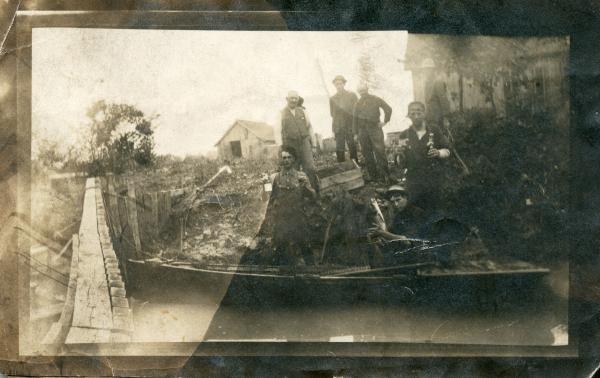
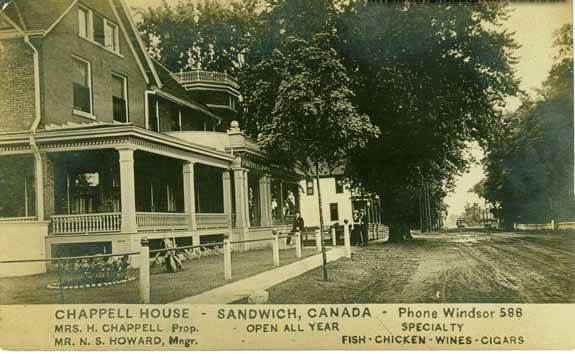
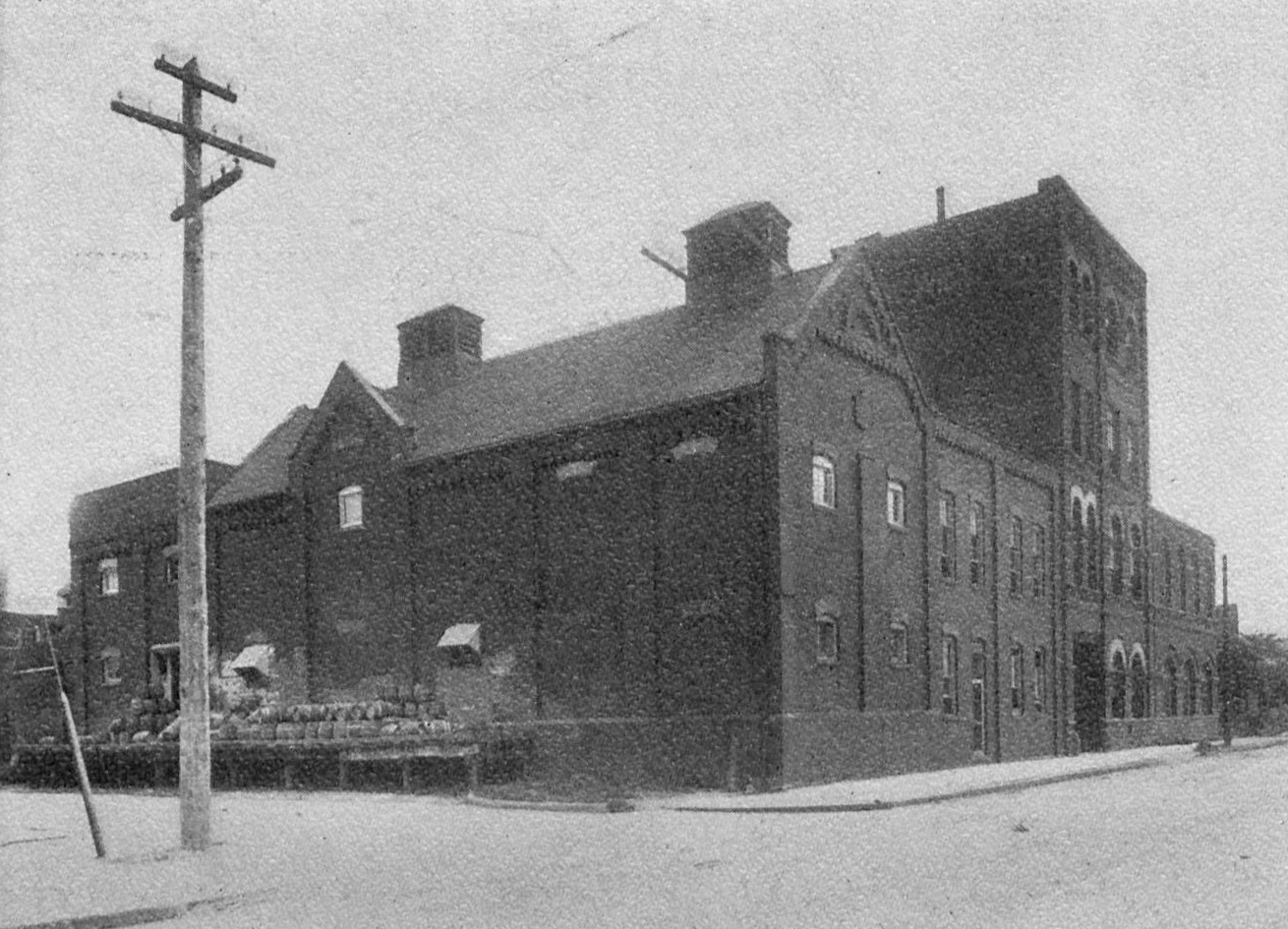
Photographs already on this chapter stay in the Pictures section below and are not copied onto other new tabs. They include rum-running on Pike Creek, a portrait of Blaise Diesbourg (later known as "King Canada"), Chappell House on Sandwich Street West, Bertha Thomas's Edgewater Thomas Inn in Riverside, and a U.S. National Archives view of Detroit police with seized brewery equipment. A 1924 U.S. Coast Guard photograph is marked as a stand-in and is not a Detroit River scene as far as the record shows. Two Reuther Library photographs of the Detroit River trade remain on order.
Winter crossings are followed in our 10 October 2026 story, linked from the timeline. Riverside's roadhouse story also belongs with how Riverside began.
Sources: University of Michigan Detroit River Story Lab · Detroit Free Press, 26 March 1922, as cited by the Story Lab · Windsor News, 10 October 2026
How the trade worked
Ontario's Temperance Act came into force on 16 September 1916 and banned the sale of liquor as a beverage in the province. It did not stop Ontario distillers and brewers from making liquor for export, because export was a federal matter. Michigan went dry on 1 May 1918, and national Prohibition followed in January 1920. Ontario replaced its Act with government sale under the Liquor Control Act in 1927. The U.S. ban lasted until December 1933.
The gap between those laws was the whole business. A shipper at a Windsor export dock filled out a federal customs clearance, known as a B-13, naming a foreign destination. The boat then crossed the river. Rivet's study notes that U.S. customs could not issue landing certificates for a banned product, so exporters wrote foreign destinations on the papers instead. In August 1928, according to a Canadian wire report printed in the Oshawa Daily Times, Customs Officer John Wesley Schooley testified in a Windsor prosecution that about 25 loaded boats cleared every day from the three export docks he watched that spring, that boats carrying as many as 600 cases could land at the foot of Second Street in Detroit and return empty inside 15 minutes, and that the captain simply swore to the cargo on the form. The same report quotes Crown counsel calling the B-13 "more honored in the breach than in the observance."
The Royal Commission on Customs and Excise found the same pattern on paper. Exporters named consignees in Detroit who did not exist, or cleared cargoes for Mexico, Cuba, Central America or St. Pierre that never arrived there. The Commission called many of the landing certificates used to cancel export bonds "false and fraudulent." At the Commission's Montreal sitting in June 1927, a lawyer for a group of Windsor export houses said there was no doubt most of their liquor reached the United States, mostly through Detroit, The New York Times reported.
Boats were the main route. In winter, cars and trucks crossed the ice, which our 10 October 2026 story follows. The Commission also heard of liquor moved in railway cars billed as other goods. Later accounts of Blaise Diesbourg's life say he also moved loads by plane.
Sources: City of Waterloo Museum: Temperance and Prohibition · Hour Detroit, Dry Times · Michigan Liquor Control Commission history · Oshawa Daily Times, 29 August 1928, p. 28 (Canadian wire report from Windsor), Whitby Public Library · Royal Commission on Customs and Excise, Interim Reports Nos. 1 to 10 (Ottawa, 1927 to 1928), Carleton University Library open archive · Lauren Rivet, Fracturing Falsehoods: Multiplexity in Windsor-Detroit's Organized Crime Networks 1900 to 1933 (MA major paper, University of Windsor, 2020) · The New York Times, 9 June 1927 · SWODA record 2096

Export docks and outports
In 1927 the Port of Windsor ran outports at Walkerville, Sandwich and Belle River. The Royal Commission wrote that the trade in exporting liquor to the United States "appears to be largely centralized at this port and its outports." It reported that the collector at Windsor had exercised no supervision over Belle River, said a thorough reorganization of the Windsor staff was desirable, and found that "a great deal of smuggling and much undervaluation" had gone on at the ferries. Smuggling ran both ways: in May 1927 the Commission heard in Windsor about silks and flowers brought over from Detroit on double invoices, the Associated Press reported.
The Commission's company reports place export docks and warehouses up and down the shore:
- Ford, LaSalle, Riverside and Amherstburg. Docks and warehouses of O. Paquette and the Dominion Export Company, supplied largely by Gooderham and Worts, Hiram Walker and Sons, and the Huether brewery, the Commission reported. Rivet's study places Paquette among Harry Low's closest business partners.
- LaSalle, Riverside, Kingsville and Amherstburg. Docks of the Bermuda Export Company, the brewers' export combine, which Harry Low operated, according to Rivet's study of the Commission record.
- Six warehouses or docks along the Windsor frontier. The Mexico Export Company. The Commission reported that its bank account showed receipts of more than $9,000,000 between July 1926 and April 1927.
- Kingsville. The export warehouse of Hoffman and Dunford, at the dock. Rivet lists the firm among the exporters tied to Low's companies.
- LaSalle and the Detroit River. The buyer known as C.A. Savard. In April 1927 the Commission ordered Savard, described as an American citizen and agent for American liquor buyers, to appear in Windsor, The New York Times reported. The Commission recorded that Savard said his purchases were smuggled into the United States. Rivet argues the name was a front used by Low's companies rather than a single real buyer.
Rivet's study, drawing on the Commission's evidence, puts about 61 percent of Canadian liquor exports in 1926 through the Port of Windsor and its outports. In 1930 the House of Commons heard that Windsor's export docks had been cut from about fifty to ten. On 31 May 1930, as Canada's new ban on clearing liquor for the United States took effect, Collector Andrew Dalziel closed those ten docks and withdrew his officers.
Sources: Royal Commission on Customs and Excise, Interim Reports Nos. 1 to 10 (Ottawa, 1927 to 1928), Carleton University Library open archive · Lauren Rivet, Fracturing Falsehoods: Multiplexity in Windsor-Detroit's Organized Crime Networks 1900 to 1933 (MA major paper, University of Windsor, 2020) · The New York Times (AP), 30 April 1927 · The New York Times (AP), 4 May 1927 · House of Commons Debates, 1930, via LiPaD · The New York Times, 1 June 1930 · TIME, 9 June 1930


Distillers and brewers on the record
Hiram Walker and Sons, Walkerville. The Commission's auditors examined the distillery's export business from 1922 to November 1926. They found large quantities shipped under bond, with no excise duty or sales tax paid, entered for Mexico, Central America, Cuba and St. Pierre and Miquelon. The evidence, the Commission wrote, "indicates that in many of these shipments, the names of the consignees were fictitious," and the goods were "apparently smuggled into the United States or into Canada." It recommended an investigation and recovery of the bonds. By 1927 the Walker family had sold the company to Harry C. Hatch of Toronto, for $14 million according to the Walkerville BIA. The distillery offices at 2072 Riverside Drive East, built 1892 to 1894, still stand and are a designated heritage property.
British American Brewing Company, Windsor. The brewery stood at the corner of Sandwich Street (now Riverside Drive West) and Bruce Avenue. The Commission found its export entries named consignees in Detroit who appeared to be fictitious, while sales were really made at the Windsor docks to people who came over by boat. From January 1925 to July 1926 it shipped under the name of the Foreign Exporting Company, which the Commission said had no actual existence. Its vice president testified that the company paid the Sandwich customs sub-collector $100 a month in 1923. The old brewery buildings are gone.
The Bermuda Export Company. From 15 July 1926, eleven Ontario brewers, including the British American Brewery and the Walkerville Brewery, sold their export beer through this one company, incorporated in Bermuda. Buyers from the United States paid cash for it at the company's docks on the Detroit River, the Commission found.
Hofer Brewing Company, LaSalle. LaSalle was incorporated as a town in 1924, and its heritage report names the Hofer brewery as the new town's major enterprise during U.S. Prohibition. The brewery building on Front Road went up in 1927 and 1928, closed as a brewery in 1945 and still stands.
Carling. Harry Low and two partners bought the closed Carling brewery in London, Ontario in 1923, according to Rivet. Ottawa later sued the Carling Export Brewing and Malting Company for sales and gallonage taxes on beer sold between April 1924 and May 1927, about $421,000 according to Rivet. This was a tax case, not a criminal trial. In February 1930 the Supreme Court of Canada sided with the Crown, noting that "no doubt beer was exported in large quantities" but that the company could not prove any particular shipment was. In 1931 the Privy Council in London allowed Carling's appeal on the gallonage tax.
Sources: Royal Commission on Customs and Excise, Interim Reports Nos. 1 to 10 (Ottawa, 1927 to 1928), Carleton University Library open archive · Walkerville BIA history · Haris Korman, Smuggling, Business, and Drinks All Around (MA major paper, University of Windsor, 2025) · Canada's Historic Places: Hiram Walker and Sons Main Office Building · International Metropolis, 4 September 2013 · Lauren Rivet, Fracturing Falsehoods: Multiplexity in Windsor-Detroit's Organized Crime Networks 1900 to 1933 (MA major paper, University of Windsor, 2020) · The King v. Carling Export Brewing and Malting Co., [1930] S.C.R. 361 · Supreme Court of Canada, Irving Oil v. Provincial Secretary of New Brunswick, describing Carling Export [1931] A.C. 435 · Town of LaSalle, Malden Road Cultural Heritage Assessment Report (2021) · International Metropolis, 23 December 2019
Roadhouses, hotels and blind pigs
A blind pig was an illegal bar. Along the Windsor shore, the roadhouses that served Detroit visitors also had river frontage and docks. The Windsor Public Library records that Abars was wired to the Tecumseh Tavern, the Golden House, the Rendezvous and the Edgewater Thomas Inn, so the houses could warn one another of a police raid.
- Chappell House, 3885 Sandwich Street West, Sandwich. Built in 1903 and owned by Henry and Francis Chappell, it became a notorious roadhouse during Prohibition. Beverly Trumble ran it in 1920, when he was shot there. Destroyed by fire in 2006.
- Island View Hotel, later Abars, Riverside Drive East at Lauzon Road. A stage stop and hotel facing Belle Isle, run by the Hebert family, that became a Prohibition-era roadhouse popular with Americans. Added to the Windsor Municipal Heritage Register in 2010, demolished in July 2016. Some fittings were saved for Museum Windsor.
- Edgewater Thomas Inn, Riverside Drive East at Bertha, Riverside. Bertha Thomas, a widow from Detroit, bought a three-room restaurant in 1920. The archive record says it became a popular speakeasy in the 1920s, with false walls, hidden cellars, an underground dock and a raid warning system, and that a 1970 fire exposed the hidden rooms. Gone.
- Rendezvous Tavern, 7324 Riverside Drive, Riverside. One of the houses on the warning wire. A later postcard shows it facing Lake St. Clair with harbour facilities. We have not confirmed what stands at the address today.
- Tecumseh Tavern and the Golden House. Named by the library as linked houses. We have not confirmed their addresses.
- Wellington Hotel, Belle River, and Omar Hotel, Stoney Point. Blaise Diesbourg worked first at his brother Charlie's Wellington Hotel, then ran his own Omar Hotel. We have not confirmed whether either building stands.
- Sunnyside Hotel, Wahneta Avenue, LaSalle. A 1928 postcard advertises frog, sturgeon, chicken and steak dinners. The Leddy Library archive record and International Metropolis both say it operated as a speakeasy during the rum-running years. The original building burned in 1972 and was replaced. The later Sunnyside Tavern closed in 2018.
- Harry Low's pool hall. Low ran a blind pig out of the back of his pool hall before he moved into the export trade, the library says.
Sources: Windsor Public Library: Abars · SWODA record 2897 · SWODA record 1755 · CBC News, 2016 · Radio Canada International, 20 July 2016 · SWODA record 2877 · SWODA record 2382 · International Metropolis, 5 October 2011 · SWODA record 2953 · SWODA record 2096 · SWODA record 2193 · International Metropolis, 11 January 2008 · AM800 News, 12 January 2018 · Windsor Public Library: Harry Low


The Fighting Parson and the Chappell House killing
The Rev. J.O.L. Spracklin was born in Woodstock in 1886 and grew up in Sandwich. He took charge of Sandwich Methodist Church in 1918 and was hired in 1920 as a provincial liquor licence inspector. The Windsor Public Library says he and the handful of men he led gained a reputation for questionable methods. On Halloween night 1920, the library says, his home was riddled with bullets and his wife narrowly escaped being shot.
About a week later, in the early hours of 6 November 1920, Spracklin and his men entered the Chappell House, run by Beverly "Babe" Trumble, without a warrant. Spracklin shot Trumble, who died that morning. At the inquest in the Sandwich courthouse, now Mackenzie Hall, Lulu Trumble testified that her husband was unarmed. Spracklin's men testified that Trumble had a gun. The coroner's jury found the shooting was in self-defence, The New York Times reported on 9 November.
Ontario still charged Spracklin with manslaughter. At the February 1921 assizes, a jury acquitted him. He resigned his church, moved to Michigan in 1922, spoke for the Anti-Saloon League, and died in 1960. Historian Patrick Brode argues the case helped turn Ontario opinion against the Temperance Act.
Sources: Windsor Public Library: Rev. J.O.L. Spracklin · Chatham Daily News, Rum running and the Rev. Spracklin, Part 4 · The New York Times, 7 November 1920 · The New York Times, 9 November 1920 · The New York Times, 25 February 1921 · Patrick Brode, Dying for a Drink (Biblioasis, 2018) · Literary Review of Canada, November 2018 · Publishers Weekly review of Dying for a Drink · City of Windsor: History of Mackenzie Hall
Syndicates and the mob
The Royal Commission named the export groups working from the Windsor district. These are its findings from 1927, not court verdicts. Lauren Rivet's University of Windsor study, which works from the Commission's hearing transcripts at Library and Archives Canada, reconstructs the same network.
- Harry Low's group. With S.J. Low, Marco Leon and a man named Nathanson, Harry Low was "among the most active dealers in beer and liquor in the Windsor district," the Commission wrote, whose business was principally supplying liquor "to be smuggled into the United States." The group traded as the Vancouver Forwarding Company, Wayne Products Company and Western Exporters, and S.J. Low traded as the Seagram Distillery Agency. That was a trade name, not the Seagram company. The Commission's auditors put the group's profits at about $474,000 over a few months of 1926 and 1927, and the Commission said none of the companies had filed income tax returns. It found "strong evidence" that Harry Low tried to bribe customs officers and railway employees. Rivet's study also describes Low's companies paying customs and railway employees. No court convicted Low on these findings.
- The Mexico Export Company. A syndicate with six warehouses or docks. The Commission reported that a few days before it opened its Windsor sittings, the company's goods were moved out, its bank account was closed, and its principal partners left Canada. Rivet notes that it sold to the same buyer as Low's companies, the name Savard. Later accounts of Diesbourg's life say he worked with this outfit.
- The Massey group. Ten people exporting from Windsor and nearby towns as the Massey Export Company, the Commission reported, adding that no income tax was paid on what Harold Massey admitted were substantial profits. Rivet records that the Massey group pooled its business with Low's group in 1926.
The Purple Gang. On the Detroit side, the Purple Gang began by hijacking liquor smuggled across the border, chiefly over the Detroit River, according to the Detroit Historical Society. The Mob Museum says the gang ran liquor into Detroit from Windsor by speedboat and hijacked rivals' loads. Historian Robert Rockaway writes that the gang hired the "Little Jewish Navy" to bring the liquor across, while the Purples handled the Michigan side. By 1935 the gang had broken apart, with at least 18 members dead and others in prison.
Blaise Diesbourg, "King Canada." Born in 1897 and originally from Pike Creek, Diesbourg smuggled liquor to Detroit by boat, car and aeroplane, according to the Leddy Library archive record.
Sources: Royal Commission on Customs and Excise, Interim Reports Nos. 1 to 10 (Ottawa, 1927 to 1928), Carleton University Library open archive · Lauren Rivet, Fracturing Falsehoods: Multiplexity in Windsor-Detroit's Organized Crime Networks 1900 to 1933 (MA major paper, University of Windsor, 2020) · The New York Times (AP), 30 April 1927 · Windsor Public Library: Harry Low · Detroit Historical Society, Encyclopedia of Detroit: Purple Gang · The Mob Museum, Prohibition: An Interactive History · Robert A. Rockaway, The Notorious Purple Gang, Shofar journal · SWODA record 2096 · Wikipedia: Blaise Diesbourg, drawing on Marty Gervais, The Rumrunners

Customs, corruption and the Royal Commission
A House of Commons committee investigated the Customs department in 1926. Its findings set off the censure fight that led to the King-Byng crisis. The committee asked that officers at the Port of Windsor be investigated further, and the Royal Commission on Customs and Excise sat in Windsor in 1927. What it reported about Windsor:
- That customs law on liquor export at Windsor and its sub-ports had not been carried out at any time since 1923, and that prosecutions were not brought for repeated breaches, as Rivet quotes the Commission's audit.
- That W.M. Egan, a Windsor lawyer appointed in 1922 to prosecute customs cases, took payments from breweries and exporters, apparently for favourable treatment, while very few prosecutions were brought. The Commission said the evidence fell short of a criminal case. Egan had left Canada by the time of the inquiry. Rivet, drawing on the hearing transcripts and a June 1927 report in The Globe, describes the payments as a "rat fund" that Egan set up in 1923. At the Windsor hearings in May 1927, Stephen A. Griggs, a former brewing company president, testified that he had paid Egan more than $12,000 on exported beer and that Ontario brewers paid him "tribute," the Associated Press reported.
- That Joseph U. Piche, sub-collector at the Sandwich outport, accepted several $100 payments from the British American Brewing Company. He denied it. The Commission believed the brewery's vice president. Rivet's study, working from the hearing transcripts, also names Piche as a customs officer paid by exporters.
Sources: Royal Commission on Customs and Excise, Interim Reports Nos. 1 to 10 (Ottawa, 1927 to 1928), Carleton University Library open archive · Lauren Rivet, Fracturing Falsehoods: Multiplexity in Windsor-Detroit's Organized Crime Networks 1900 to 1933 (MA major paper, University of Windsor, 2020) · The New York Times (AP), 4 May 1927 · The Canadian Encyclopedia: King-Byng Affair · The Canadian Encyclopedia: Customs and Excise

Gunfire, raids and the courts
- 31 October 1920, Sandwich. Shots riddle Spracklin's home, the Windsor Public Library says. His wife narrowly escapes.
- 6 November 1920, Chappell House. Spracklin shoots and kills Beverly Trumble. A jury acquits him of manslaughter in February 1921.
- 1924, Detroit River. Michigan puts armed speedboats on the river to chase smugglers, according to a 1924 news report reprinted by the University of Michigan's Detroit River Story Lab.
- August 1928, Windsor. The Inter Transit Company is prosecuted for illegal possession of liquor, according to the wire report in the Oshawa Daily Times. Customs Officer Schooley's testimony lays out how the B-13 system worked. We have not found the verdict.
- November 1928, LaSalle. Canadian customs officials seize 4,000 gallons of denatured alcohol on a LaSalle export dock and say it traces a ring tied to poisoned liquor that killed about 40 people in New York, The New York Times reported. Haris Korman's University of Windsor study also cites the seizure.
- 1928. John Allen Kennedy, who worked for Low's companies and represented the buyer called Savard, is murdered in Monroe County, Michigan, according to Rivet. The Windsor Public Library says Low fell under suspicion. Rivet writes that officials never connected Low to it, and we found no record of a charge.
- 1929 to 1931. Ottawa's tax case against Carling's export company goes from the Exchequer Court to the Supreme Court of Canada, which sides with the Crown in 1930, and then to the Privy Council, which allows Carling's appeal on the gallonage tax in 1931. It was a civil tax case.
- 19 June 1929, Detroit River. Rum runners open fire on U.S. customs patrol boat No. 4101 and damage it in a running fight in American waters, The New York Times and the Washington Evening Star reported. The acting Detroit customs collector called the runners' boat "the most dangerous on the river." The Evening Star reported that the boat escaped into Canadian waters and that nobody was hit. The Evening Star also reported that Sandwich Police Chief James D. Proctor had complained to Ottawa that American patrol fire could hurt or kill an innocent person.
Sources: Windsor Public Library: Rev. J.O.L. Spracklin · The New York Times, 7 November 1920 · The New York Times, 25 February 1921 · University of Michigan Detroit River Story Lab: Michigan Has Navy on Detroit River (1924) · Oshawa Daily Times, 29 August 1928, p. 28 (Canadian wire report from Windsor), Whitby Public Library · The New York Times, 8 November 1928 · Haris Korman, Smuggling, Business, and Drinks All Around (MA major paper, University of Windsor, 2025) · Lauren Rivet, Fracturing Falsehoods: Multiplexity in Windsor-Detroit's Organized Crime Networks 1900 to 1933 (MA major paper, University of Windsor, 2020) · Windsor Public Library: Harry Low · The King v. Carling Export Brewing and Malting Co., [1930] S.C.R. 361 · Supreme Court of Canada, Irving Oil v. Provincial Secretary of New Brunswick, describing Carling Export [1931] A.C. 435 · The New York Times, 20 June 1929 · Evening Star (Washington), 20 June 1929, p. 4, Associated Press and NANA dispatches
People on the record
- Harry Low (died 1955). Ottawa-born toolmaker who moved to Windsor in 1919, ran a pool hall and blind pig, became part owner of Carling and the Bermuda Export Company, and built Devonshire Lodge. By 1934 the business had dried up. He died at Hotel Dieu in Windsor.
- Blaise Diesbourg (born 1897). "King Canada," from Pike Creek. Smuggled by boat, car and aeroplane.
- Rev. J.O.L. Spracklin (1886 to 1960). Methodist minister and liquor licence inspector. Acquitted in the Trumble killing.
- Beverly "Babe" Trumble (died 1920). Ran the Chappell House. Killed in the November 1920 raid.
- Bertha Thomas (died 1955). Ran the Edgewater Thomas Inn in Riverside from 1920.
- Harry C. Hatch. Toronto distiller who bought Hiram Walker and Sons, by 1927.
- W.M. Egan. Customs prosecutor at Windsor from 1922, named by the Royal Commission and in testimony reported by the Associated Press.
- Andrew Dalziel. Collector of Customs at Windsor who shut the last ten export docks on 31 May 1930.
Sources: Windsor Public Library: Harry Low · Windsor Public Library: Devonshire Lodge · Lauren Rivet, Fracturing Falsehoods: Multiplexity in Windsor-Detroit's Organized Crime Networks 1900 to 1933 (MA major paper, University of Windsor, 2020) · SWODA record 2096 · Windsor Public Library: Rev. J.O.L. Spracklin · International Metropolis, 5 October 2011 · SWODA record 2877 · Walkerville BIA history · Royal Commission on Customs and Excise, Interim Reports Nos. 1 to 10 (Ottawa, 1927 to 1928), Carleton University Library open archive · The New York Times, 1 June 1930 · TIME, 9 June 1930
Legend and folklore
These stories are told often. We could not confirm them with solid records, so we mark them as legend.
- Al Capone in Windsor. Abars, Devonshire Lodge and Walkerville all have Capone stories. The Windsor Public Library lists Capone among Abars' famous guests, CBC News called him an alleged visitor, and the Walkerville BIA says Capone and his representative "were said to" frequent Walkerville. No record we found places him here.
- Diesbourg and Capone. Later accounts of Diesbourg's life say Capone arranged regular shipments from him by plane. The story rests on Diesbourg's own word.
- Tunnels and secret rooms. False walls, hidden cellars and an underground dock at the Edgewater Thomas Inn are described in the archive record as legendary. Tunnel stories elsewhere along Riverside Drive are unconfirmed.
- The Purple Gang at the Sunnyside. International Metropolis says the Sunnyside Hotel in LaSalle was a regular hangout for the Purple Gang and that Jean Harlow visited. We found no second source.
- Cars on the river bottom. Tourism material says trucks that fell through the ice are still on the bottom. We have no survey that confirms it.
Sources: Windsor Public Library: Abars · CBC News, 2016 · Radio Canada International, 20 July 2016 · Walkerville BIA history · Wikipedia: Blaise Diesbourg, drawing on Marty Gervais, The Rumrunners · SWODA record 2877 · International Metropolis, 11 January 2008 · Tourism Windsor Essex Pelee Island

Then and now
Places named on this page, with addresses where confirmed and what is there today. Unconfirmed locations are marked.
- Hiram Walker and Sons distillery offices. 2072 Riverside Drive East, Walkerville. Now: Distillery offices, still part of the Walkerville distillery site. Stands. Designated heritage property.
- Devonshire Lodge (Low-Martin House). 2021 Ontario Street, Walkerville. Now: Private home. Stands. Designated, By-law 58-2008.
- Mackenzie Hall, the former Essex County courthouse and scene of the Spracklin inquest. 3277 Sandwich Street, Sandwich. Now: Mackenzie Hall Cultural Centre. Stands. Courthouse until 1963.
- Chappell House. 3885 Sandwich Street West, Sandwich. Now: Site only. Gone. Fire, 2006.
- British American Brewery. Riverside Drive West at Bruce Avenue. Now: Site only. Gone. Demolished.
- Island View Hotel, later Abars. Riverside Drive East at Lauzon Road. Now: Site only. Gone. Demolished July 2016.
- Edgewater Thomas Inn. Riverside Drive East at Bertha. Now: Site only. Gone. Fire, 1970.
- Rendezvous Tavern. 7324 Riverside Drive, Riverside. Now: Not confirmed. Not confirmed.
- Walkerville ferry dock and customs house. Foot of Devonshire Road. Now: Riverfront. The ferry stopped running in 1942.
- Detroit and Windsor ferry dock. Foot of Ouellette Avenue. Now: Riverfront. No longer a ferry dock.
- Hofer brewery. Front Road, LaSalle (392 Front Road, to confirm on site). Now: Private warehouse. Stands.
- Wellington Hotel. Main street, Belle River. Now: Not confirmed. Not confirmed.
- Omar Hotel. Stoney Point. Now: Not confirmed. Not confirmed.
- Sunnyside Hotel. Wahneta Avenue, LaSalle. Now: Not confirmed. Original burned 1972. The later Sunnyside Tavern closed in 2018.
Sources: Canada's Historic Places: Hiram Walker and Sons Main Office Building · Walkerville BIA history · Ontario Heritage Act Register, Windsor By-law 58-2008 · City of Windsor: History of Mackenzie Hall · SWODA record 2897 · International Metropolis, 4 September 2013 · Windsor Public Library: Abars · International Metropolis, 5 October 2011 · SWODA record 2953 · SWODA record 781 · SWODA record 818 · International Metropolis, 23 December 2019 · SWODA record 2096
Timeline
- 1916 to 1933 Two prohibitions. Ontario's Temperance Act of 1916 banned sales in the province until 1927, but export stayed legal. U.S. Prohibition ran from 1920 to 1933. The river between them became a smuggling route. Sources: University of Michigan Detroit River Story Lab · Windsor News
- March 1922 The Sandwich ruling. Judge Coughlin at Sandwich rules that the province cannot regulate export warehouses (Detroit Free Press, 26 March 1922). Sources: University of Michigan Detroit River Story Lab · CBC News
- 1920s Customs and enforcement. Smuggling did not stop in winter; our October 2026 story follows the crossings over the ice. Sources: Windsor News, 10 Oct 2026
- 16 September 1916 Ontario goes dry. The Ontario Temperance Act comes into force. Export stays legal. Sources: City of Waterloo Museum: Temperance and Prohibition
- 1 May 1918 Michigan goes dry. Detroit becomes the first major U.S. city under prohibition. Sources: Hour Detroit, Dry Times
- 6 November 1920 Chappell House killing. Rev. J.O.L. Spracklin shoots Beverly Trumble. A jury acquits him in February 1921. Sources: Windsor Public Library: Rev. J.O.L. Spracklin
- July 1926 Bermuda Export Company. Eleven Ontario brewers begin selling export beer through one combine. Sources: Lauren Rivet, Fracturing Falsehoods: Multiplexity in Windsor-Detroit's Organized Crime Networks 1900 to 1933 (MA major paper, University of Windsor, 2020)
- 1926 to 1927 Walker sale. The Walker family sells Hiram Walker and Sons to Harry C. Hatch. Sources: Walkerville BIA history
- 1927 Royal Commission in Windsor. The Commission sits in Windsor and later reports widespread breaches at the port. Sources: Royal Commission on Customs and Excise, Interim Reports Nos. 1 to 10 (Ottawa, 1927 to 1928), Carleton University Library open archive
- 1 June 1927 Ontario ends its ban. Government liquor stores open under the Liquor Control Act. Sources: City of Waterloo Museum: Temperance and Prohibition
- 31 May 1930 Docks closed. Canada stops clearing liquor for the United States. Collector Andrew Dalziel closes Windsor's last ten export docks. Sources: The New York Times, 1 June 1930
- 5 December 1933 Repeal. U.S. Prohibition ends. Sources: Michigan Liquor Control Commission history
About the pictures
Two Reuther Library photographs of the Detroit River trade (Detroit News negatives 27833 and 27841) are on order. Until the files arrive, a 1924 U.S. Coast Guard photograph stands in. It is marked as a stand-in and is not a Detroit River scene as far as the record shows.
Pictures