From the 21st "Essex" Battalion of 1885 to the reservists of the Essex and Kent Scottish and the Windsor Regiment today. This page gathers the area's Army regiments, the battalions raised here for the First World War, the carriers built at Ford, Dieppe, and the people from here who served. Every statement has a source. Where sources disagree, both are shown. Where we could not find something, we say so.
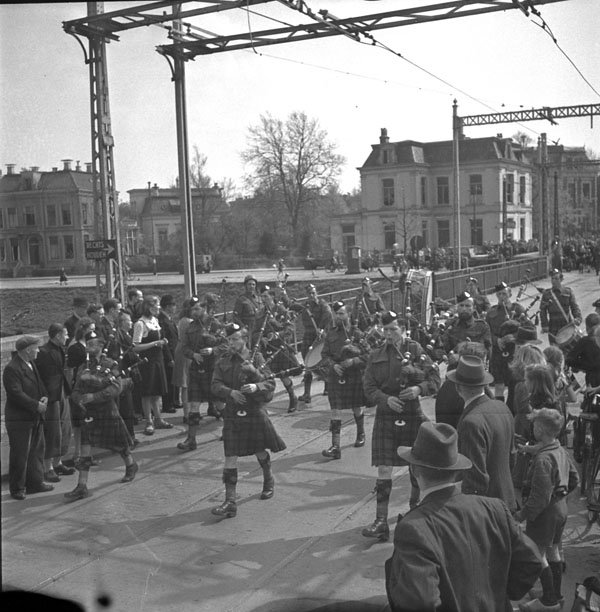
A 30-second montage of archival film and photographs about the Army and Windsor, with added ambient music: the Ford plant in 1941, Essex Scottish soldiers after Dieppe, Dieppe honours at Buckingham Palace from Canadian Army Newsreel No. 1, and a band in Groningen in 1945 that the archive identifies as the Essex Scottish. The man in the newsreel is not named. Captions on screen name each source. Music: “Dreams Become Real” by Kevin MacLeod (incompetech.com), licensed under Creative Commons: By Attribution 3.0. Credits and rights
12 June 1885The 21st "Essex" Battalion of Infantry is authorized at Windsor. It becomes the Essex Fusiliers and, on 15 July 1927, the Essex Scottish.1
1899 to 1902Essex County volunteers serve in South Africa. The Boer War Memorial in Jackson Park honours them (chronology).
7 November 1914The 18th Battalion, CEF, is authorized. It fights in France and Flanders with the 2nd Canadian Division from September 1915 to the end of the war.1
15 December 1936The Essex Regiment (Tank) is authorized at Windsor. It is today's Windsor Regiment (RCAC).2
19 August 1942The Essex Scottish land on Red Beach at Dieppe.13
1 March 1945Maj. F.A. Tilston wins the Victoria Cross in the Hochwald.4
1 October 1954The Essex Scottish and the Kent Regiment amalgamate as the Essex and Kent Scottish.1
2002 to 2014Both Windsor regiments reinforce units in Afghanistan and later receive the theatre honour AFGHANISTAN.125
2004Military use moves from the University Avenue Armouries to the Major F.A. Tilston, VC Armoury on Sandwich Street.6
The local regiments
Two Army Reserve regiments serve Windsor today, both at the Sandwich Street armoury.78 Their histories run back through older names, so the same unit can appear under four or five titles in the records.
The Essex and Kent Scottish
The regiment "originated in Windsor, Ontario on 12 June 1885, when the '21st "Essex" Battalion of Infantry' was authorized to be formed." It was renamed the 21st Battalion "Essex Fusiliers" in 1887, the 21st Regiment "Essex Fusiliers" in 1900, The Essex Fusiliers in 1920 and The Essex Scottish on 15 July 1927. On 1 October 1954 it was amalgamated with The Kent Regiment of Chatham and became The Essex and Kent Scottish.1
Its badge, as the official lineage describes it, keeps the badge of the Essex Scottish and adds "the white horse taken from the badge of The Kent Regiment". The motto is Semper Paratus (Always prepared), and the marches are "The Highland Laddie" and "A Hundred Pipers". The regiment also perpetuates the Essex and Kent militia of the War of 1812 and the 18th, 99th, 186th and 241st Battalions of the CEF.1
Its Second World War battle honours, from the lineage: Dieppe; Bourguébus Ridge; St. André-sur-Orne; Falaise; Falaise Road; Clair Tizon; Forêt de la Londe; The Scheldt; Woensdrecht; South Beveland; The Rhineland; Goch-Calcar Road; The Hochwald; Xanten; Twente Canal; Groningen; Oldenburg; North-West Europe, 1942, 1944-1945. Its First World War honours include Mount Sorrel, Flers-Courcelette, Vimy, 1917, Hill 70, Passchendaele, Amiens and the Hindenburg Line.1
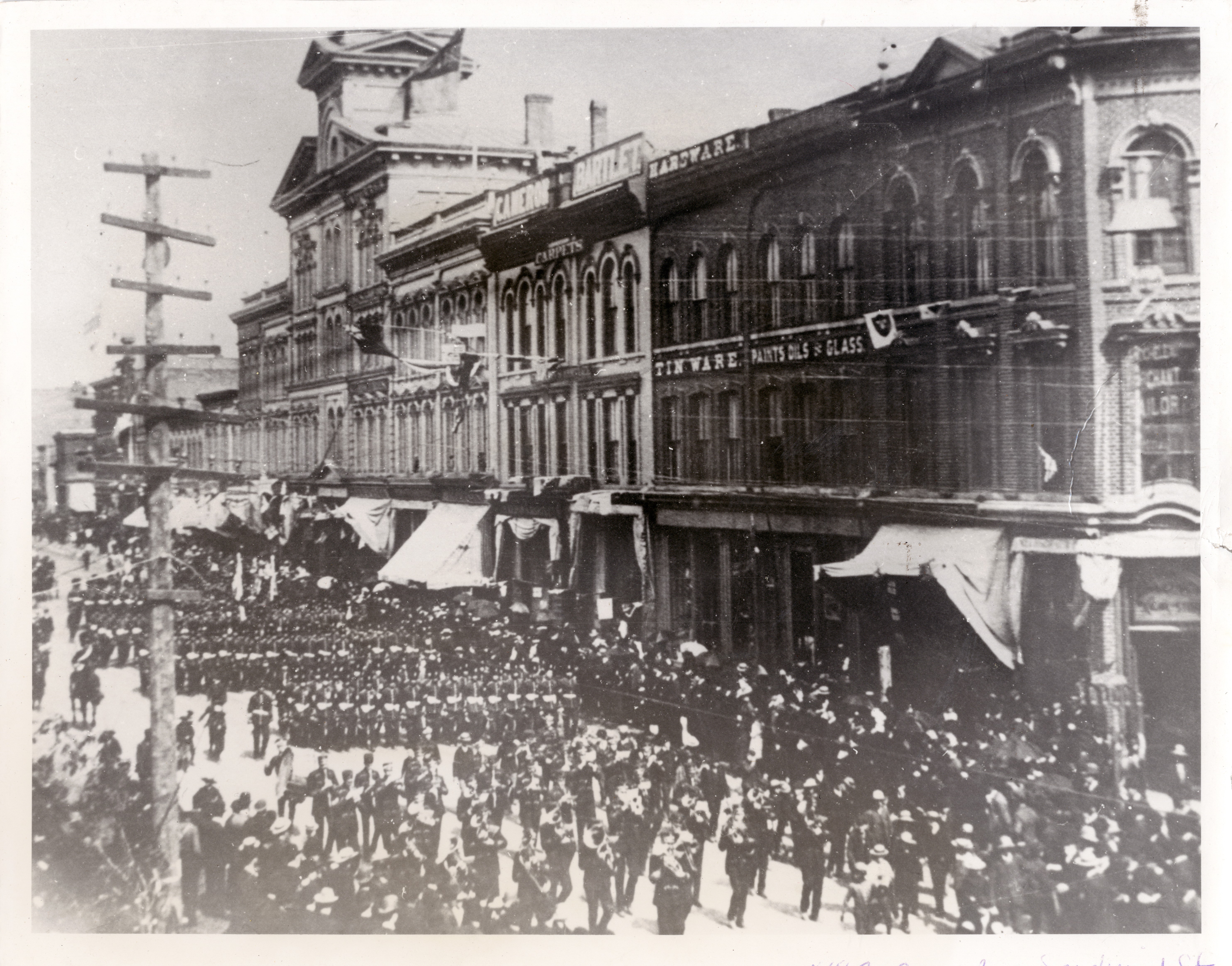
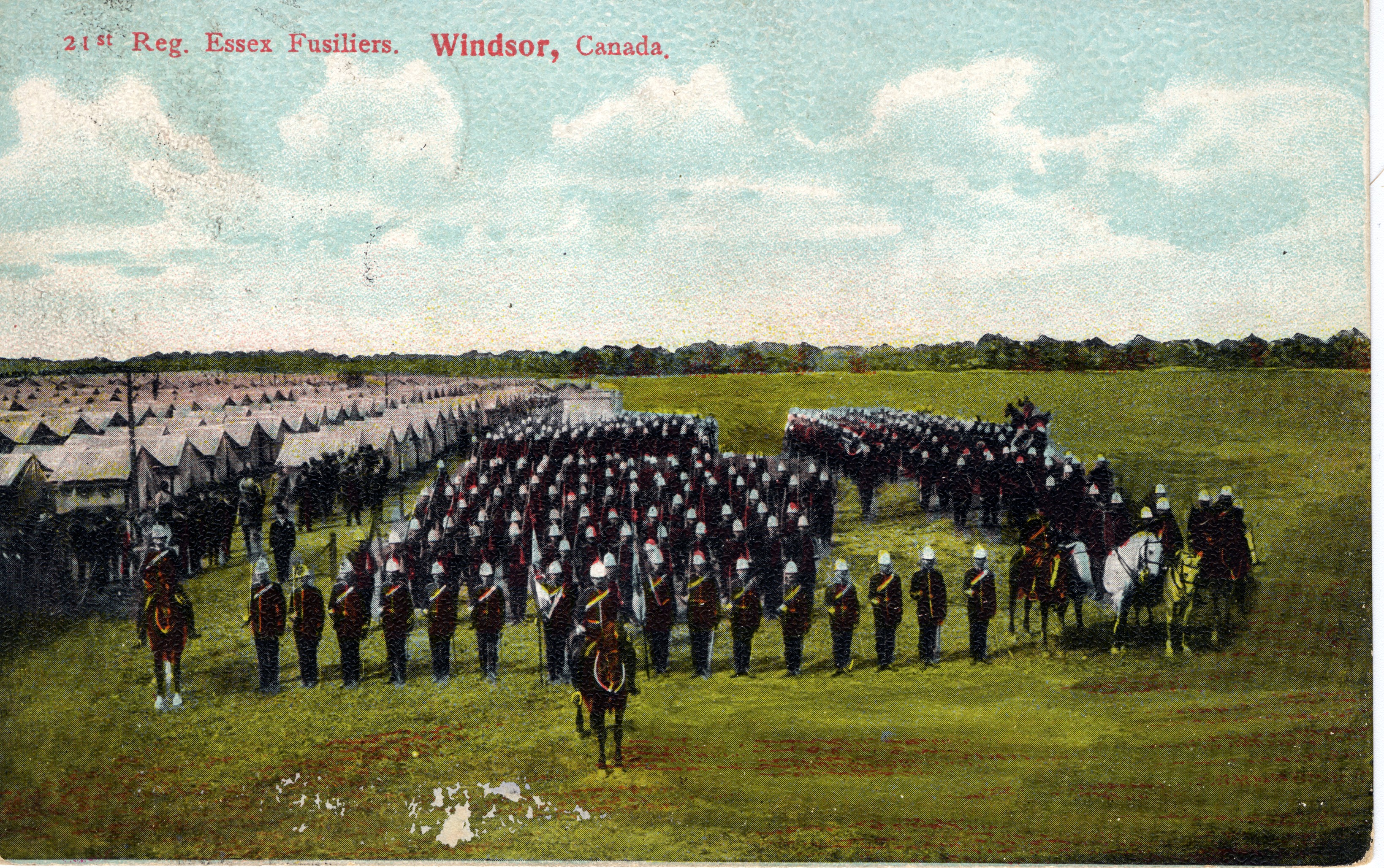
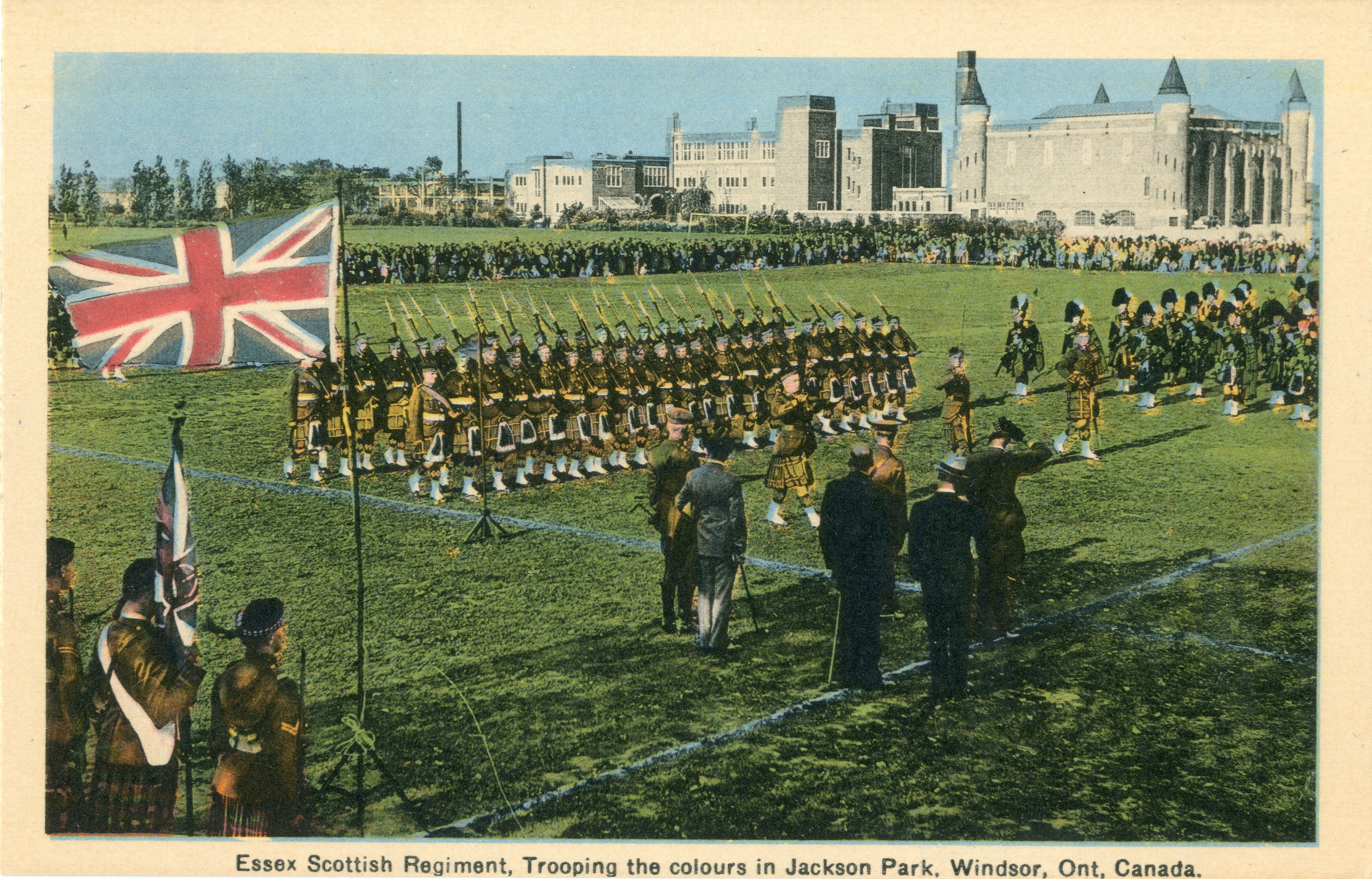
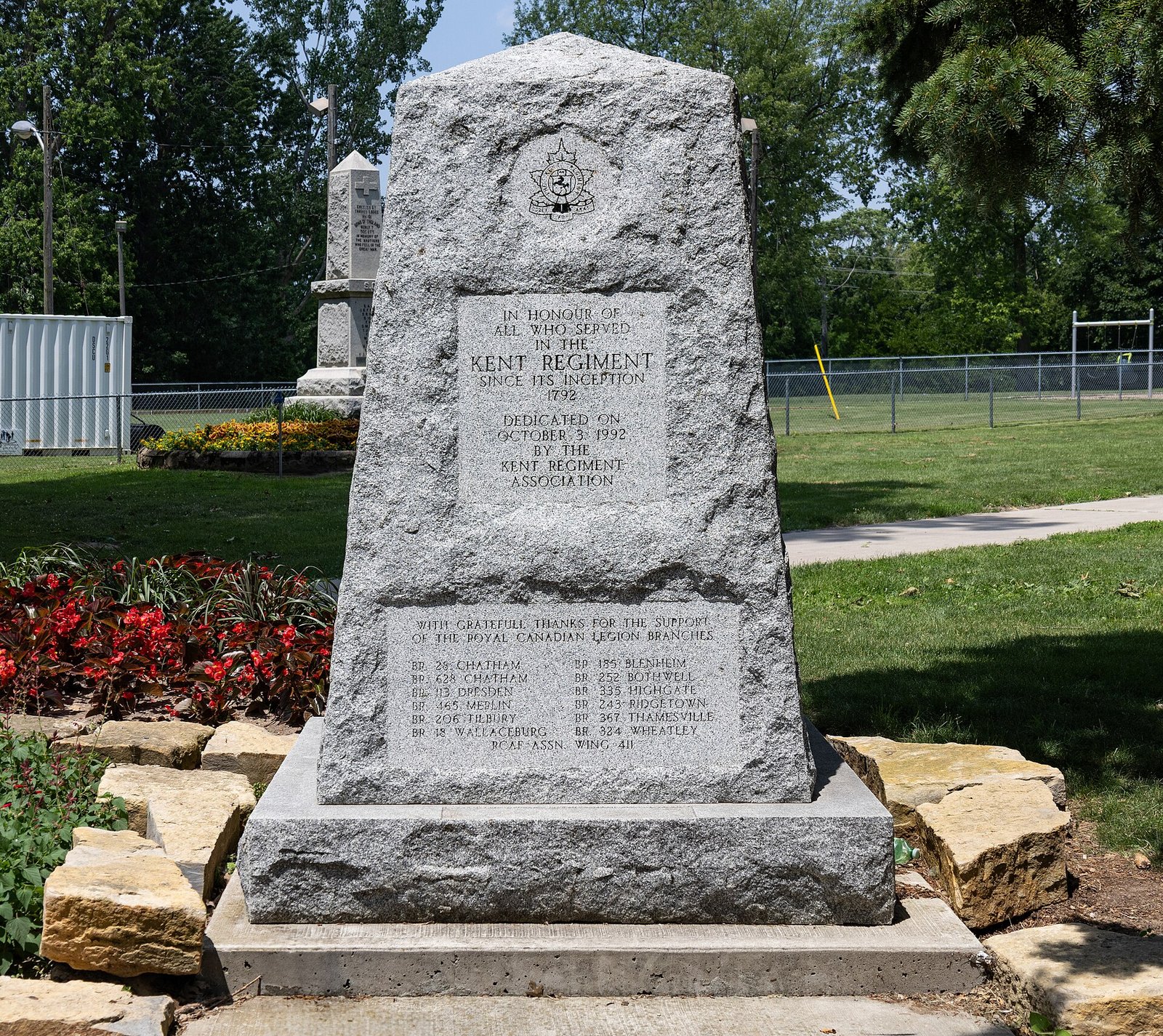
Victoria Day parade of the 21st Essex Battalion, Sandwich Street (now Riverside Drive) at Ouellette, 24 May 1887, two years after the battalion was formed. Walkerville Times Collection; University of Windsor, Leddy Library / SWODA. Public domain. Source record"21st Reg. Essex Fusiliers, Windsor." Postcard, postmarked 1907. University of Windsor, Leddy Library / SWODA. Public domain. Source recordThe Essex Scottish trooping the Colours, Jackson Park, about 1935. Photogelatine Engraving Co. postcard. University of Windsor, Leddy Library / SWODA. Public domain. Source recordThe Kent Regiment Memorial, Tecumseh Park, Chatham, 6 July 2025. The Kent Regiment joined the Essex Scottish in 1954. Chris Woodrich, via Wikimedia Commons. CC BY-SA 4.0. Source file
The Windsor Regiment (RCAC)
The Windsor Regiment "originated in Windsor, Ontario on 15 December 1936, when 'The Essex Regiment (Tank)' was authorized to be formed." It became the 30th (Reserve) Reconnaissance Regiment (Essex Regiment) in 1942, the 22nd Reconnaissance Regiment (Essex Regiment) in 1946, The Windsor Regiment (22nd Reconnaissance Regiment) in 1949 and The Windsor Regiment (RCAC) in 1958.2
In the Second World War it mobilized the 30th Reconnaissance Battalion for active service on 12 May 1942. That unit served in Canada in a home defence and training role, then embarked for Britain on 23 July 1943, "where its soldiers were employed as assembly workers for unassembled vehicles arriving from Canada." It was disbanded on 31 March 1944.2 The badge shows a tank over two crossed carbines; the carbines come from its allied regiment, the 3rd Carabiniers. Its motto is also Semper Paratus.2 The regiment received Sherman tanks in 1954 and returned to reconnaissance in 1965 (uniforms and equipment).7
Other units
The Kent Regiment was formed at Chatham on 1 January 1901 as the 24th "Kent" Regiment. In the Second World War it mobilized a battalion that served in Canada on home defence, with the 14th Infantry Brigade, 8th Canadian Division, and Pacific Command.1No. 2 Construction Battalion, the all-Black unit of the First World War, had a detachment in Windsor from September 1916 to March 1917 (chronology).910The Canadian Women's Army Corps enlisted women from the area; Lance Corporal Dorothy Helena James, whose parents lived in Windsor, is on the honour roll.11
The First World War battalions
The Essex and Kent Scottish carries the lineage of four CEF battalions raised in this area.1
18th Battalion. Authorized on 7 November 1914, it sailed for Britain on 18 April 1915 and landed in France on 15 September 1915. It fought with the 4th Infantry Brigade, 2nd Canadian Division, until the end of the war.1 A badge collectors' study says it was "recruited by the 21st Essex Fusiliers" and sailed with 36 officers and 1,081 other ranks under Lt-Col E.S. Wigle, a Windsor lawyer and former mayor.1213
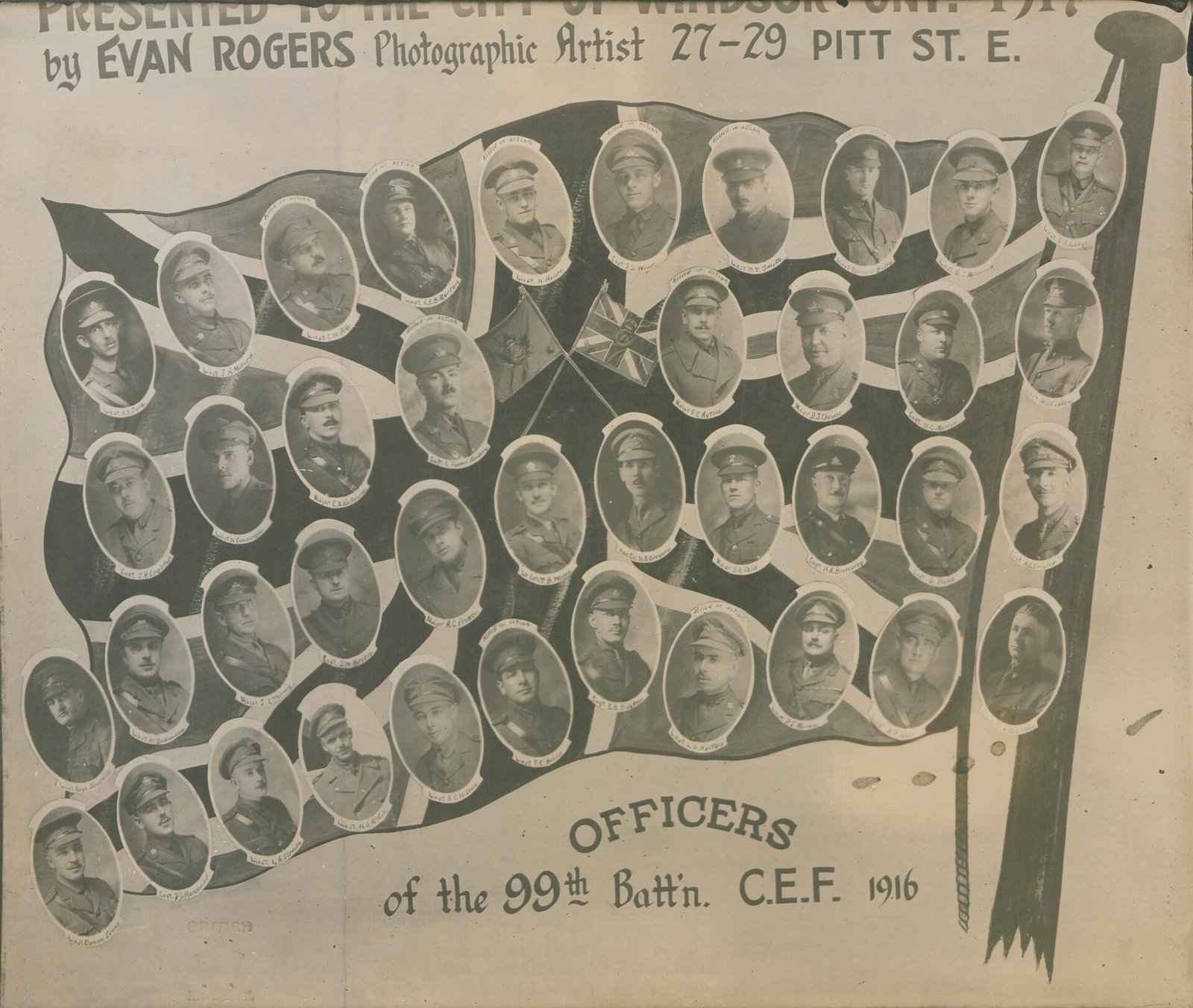
99th Battalion (Essex). Authorized on 22 December 1915, it sailed on 31 May 1916. On 6 July 1916 its men were absorbed into the 35th Reserve Battalion as reinforcements.1 A Museum Windsor record says its recruits were housed in the old fairgrounds building at Ouellette and Tecumseh, with a tent city along Ouellette.14
186th Battalion (Kent). Authorized on 15 July 1916, it sailed on 28 March 1917 and was absorbed into the 4th Reserve Battalion on 7 April 1917.1
241st Battalion (Canadian Scottish Borderers). Authorized on 15 July 1916, it sailed on 29 April 1917 and was absorbed into the 5th Reserve Battalion on 7 May 1917.1 The regimental collection calls it "the third battalion raised in the Windsor area" and says "twenty-seven percent of the battalion was American, most being from Michigan."15
Because the 99th, 186th and 241st were broken up for reinforcements, their men fought with other battalions. The best-documented local soldier of the 18th is C/S/M Abbott Elmer Ross, DCM.
"Canadian Expeditionary Force, 99th O.S. Battalion, Queens Park, London, Ontario, May 19, 1916. No. 498." Panorama by Percy E. McDonald, from the British Library's collection of Canadian copyright deposits, via Wikimedia Commons. The men are not identified. Public domain. Source file
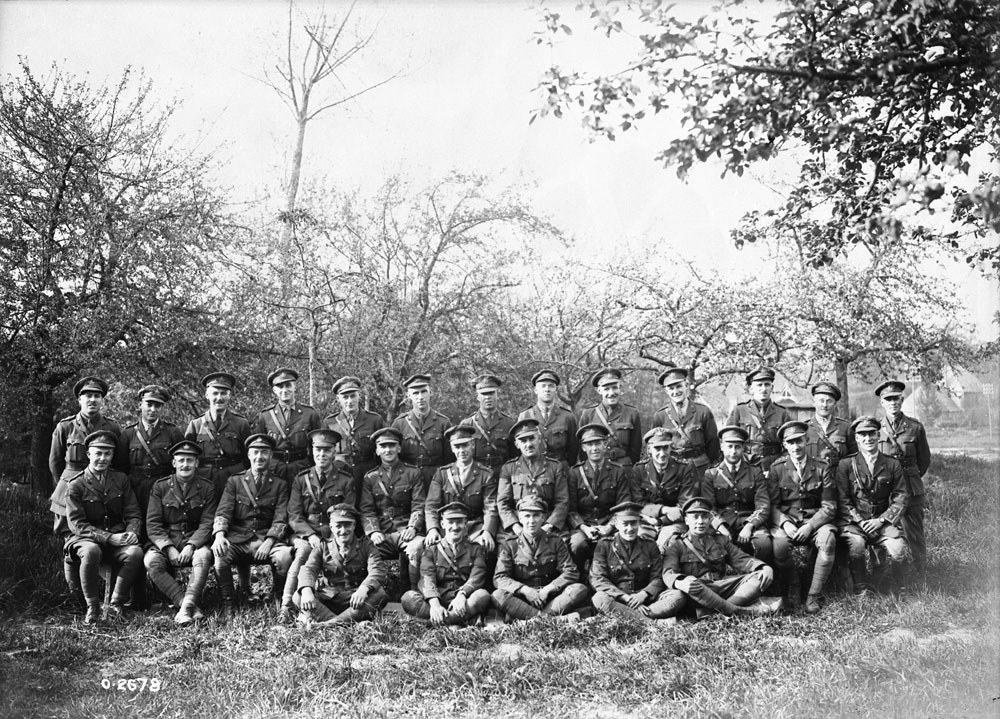
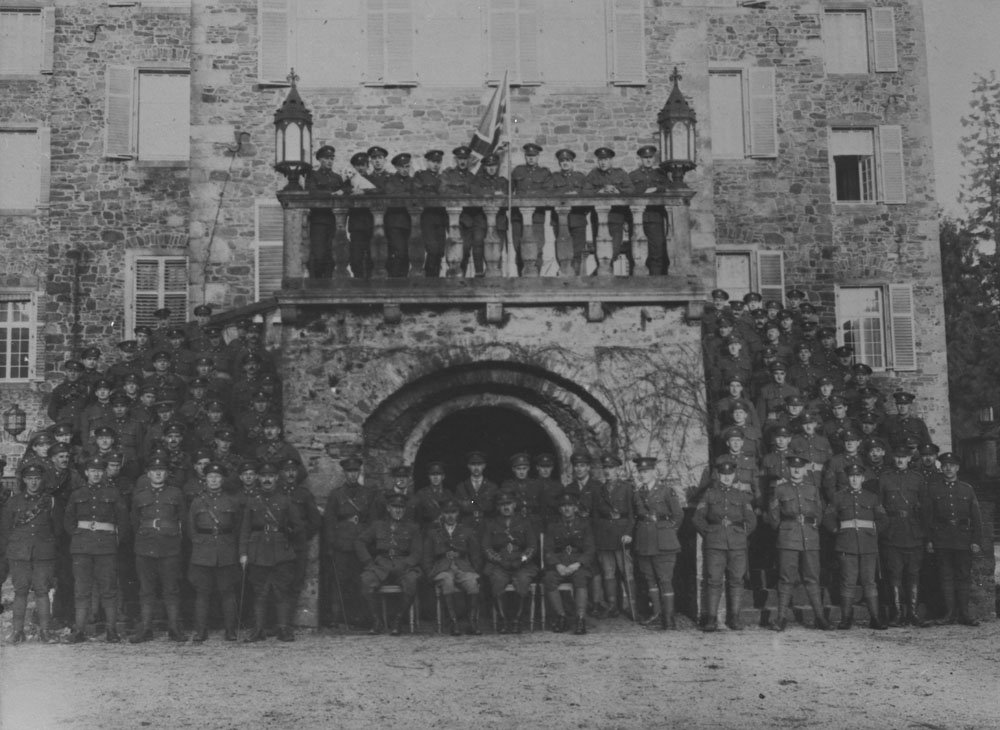
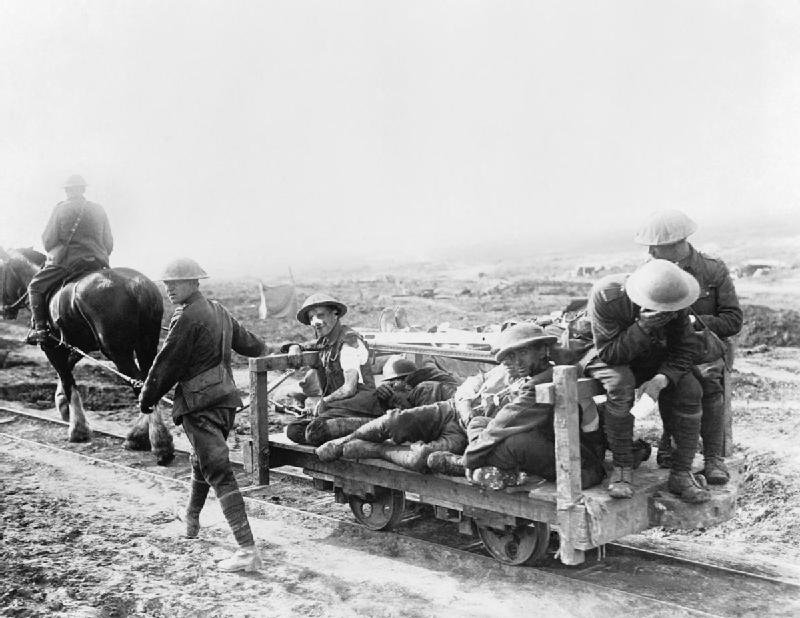
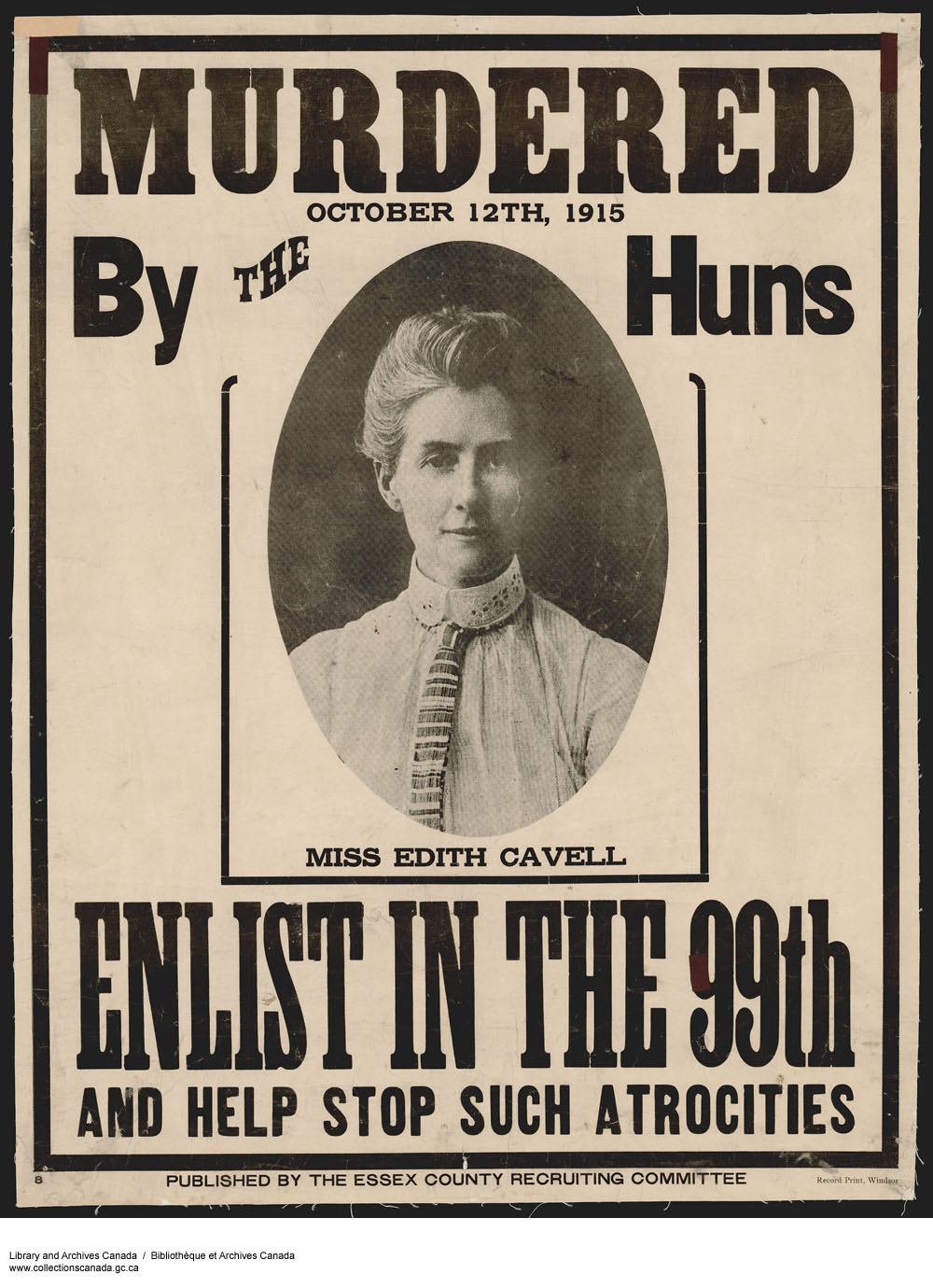
"Officers of the 99th battalion, CEF 1916." Evan Rogers, from the British Library's Canadian copyright deposits, via Wikimedia Commons. The officers are not named in the caption. Public domain. Source fileOfficers of the 18th Canadian Infantry Battalion, May 1918. Public domain, via Library and Archives Canada and Wikimedia Commons. The officers are not named here.Surviving original members of the 18th Battalion, CEF, 1919. Photographer not recorded. Library and Archives Canada, via Wikimedia Commons. The men are not named. Public domain. Source fileCanadian wounded taken to a dressing station on a horse-drawn light railway, Battle of Flers-Courcelette, September 1916. The men are not identified. Lt William Ivor Castle, Canadian official photographer. Imperial War Museums CO 811, via Wikimedia Commons. Public domain. Source fileA 99th Battalion (Essex) recruiting poster built around the execution of the nurse Edith Cavell. Its wartime wording is historical propaganda. Library and Archives Canada, e010754202. Public domain in Canada. More in the chronology.No. 2 Construction Battalion unit photograph, Nova Scotia, before France. H.C. Dodge. Public domain. Not a portrait of the Windsor men named below.
Made in Windsor: the Universal Carrier
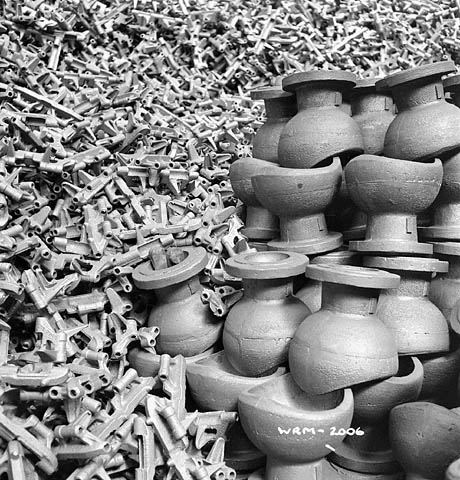
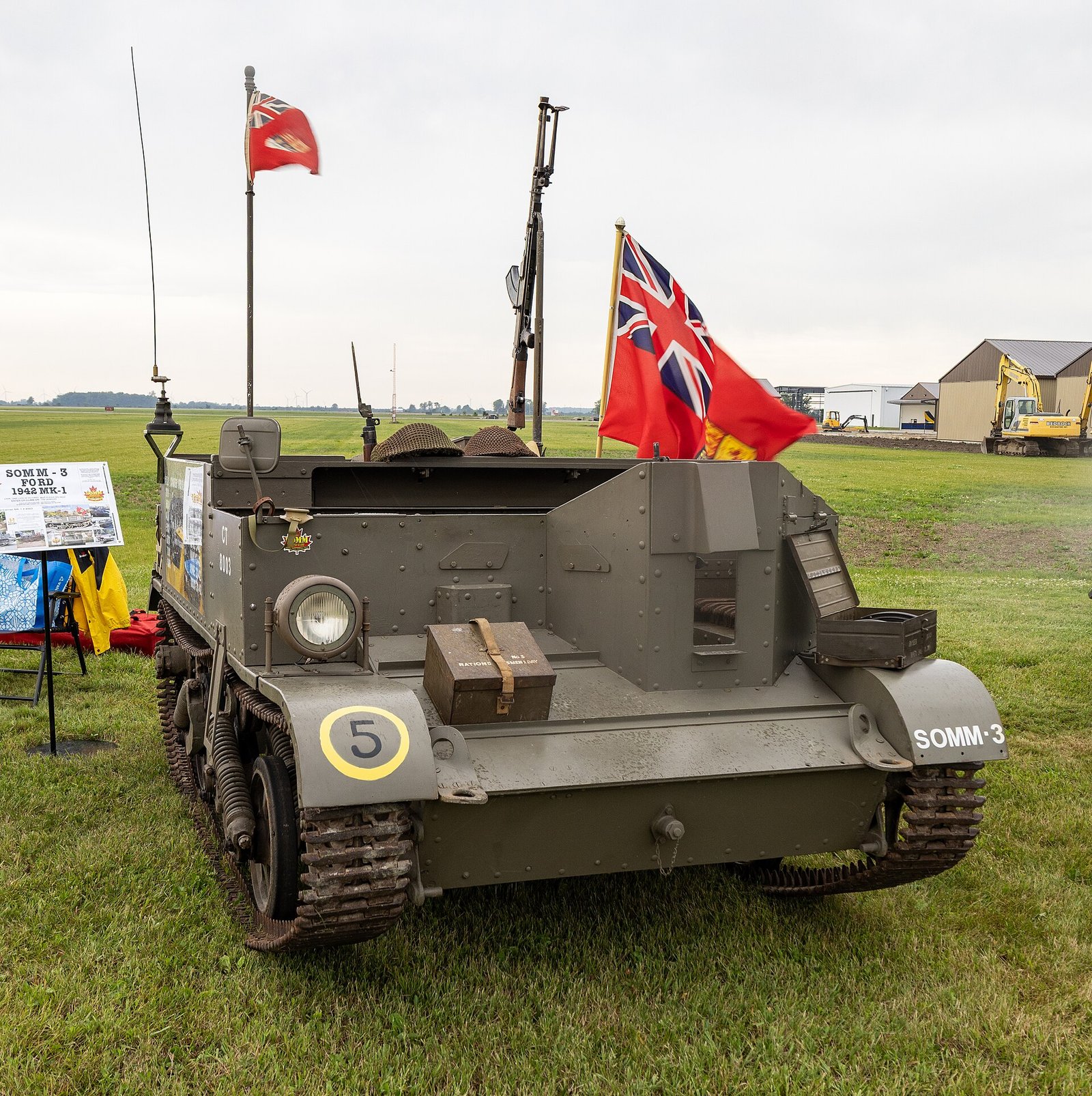
The Canadian War Museum holds a Universal Carrier Mk II built by the Ford Motor Company of Canada in July 1943, and notes that "Ford of Canada and the Dominion Bridge Company made 29,000 Mk II Universal Carriers".16 The museum's own Universal Carrier page says "more than 28,000 were produced in Windsor".17 The two figures do not match, so neither is treated as exact. In the House of Commons on 4 November 1941, C.D. Howe said universal carriers "came into production in the middle of the year, and already over 1,500 have been delivered."18
Ford also built a longer "Windsor Carrier", with "one extra bogie wheel per side", described in the Department of Munitions and Supply's wartime Design Record.19 The full home-front story is in the chronology.
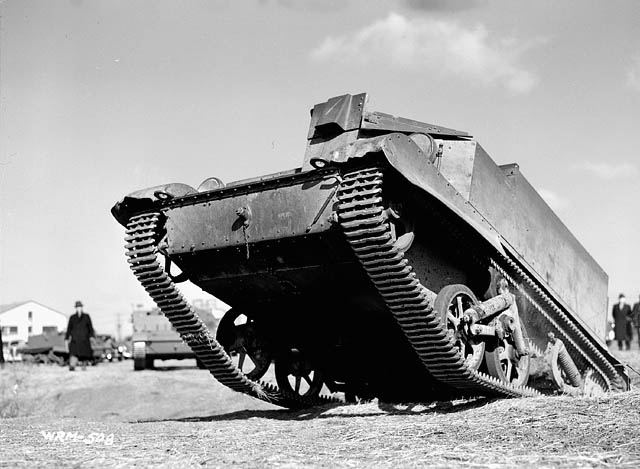
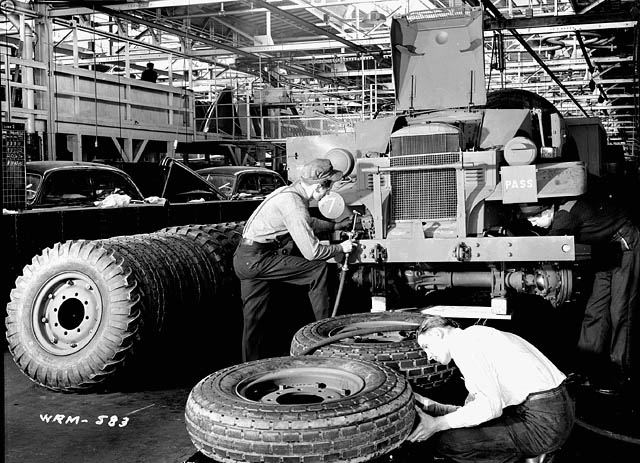
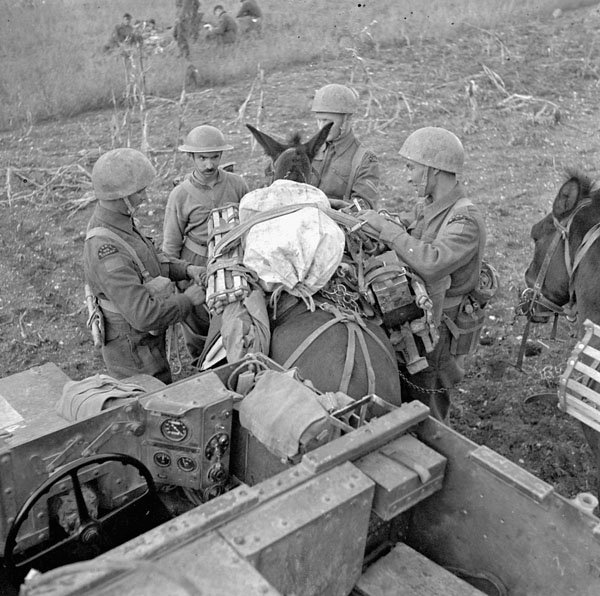
A Universal Carrier is driven up a test slope at the Ford Motor Company of Canada, Windsor, March 1941. National Film Board of Canada. Photothèque / Library and Archives Canada (MIKAN 3195684). Public domain. Source recordWorkers on a military vehicle assembly line, Ford Motor Company of Canada, Windsor, March 1941. LAC titles the frame Universal Carriers; the vehicle shown is a wheeled truck. National Film Board of Canada. Photothèque / Library and Archives Canada (MIKAN 3195715). Public domain. Source recordRough castings of Universal Carrier track links beside steering knuckles, Ford plant, Windsor, 2 July 1942. Nicholas Morant / National Film Board of Canada. Library and Archives Canada (MIKAN 3196094). Public domain.Unidentified Canadian soldiers with their Universal Carrier and a mule carrying supplies, Italy, 9 to 18 October 1943. Where this carrier was built is not recorded. Capt. Alex M. Stirton / Canada. Dept. of National Defence / Library and Archives Canada, via Wikimedia Commons. Public domain. Source fileA 1942 Ford Universal Carrier Mk1 on show at Military Heritage Day, Chatham, Ontario, 21 June 2025. The file title names Ford; the plant where it was built is not stated. Chris Woodrich (Crisco 1492), via Wikimedia Commons. CC BY-SA 4.0. Source file
Dieppe, 19 August 1942
A list of Windsor-Essex people tied to Dieppe, and to the other City poppy streets, is at Windsor's poppy streets, Dieppe. Photographs already on this page are not repeated there.
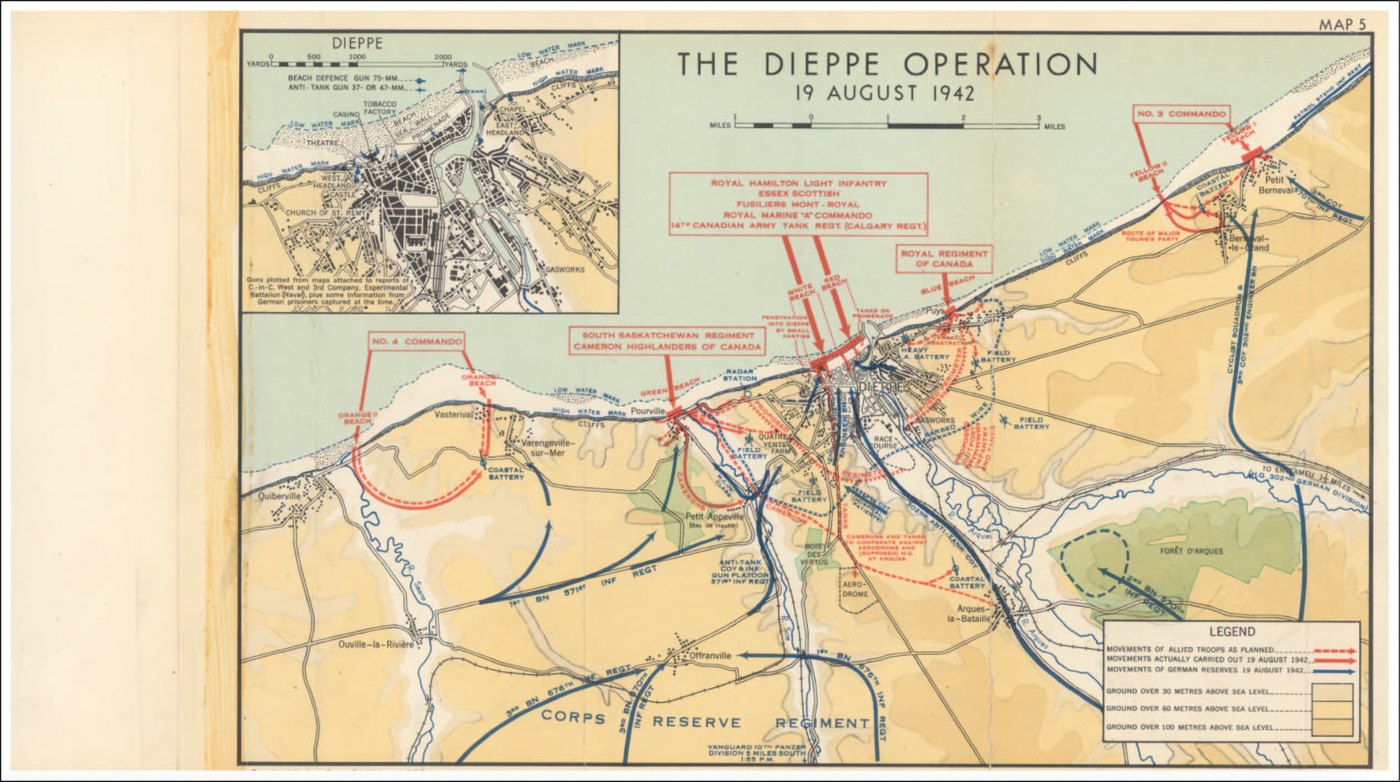
The Essex Scottish sailed for Britain in July 1940 and "took part in the raid on Dieppe on 19 August 1942."1 They landed on Red Beach, in front of the town. The official historian, C.P. Stacey, wrote that "out of 553 all ranks, it brought back only 52, of whom 28 were wounded."3 The regimental association gives different figures for killed and captured, so no combined total is given here.20 Among the men who returned was Pte George Edmond Marchant, a stretcher bearer, later remembered by his family as a medical sergeant. He was awarded the Military Medal for the raid. His profile is in People, below.646769
Stacey also recorded that only one party of the battalion got across the Promenade: "about a dozen men led by C.S.M. Cornelius Stapleton". An exaggerated report of that progress, "Essex Scottish across the beaches and in houses", was "responsible for his decision to land the floating reserve".3 The battalion's war diary, the awards and the story of Private Mick Gleason are in the chronology and on his profile. That Christmas, Windsor's Mayor Arthur J. Reaume sent the battalion a greeting: "Our gallant Essex Scottish Regiment has written its name gloriously upon the sands of Dieppe."21
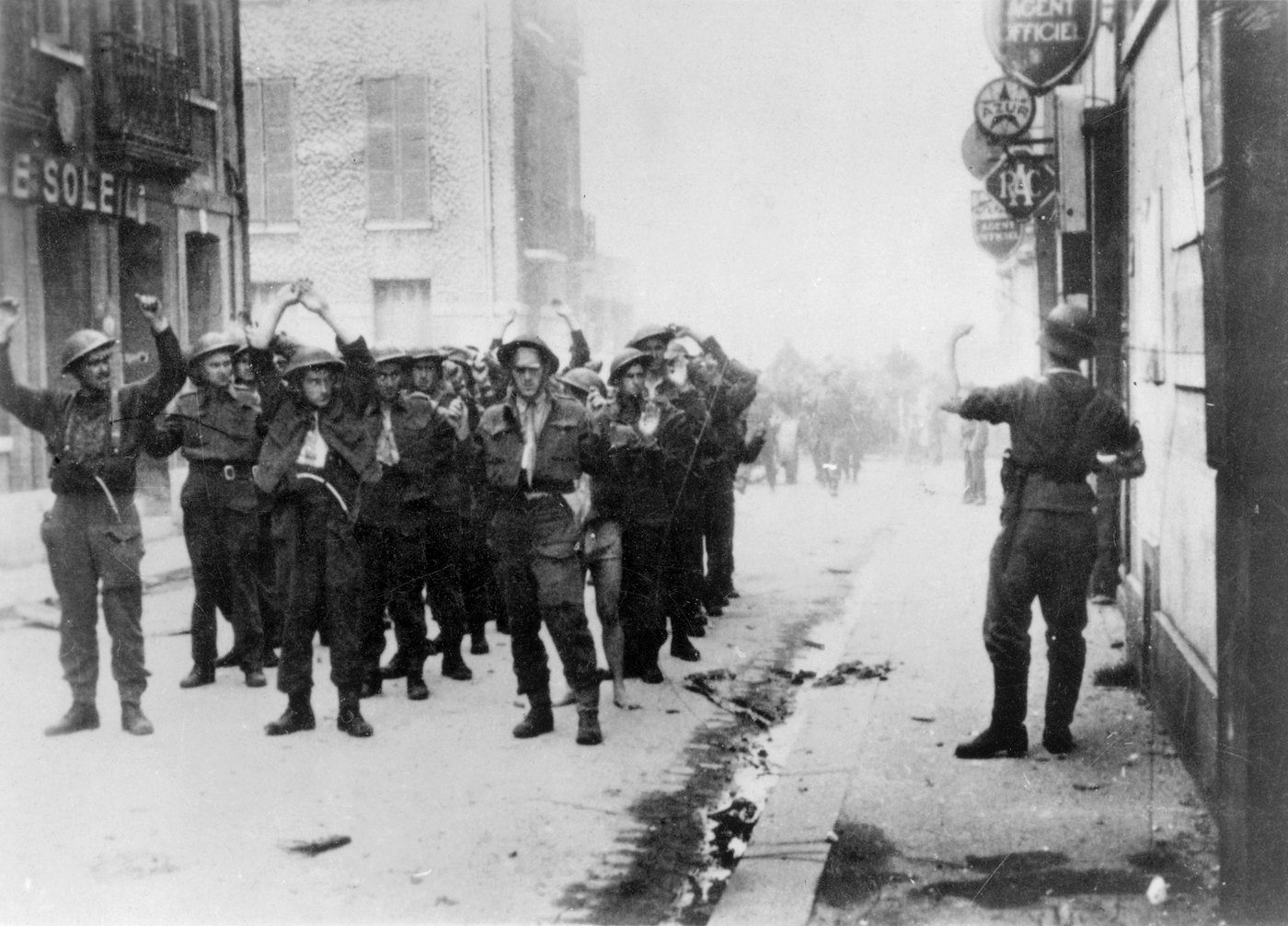
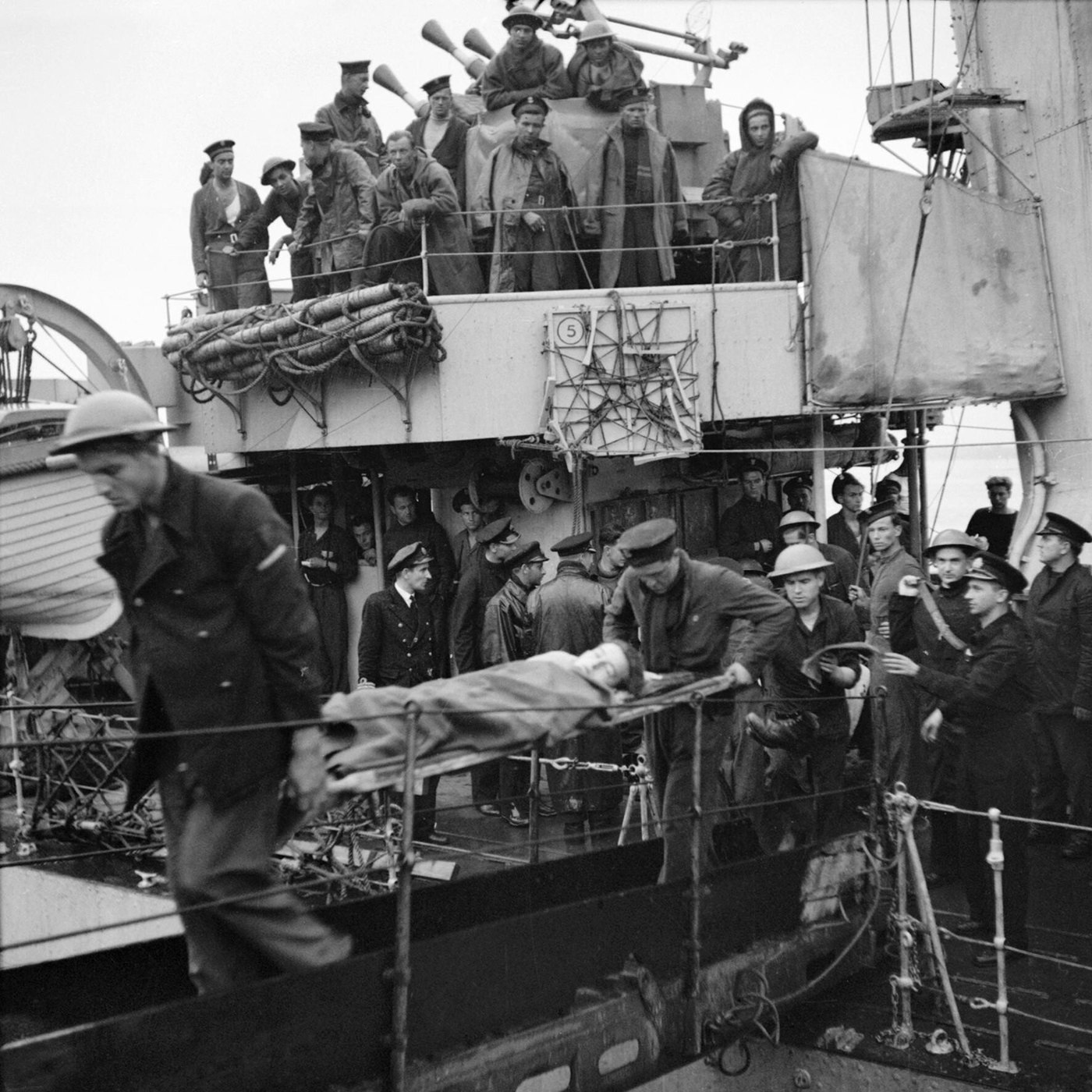
Unidentified infantrymen of the Essex Scottish Regiment who took part in the Dieppe raid, after their return to England, 23 August 1942. Capt. W.G. Abel / Canada. Dept. of National Defence / Library and Archives Canada / PA-189474. Public domain.The Dieppe Operation, 19 August 1942. The Essex Scottish landed on Red Beach. Map by Capt. C.C.J. Bond, from C.P. Stacey, Six Years of War (Ottawa, 1955). Public domain (Crown copyright expired). Source fileCanadian prisoners of war are marched through Dieppe, 19 August 1942. The men are not identified. Photographer unknown. Library and Archives Canada, C-014171. Public domain. Source fileA wounded Canadian soldier is landed at Portsmouth from the Polish destroyer ORP Ślązak on his return from Dieppe, 19 August 1942. His unit is not recorded. Sgt A.W.P. Wooldridge. Imperial War Museums H 22637. Public domain. Source file
Northwest Europe, 1944 to 1945
Rebuilt in England, the battalion "landed again in France on 5 July 1944, as part of the 4th Infantry Brigade, 2nd Canadian Infantry Division, and it continued to fight in North-West Europe until the end of the war."1
Verrières Ridge, 20 to 21 July 1944. The official history counts 244 Essex Scottish casualties in Operation Atlantic, 37 of them fatal.2223
The Goch-Calcar road, 19 to 20 February 1945. Parts of the battalion were overrun, and its headquarters held out in a farmhouse cellar until the line was restored.2425
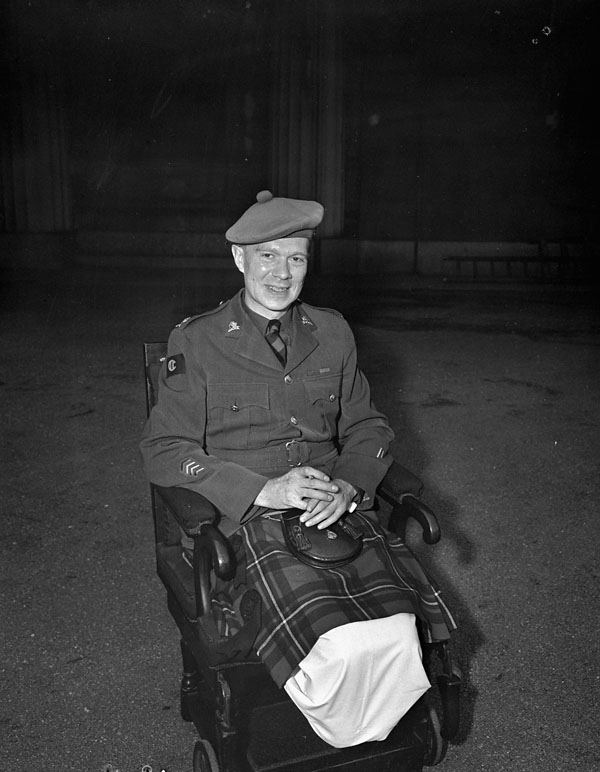
The Hochwald, 1 March 1945. The action for which Maj. F.A. Tilston received the Victoria Cross.264
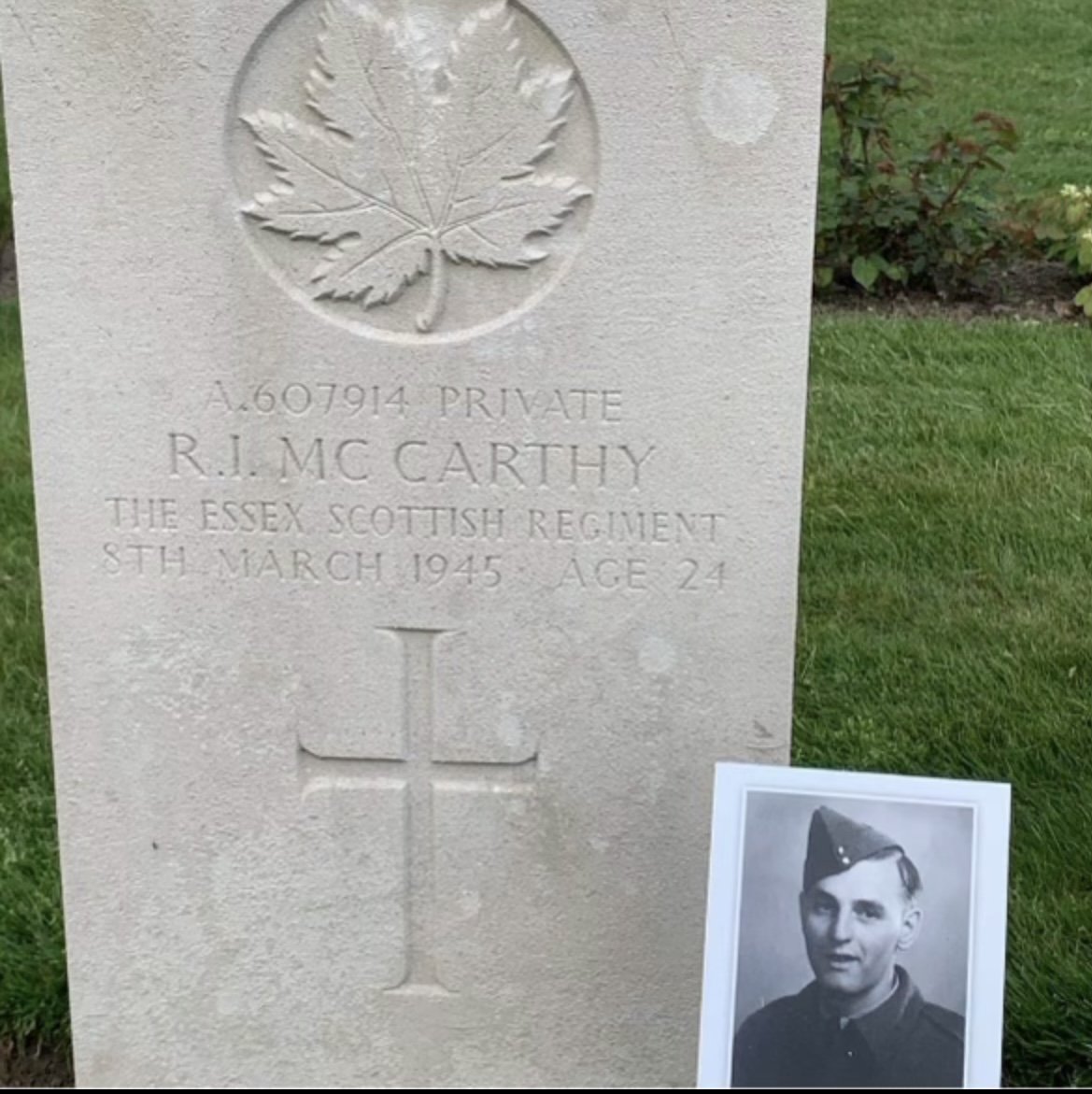
Toward Xanten, 8 March 1945. The battalion advanced through Roschof and cleared farmhouses between the railways. Private Ray Ivan McCarthy died that day.2627
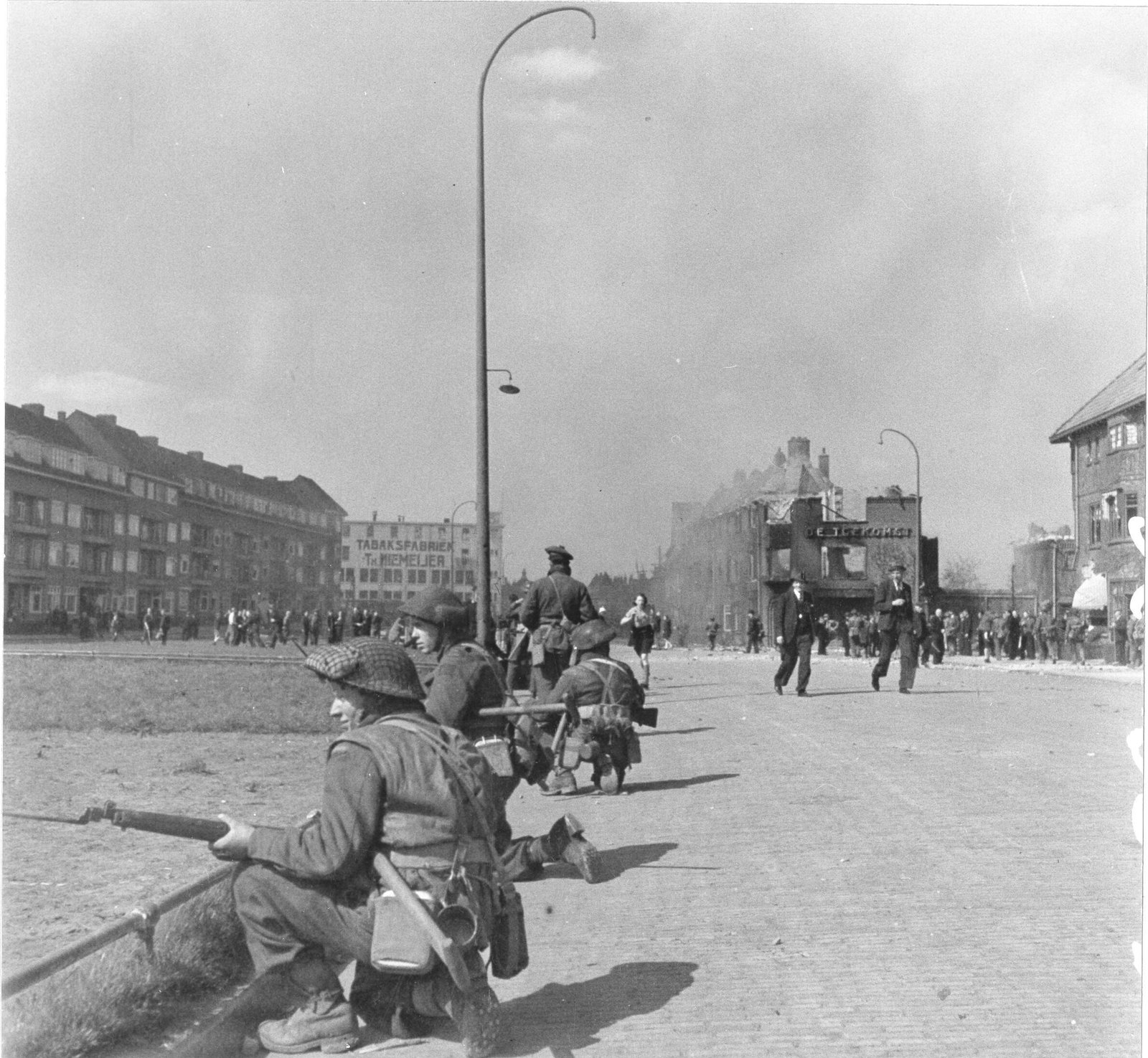
Groningen, April 1945, and the advance toward Oldenburg at the end of the war.2829
Some sources say the Essex Scottish had more casualties than any other Canadian regiment of the war. That has not been checked against the official casualty returns, so it is not repeated as fact. The full account is in the chronology.
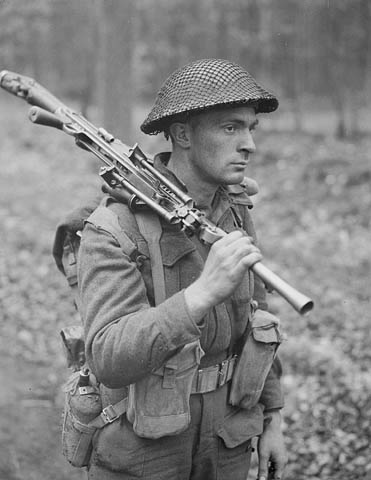
Maj. Frederick A. Tilston, Essex Scottish Regiment, at his Victoria Cross investiture, Buckingham Palace, 22 June 1945. Lieut. Arthur L. Cole / Canada. Dept. of National Defence / Library and Archives Canada / PA-189620. Public domain. Source recordInfantrymen of the Essex Scottish on the Paterswoldseweg, Groningen, 14 April 1945. Public Archives Canada; Beeldbank Groningen. Public domain. Source recordThe pipe band of the Essex Scottish crossing the Herebrug, which the regiment had captured, Groningen, 17 April 1945. Daniel Guravich / Library and Archives Canada / PA-130999. Public domain. Source recordKit of the period: Pte H.E. Goddard of The Perth Regiment with a Bren gun, north of Arnhem, 15 April 1945. Not a Windsor regiment. Capt. Jack H. Smith / Canada. Dept. of National Defence / Library and Archives Canada / PA-166370. Public domain. Source record
In Italy, 1944
Two official British Army photographs name local men who served in Italy with other units, not with the Essex Scottish. The Essex Scottish fought in Northwest Europe.
Pte T.V. Gibson of La Salle, near Ortona, 12 January 1944. The official caption card, marked passed as censored, reads: "Pte. T.V. Gibson of La Salle, Nr. Windsor, Ontario, a stretcher-bearer, places a crucifix on the grave of a fellow-countryman, buried in what was once a garden. San Nicola nr. Ortona." Taken by Sgt Jim Christie, No. 2 Army Film and Photo Section, AFPU, on 12 January 1944. Imperial War Museums, NA 10835. Public domain (UK Crown copyright expired). Shown at the size of the IWM catalogue scan. Source recordSapper C.P. Cupryniak of Windsor, Ortona area, 28 January 1944. The official caption card, marked passed as censored, identifies Spr. C.P. Cupryniak of Windsor, Ontario, Royal Canadian Engineers, 1st Canadian Division, in the Ortona area, taken by Sgt Jim Christie on 28 January 1944. The initials and date follow that wartime card; the IWM webpage gives different initials and a different day. Imperial War Museums, NA 11562. Public domain (UK Crown copyright expired). Shown at the size of the IWM catalogue scan. Source record
Korea, peacekeeping and Afghanistan
The Canadian Virtual War Memorial records eight soldiers with a Windsor-Essex link who died in or after the Korean War. Local reports put the number at seven; the count is not reconciled (chronology).3031
Peacekeeping: Cpl John Marc Henry Béchard, 2nd Battalion PPCLI, born in Leamington and enlisted in Windsor, died on 6 August 1993 while serving with UNPROFOR.40 Jeffrey Dennis Hamelin, born in Windsor, served in Bosnia in 1998 and Kosovo in 1999 to 2000, and later with the Essex and Kent Scottish.41 Michael Feyko, also Windsor-born, served in Cyprus and Somalia.42
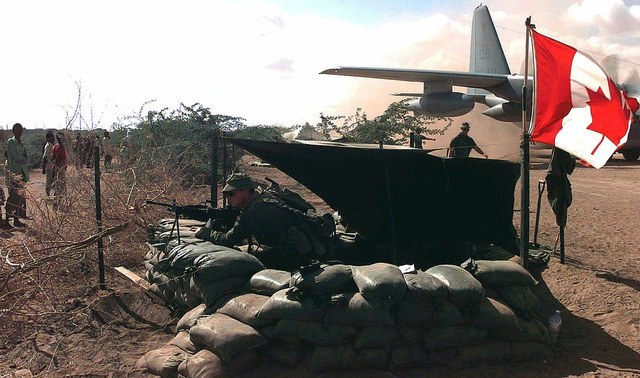
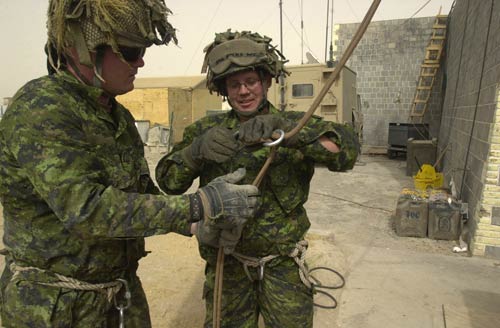
Afghanistan: the official lineages say both Windsor regiments "reinforced various CAF units deployed to Afghanistan" from 2002 to 2014, and both carry the theatre honour AFGHANISTAN.125 Cpl Andrew Paul Grenon, 2nd Battalion PPCLI, born in Windsor, was killed in Zharey district on 3 September 2008.4344 The Essex and Kent Scottish also records members on Operation UNIFIER (training Ukrainian forces), Operation REASSURANCE in Latvia and Operation IMPACT in Lebanon and Kuwait.45
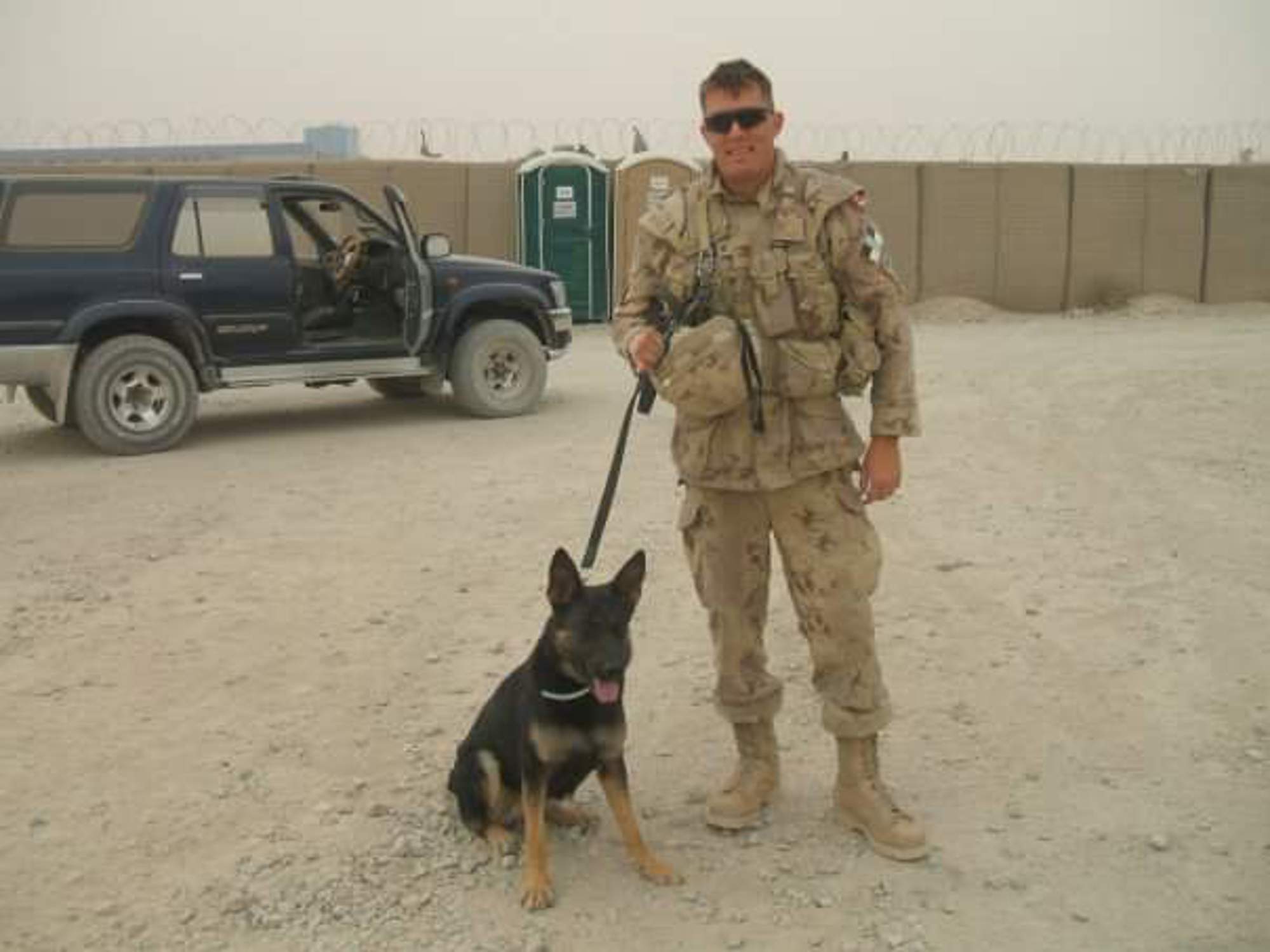
Silver Cross Monument (Croix d'Argent) in Windsor, 4 August 2013. Bohao Zhao, CC BY 3.0, via Wikimedia Commons. A local remembrance monument; not a portrait of any named casualty.A Canadian Forces soldier guarding the entrance to Belet Uen Field, Somalia, 1993. TSgt David McLeod, U.S. Air Force, via the U.S. National Archives. Public domain. Mission context; not identified as a Windsor soldier.Canadian Army training at Kandahar Airport. U.S. Army photo. Public domain. General Afghanistan context; not a portrait of a named local soldier.Corporal James Meloche CD of The Windsor Regiment during his Afghanistan tour, 2008 to 2009. Photo courtesy of James Meloche. Used with his written permission, 9 November 2026. Not under an open licence. Preferred credit pending.
People
Local Army people already researched for the War Chest. Each card links to the full, sourced account. People who died in service are also on the honour roll.
First World War, 18th Battalion
C/S/M Abbott Elmer Ross, DCM
Born in Gosfield in 1891, by a research blog's account, and died in Windsor in 1974. His DCM citation (London Gazette, 26 January 1918) praises his leadership of a bombing party that cleared dug-outs and held a barricade. The date of the action is unresolved.
Col. E. S. Wigle, from History of the Wigle Family and Their Descendants (Kingsville, 1931), figure 5. Public domain.
A Windsor lawyer and mayor in 1905 to 1909 and 1937 to 1938. He took the 18th Battalion overseas in 1915 and commanded it in France until the summer of 1916.
Enlisted at Windsor on 9 September 1916. Later an 18-year employee of the City engineer's department who "served overseas with Canadian Army Construction Battalion".
The battalion roll lists him enlisting at Windsor on 4 December 1916. CBC reports he was the grandfather of the Amherstburg Freedom Museum's vice-president.
Moved to Windsor in 1938 and enlisted in the Essex Scottish in 1939. At Dieppe he led the only party of the battalion known to have got across the Promenade. Taken prisoner. DCM "in recognition of gallant and distinguished services at Dieppe".
Born in Kingsville and a Windsor lawyer, he commanded the Essex Scottish at Dieppe and was a prisoner for three years. DSO for Dieppe; no individual citation has been found.
Official memorial records name Private George Henry Leopold of the Essex Scottish, who died at Dieppe on 19 August 1942, and Sergeant Herbert Arthur Leopold of the RCAF, a pilot who died on 15 November 1941, as sons of George Arthur and Helena Mary Leopold, of Windsor. They were brothers. City directories of the same years also name John W. A. Leopold, listed as a soldier and later back in Windsor at work, and a fourth son at the family home.
Wartime portrait of George (Jim) E. Marchant. Courtesy of the Marchant family.Wartime portraits, uniform and a Dieppe remembrance plaque (the triangular case; his daughter wrote that the flag in the picture was a plaque, not a wartime flag). Courtesy of the Marchant family. The original photograph also included a newspaper clipping, which is not shown.
Known as Jim, and listed as George Edmond Marchant in the London Gazette. His daughter, Vicki Bennett, wrote that he was born in England on 1 August 1921 and that he died on 23 September 2013. A private and stretcher bearer with the Essex Scottish at Dieppe on 19 August 1942, he later recalled landing from tank landing craft TLC 13 and being the only man from that craft to come back. Awarded the Military Medal for the raid, service number A.21531. Bennett wrote that he was a medical sergeant, served for the duration of the war, and rarely spoke of it, and that he was most proud of that medal from King George VI. She also wrote that the family was always proud of him, and that he never felt like a hero: that title, she wrote, was always for his comrades and the ones left behind. The Town of Essex local veterans page gives his service as 1939 to 1945, says he was wounded at Dieppe, and says he later lived in or near Essex. A service file has not been read.
A Windsor sales manager before the war. Wounded three times leading his company into the Hochwald on 1 March 1945. The Sandwich Street armoury bears his name.
The family identifies Amos Henry Thomas as the man in the kilt on the left. The man on the right, in an air force uniform, is not yet identified. Courtesy of Louise Moss.
Born on Walpole Island. He lived in Wheatley. He married Hendrika de Lange. He died on 11 October 1996 and is buried at Evergreen Memorial Park in Leamington.
According to a family eulogy, he served in the Second World War with the Irish Regiment of Canada and was wounded.
Grew up in Amherstburg and later lived in Windsor. CBC reports he joined the Essex Scottish in 1940, then the Royal Canadian Regiment, and was with the Devil's Brigade in Italy in 1944.
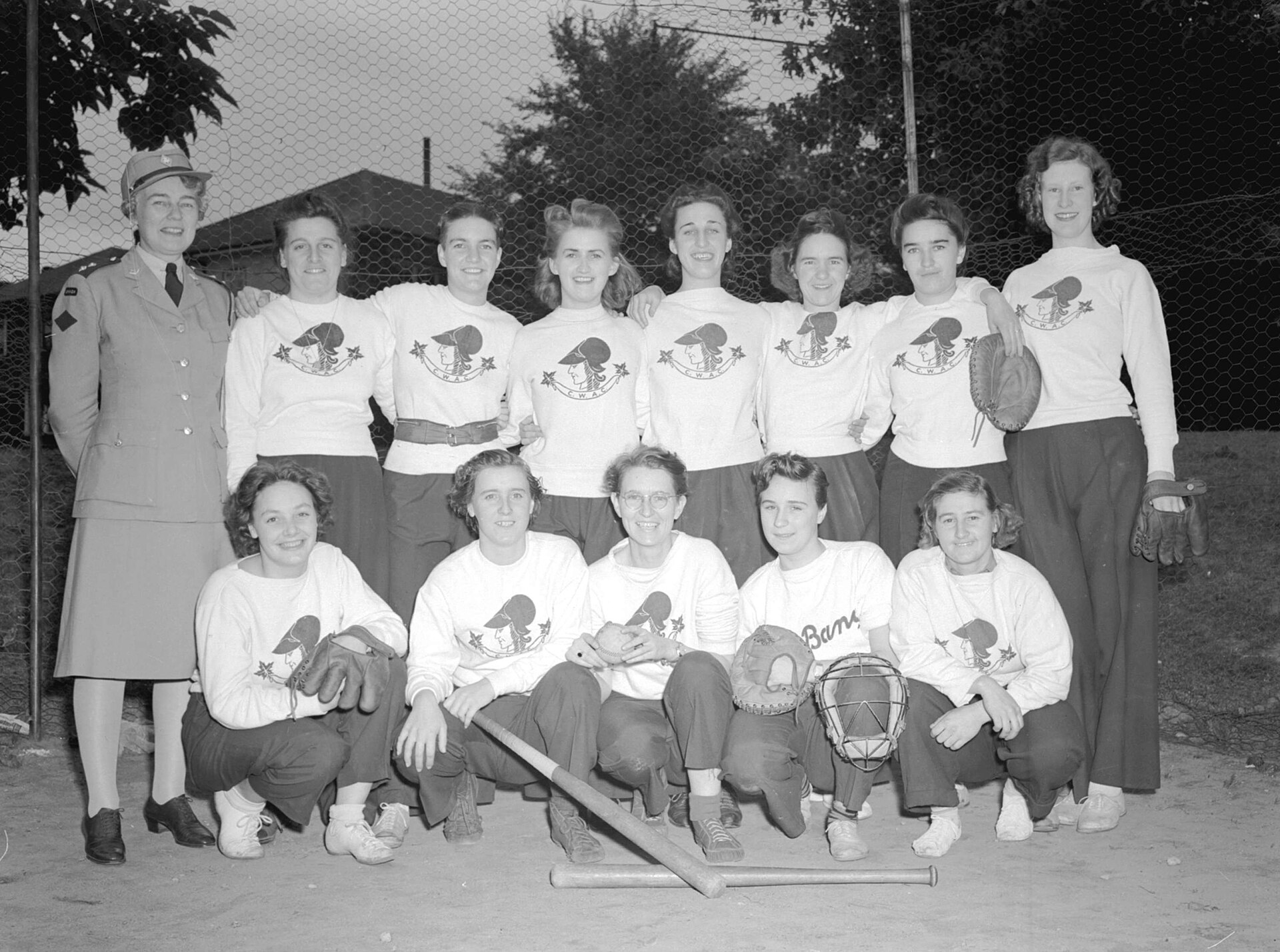
James Maxwell "Mick" Gleason in his Essex Scottish bonnet and medals. Courtesy of the Gleason family. Not under an open licence.The headstone of Pte Ray Ivan McCarthy at Groesbeek Canadian War Cemetery. Courtesy of Holly Brush, his great-niece. Used with her written permission, 10 November 2026. Not under an open licence; please ask the family before any reuse.Canadian Women's Army Corps baseball team, 1943. Don Coltman / Colmer Steffens. Public domain. Service context; the women are not identified as being from Windsor.
Those who served: a starting list
How this list was madeThese Army veterans are listed on the Town of LaSalle's Local Veterans pages, which publish stories submitted by veterans and families; the Town says it makes efforts to verify them. Only service facts and the local link are shown. It is a start, not a complete roll. People on the cards above are not repeated. Corrections and new names are welcome.62
Search this list:
Name
Service, as recorded
Local link, as recorded
Gilbert "Gil" Maure
First World War veteran
Born in Pain Court, 1897; settled in LaSalle in 1934; died 1970
Bernard Alexander Adam
Private, The Royal Canadian Regiment; died of wounds in Italy, 7 September 1944
Adam family of Windsor and LaSalle; on the honour roll
Wilfrid Adam
Private, Essex Tank Regiment (Reserve) from 1940; to England 1943; then the Essex Scottish in Europe
Brother of Bernard, Bruno and Philip
Bruno Adam
Kent Regiment, Canadian Active Service Force, from 14 August 1940; wounded by shrapnel
Brother of Bernard, Wilfrid and Philip
Philip Adam
Air force cook for a year, then the army for eight months
Brother of Bernard, Wilfrid and Bruno; died 1966
Donald Hearn
Trooper, Second World War, at age 15
Town of LaSalle Local Veterans
Willis H. "Bill" Ingram
Cipher operator, Royal Canadian Corps of Signals, 4th Canadian Armoured Division; in Europe from March 1943
Town of LaSalle Local Veterans
Ralph Munholland, M.D. (Ret.)
Enlisted August 1942; rose to Lieutenant; tank squadron at Petawawa
Town of LaSalle Local Veterans
Leon "Leo" Paré
Private, Highland Light Infantry of Canada; killed 4 April 1945
Family farm in the Petite Côte area, now LaSalle; on the honour roll
Marc J. Renaud
Highland Light Infantry, 1942 to 1945
Family farm on Front Road, LaSalle; born 1920; died 1989
Leonard Robinet
Sergeant, Algonquin Regiment; instructor in England, then fought with his regiment in Europe
Town of LaSalle Local Veterans
Donald E. Sharon
Royal Canadian Armoured Corps overseas; later Captain
Town of LaSalle Local Veterans
Eugene and Margaret Dupuis
Both served overseas and married while serving; branch not stated
Lived on Victory Street, LaSalle, for nearly 70 years
William "Bill" Thomas
Private, Canadian Army, from 1954; Korea
Later 30 years with the Windsor Police Service
Amos Henry Thomas
Second World War; a family eulogy says the Irish Regiment of Canada, and that he was wounded
Lived in Wheatley; buried at Evergreen Memorial Park, Leamington; born on Walpole Island
John Smyth
Canadian Army Regular Force from 1952, about 13 years; parachutist; UN service in the Middle East and the Belgian Congo
Town of LaSalle Local Veterans
Robert "Bob" Desjardins
Corporal, Royal Canadian Electrical and Mechanical Engineers; retired 1964
Métis veteran; Town of LaSalle Local Veterans
Leonard Gallant
Rifleman, Queen's Own Rifles of Canada; four years in Germany
Town of LaSalle Local Veterans
Armand Rock
Windsor Regiment; enlisted at 17
Lives in LaSalle, per the Town
Robert Shepley
Canadian Army from 1961; marksman and instructor
Born in Gesto (now Essex), 1943
The same list, with its context, is in the chronology. The Essex and Kent Scottish also publishes a list of members' overseas tours since 2008; it gives no hometowns, so its names are not repeated here.45
The Army roll of those who died
A separate page, the Army roll, lists 517 soldiers whose Canadian Virtual War Memorial record places them in Windsor or Essex County (194 from the First World War, 308 from the Second and 15 since 1947), with 94 more held for checking and 219 who enlisted at Windsor but whose record gives a home elsewhere or none. Each row links to its record. It is searchable by name, unit, town and cemetery.
Medals and awards
Medals named on this page, shown from museum, government and collector photographs. These are examples of each medal, not the medals of the people named.
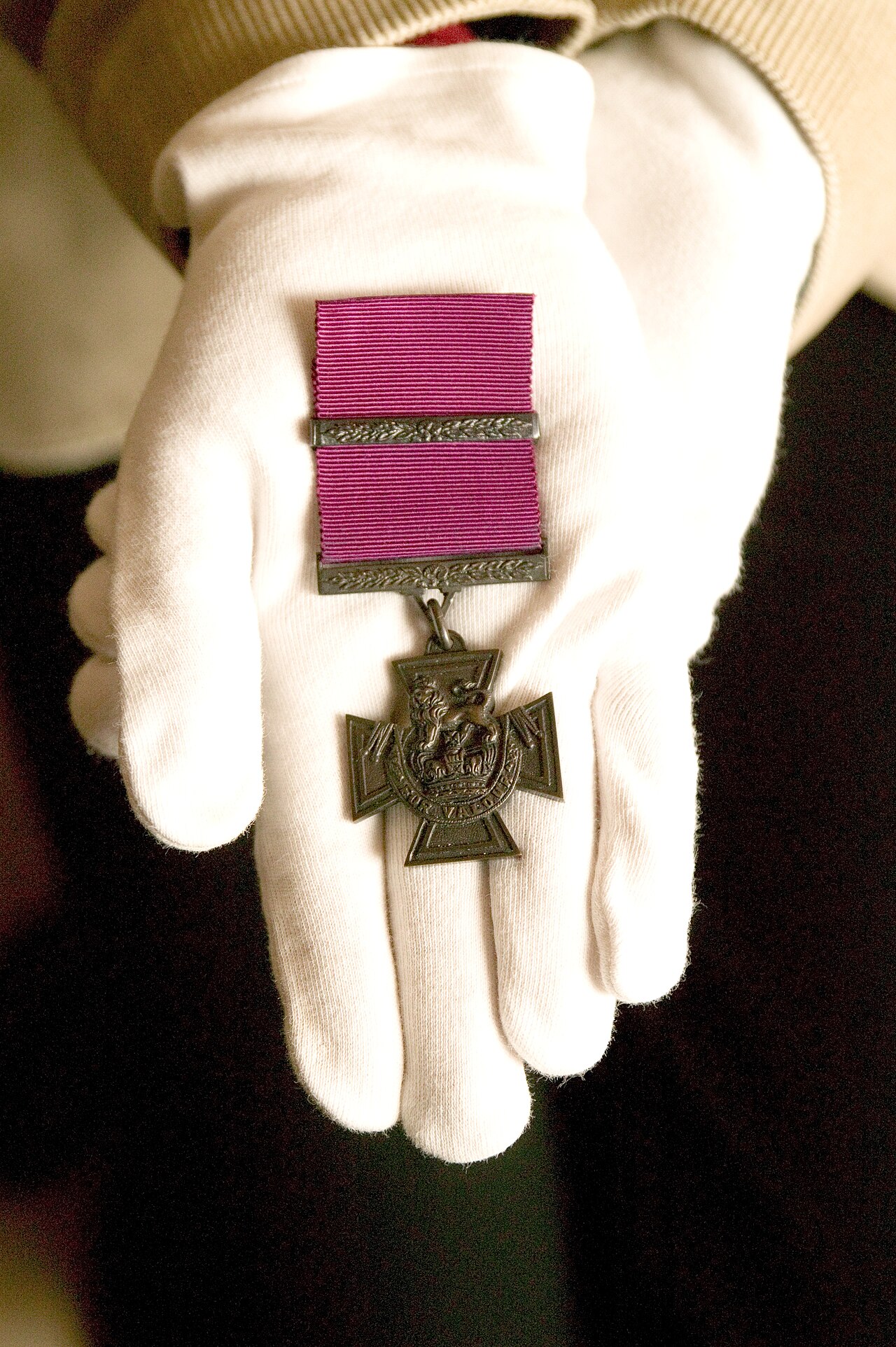
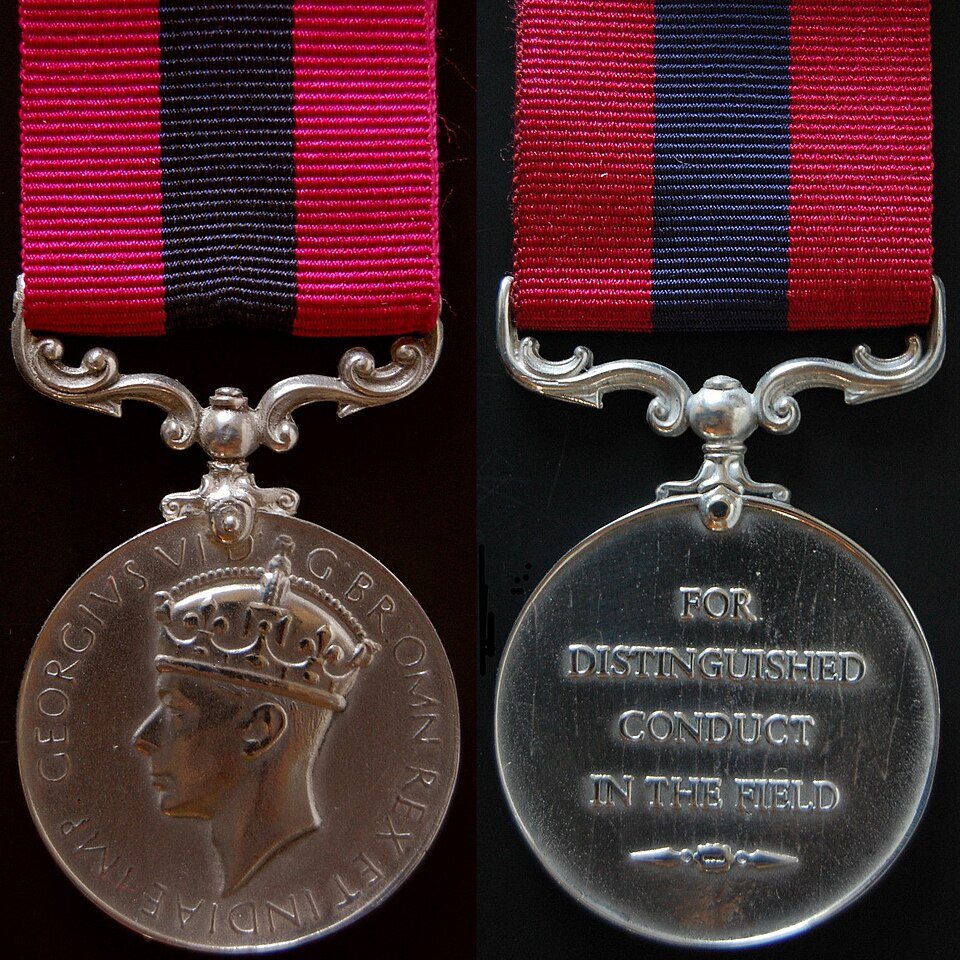
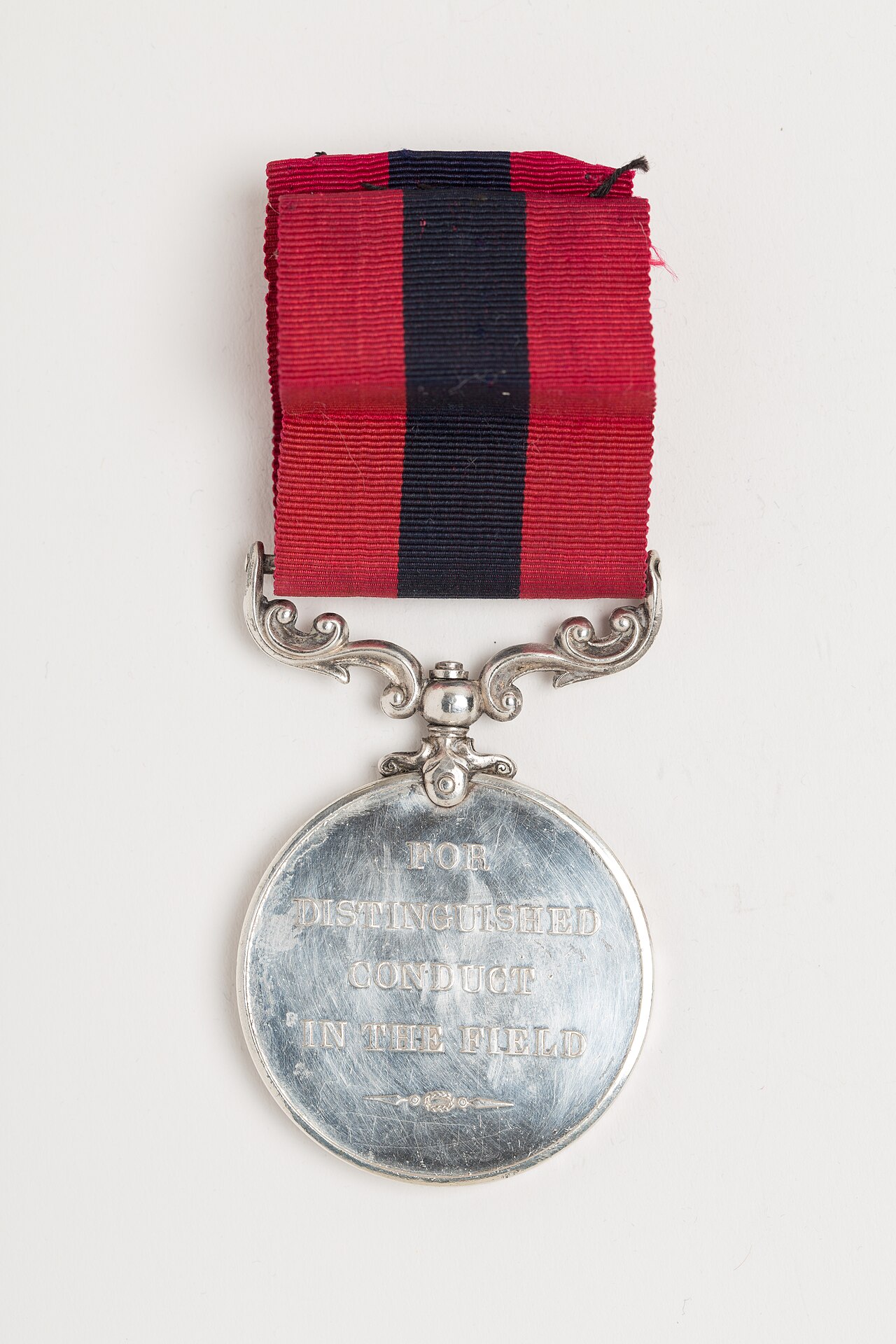
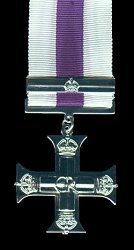
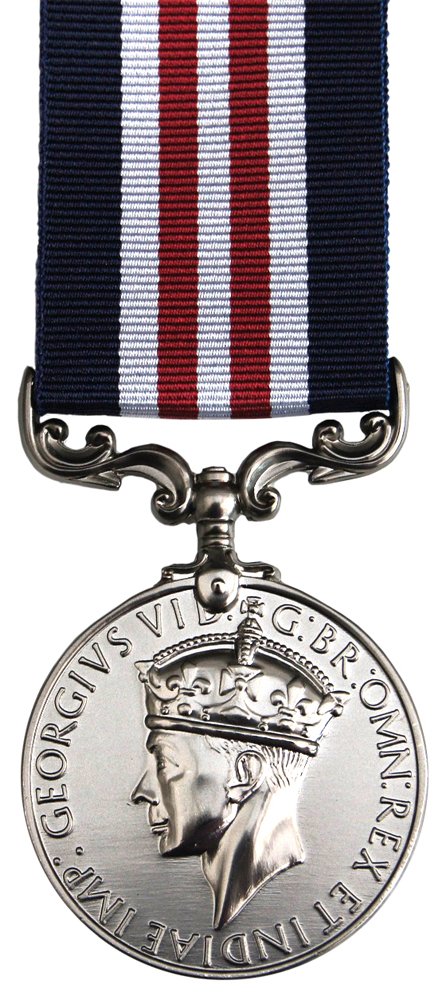
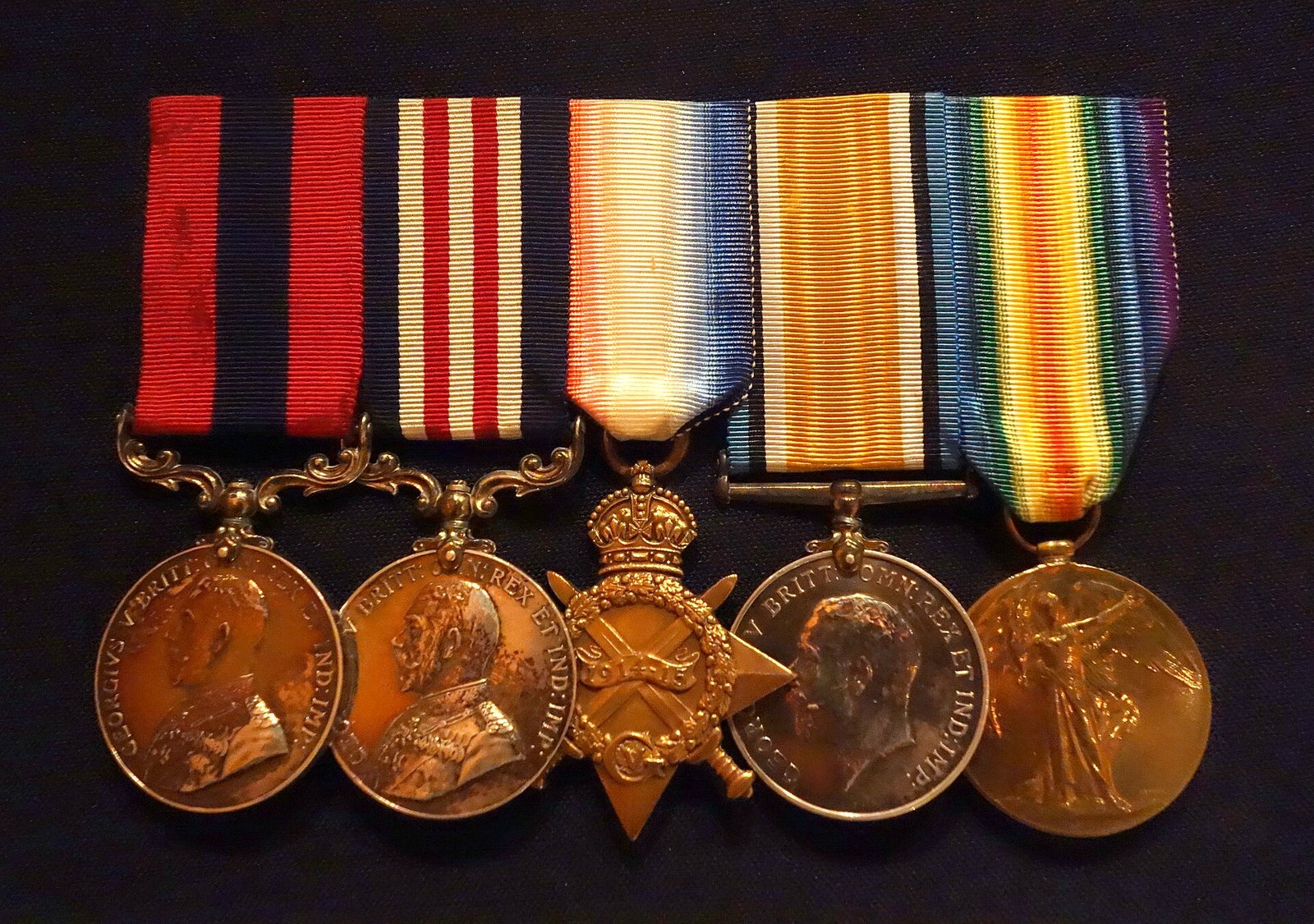
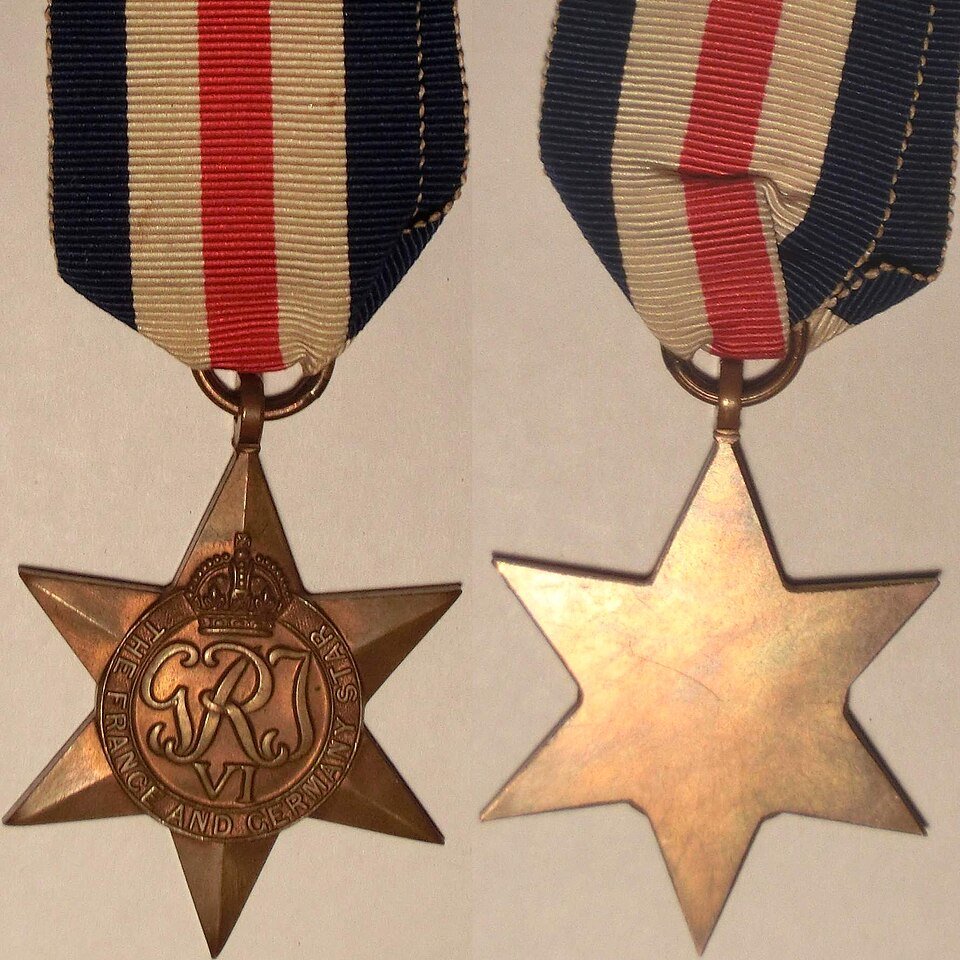
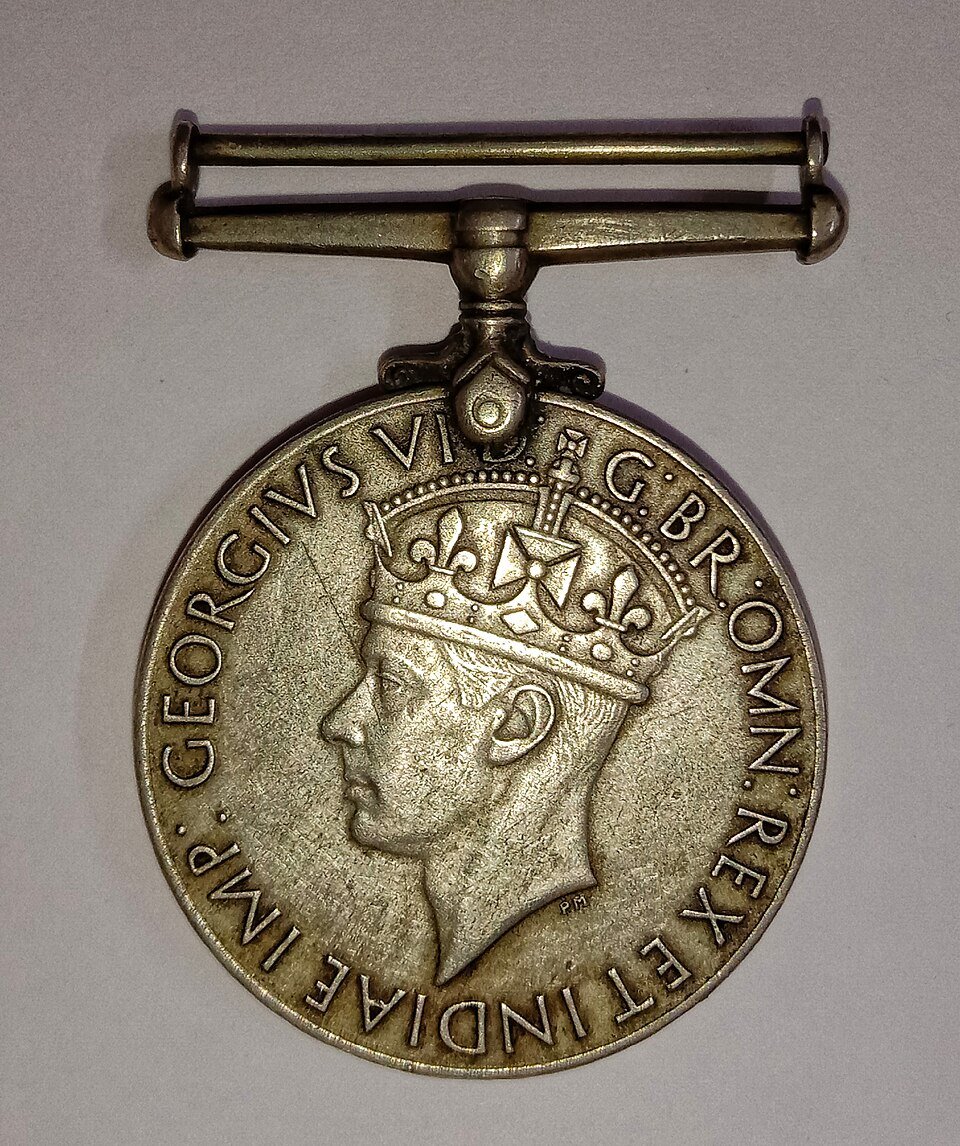
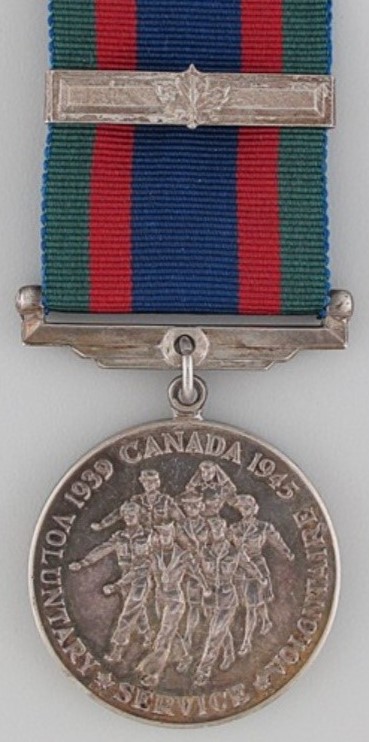
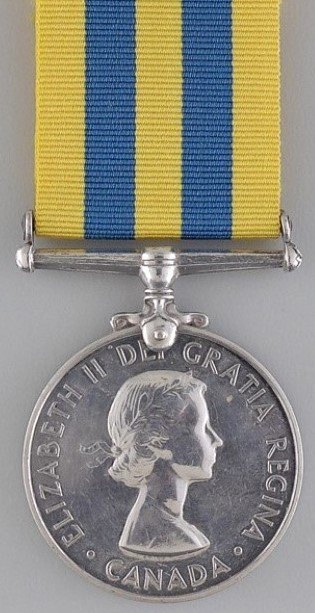
The Victoria Cross. Maj. F.A. Tilston of the Essex Scottish received it for the Hochwald, 1 March 1945.4 Specimen photo: Mike Weston ABIPP / UK Ministry of Defence, Open Government Licence v1.0. Source fileThe Distinguished Conduct Medal (George VI). CSM Cornelius Stapleton and Pte J. Maier of the Essex Scottish received it for Dieppe.5464 Public domain. Source fileThe Distinguished Conduct Medal (George V), the type C/S/M Abbott Ross of the 18th Battalion received in 1918.46 This museum example was awarded to another soldier. Auckland War Memorial Museum, CC BY 4.0. Source fileThe Military Cross (George VI). Capt. D.F. MacRae and Capt. H.J. Kennedy received it for Dieppe with the Essex Scottish.64 Image: Megan C. Robertson. CC BY-SA 3.0. Source fileThe Military Medal (George VI). Seven Essex Scottish soldiers received it for Dieppe: Hussey, Dixon, Carle, Baker, De Laurier, Marchant and Mizon, as the London Gazette lists them.64 Public domain. Source fileA First World War group: the DCM, Military Medal, 1914-15 Star, British War Medal and Victory Medal of Acting Cpl Robert Coates, 10th Battalion. Not a local soldier; shown as the kinds of medals the 18th Battalion's men received. Glenbow Museum. Photo: Daderot. CC0 (public domain dedication). Source fileThe France and Germany Star, for service in Northwest Europe from June 1944, where the Essex Scottish fought. Public domain. Source fileThe War Medal 1939-1945. Photo: Billjones94. CC BY-SA 4.0. Source fileThe Canadian Volunteer Service Medal, with the overseas clasp. Not attributed to any one person. Hsq7278, CC BY-SA 4.0. Source fileThe Korea Medal, Canadian version. Photo: Hsq7278, CC BY-SA 4.0. Source file
Not pictured: the Distinguished Service Order, gazetted to Lt-Col F.K. Jasperson for Dieppe,54 and the Sacrifice Medal, awarded to Cpl Andrew Grenon after his death.43 We did not find a free photograph of either that we could clear.
Patches and badges
The regimental cap badges of the Essex Scottish, the Essex and Kent Scottish and the Windsor Regiment are described here, not shown. The official images are Crown material without an open licence, and copies on badge-collector sites have doubtful rights, so the patches gallery does not show them either. We did not redraw them.
The Essex and Kent Scottish: "On a shield Gules fimbriated Or three seaxes in pale points to the sinister, in base a horse forcene Argent", inside a red scroll topped by a gold lion's head and binding two thistles. The seaxes refer to the arms of Essex in England; the white horse is from the arms of Kent.1
The Windsor Regiment (RCAC): "Two carbines in saltire muzzles upwards triggers inwards proper, surmounted by a tank Argent ensigned by the Royal Crown proper", with a blue scroll reading THE WINDSOR REGIMENT. The tank stands for the regiment's start as an infantry tank unit.2
What can be shown are the formation patches and signs local soldiers wore or saw, already cleared for the patches gallery.
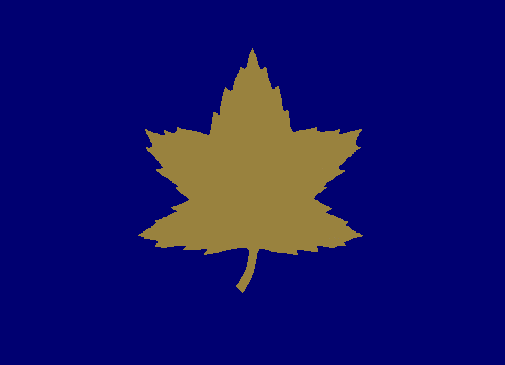
2nd Canadian Infantry Division formation patch: the division of the 18th Battalion in the First World War and of the Essex Scottish in the Second. A modern flat drawing; the blue is approximate. Public domain. More in the patches gallery.2nd Canadian Infantry Division vehicle formation sign. A modern reconstruction, not a surviving sign. BFCockburn, via Wikimedia Commons. Public domain. Source fileFirst Special Service Force shoulder sleeve insignia, for Ralph Mayville's unit. A modern drawing; not his own patch. U.S. Army Institute of Heraldry. Public domain. Source fileShoulder insignia detail from Maj. F.A. Tilston's investiture photograph, 1945 (LAC PA-189620, detail). The letters and pattern cannot be read at this size, so the pattern is not named. Public domain.
Official cap badges of the local regiments are still not shown here, for the rights reasons set out above. This official First World War photograph of a badge sheet can be shown. It includes the 241st Battalion (Canadian Scottish Borderers).
Canadian infantry cap badges, including the 241st Battalion. The sheet is labelled Infantry and includes, at top right, a badge captioned "241st Battalion Canadian Scottish Borderers." The 241st was raised in the Windsor area. The other badges on the sheet are other CEF battalions, not Windsor units. Imperial War Museums, Q 61453. Public domain (UK Crown copyright expired). Source record
Posters
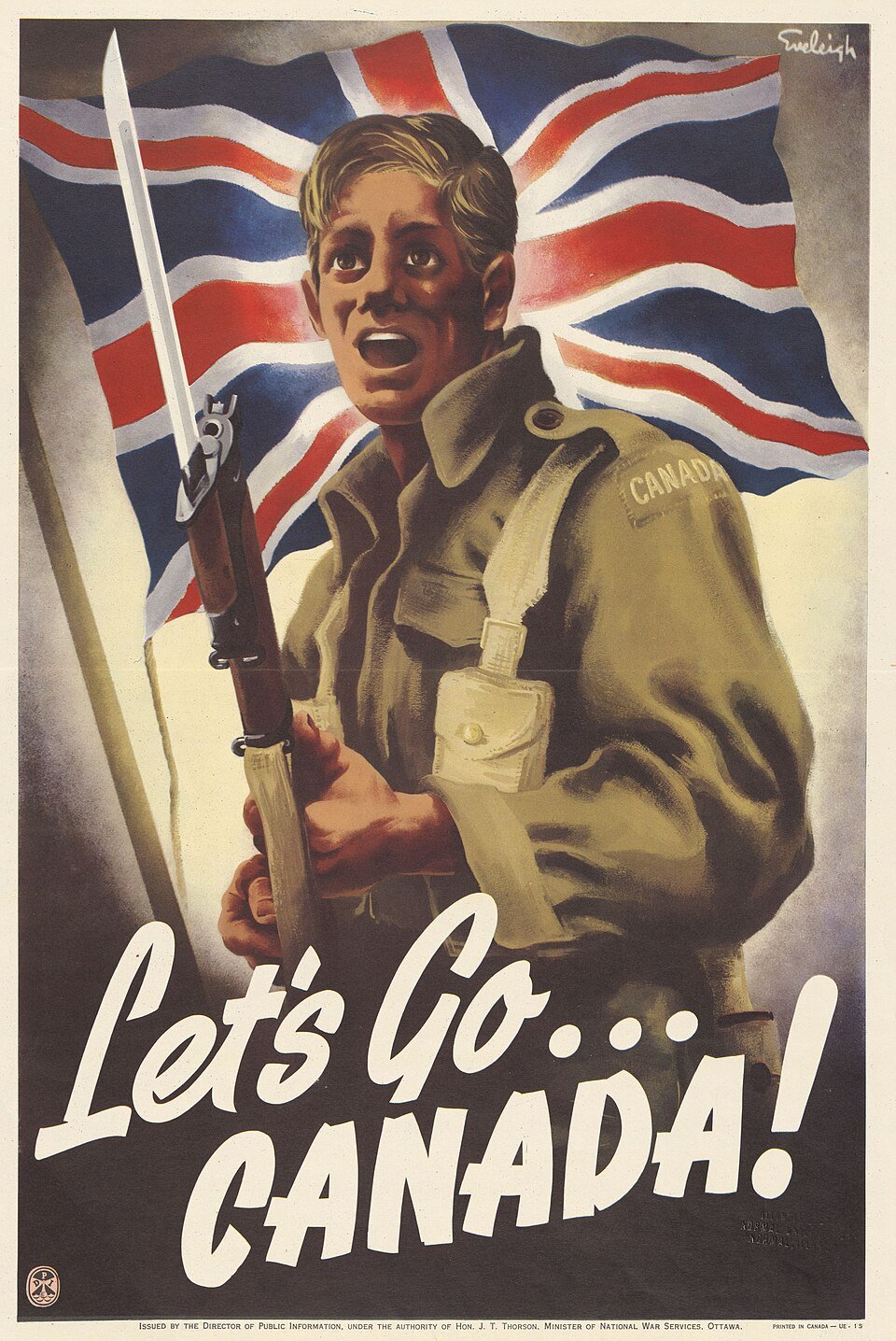
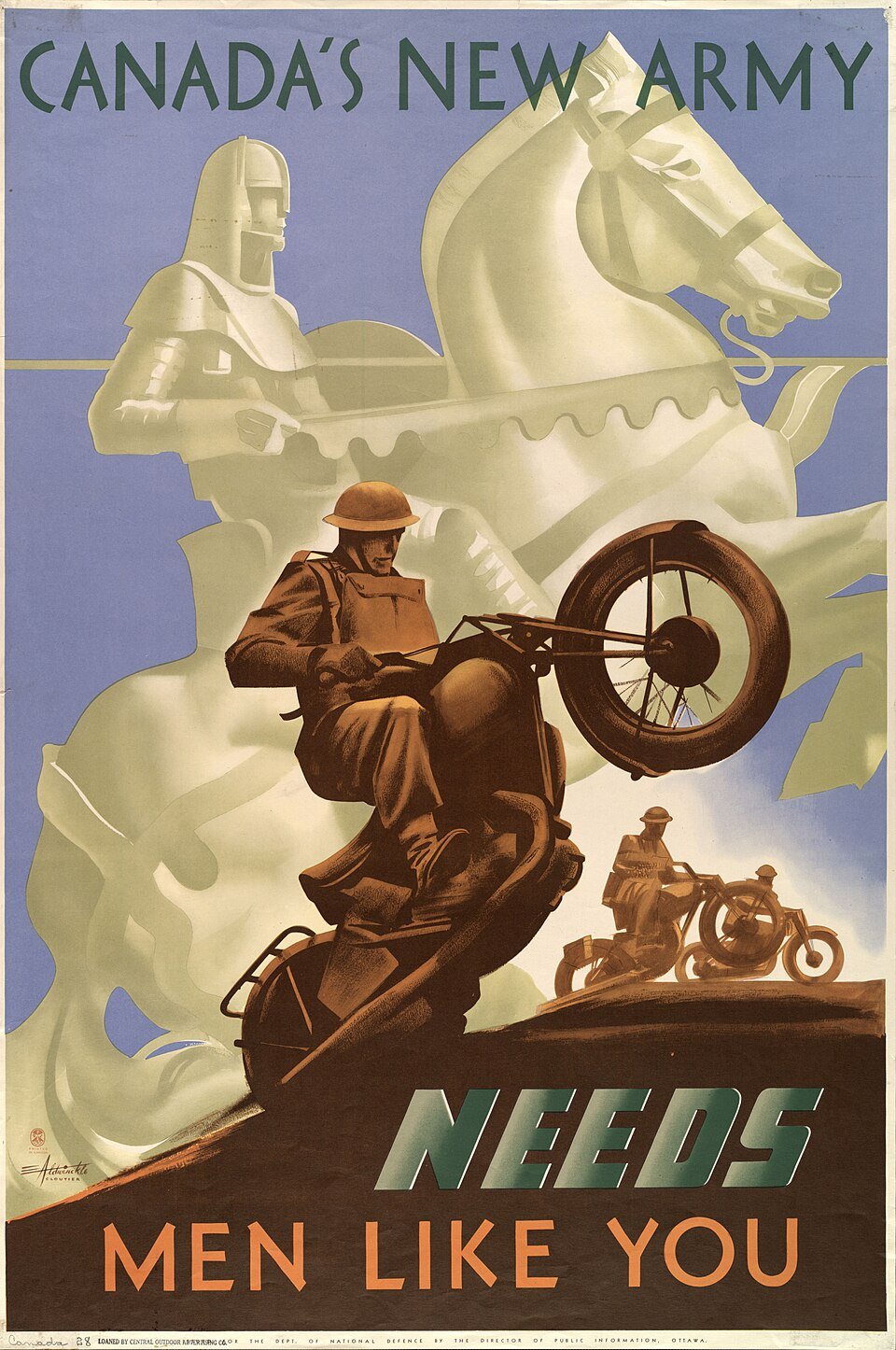
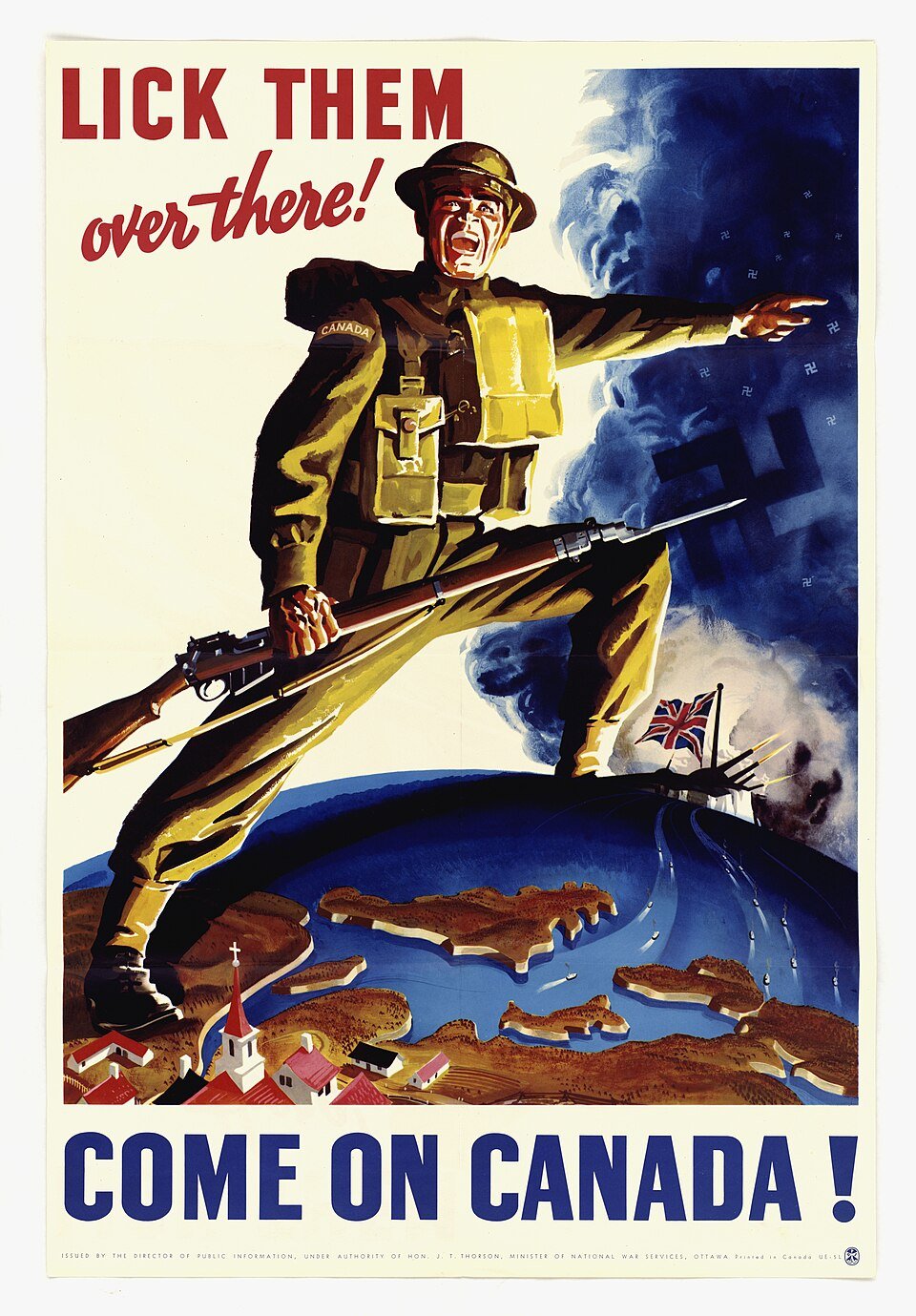
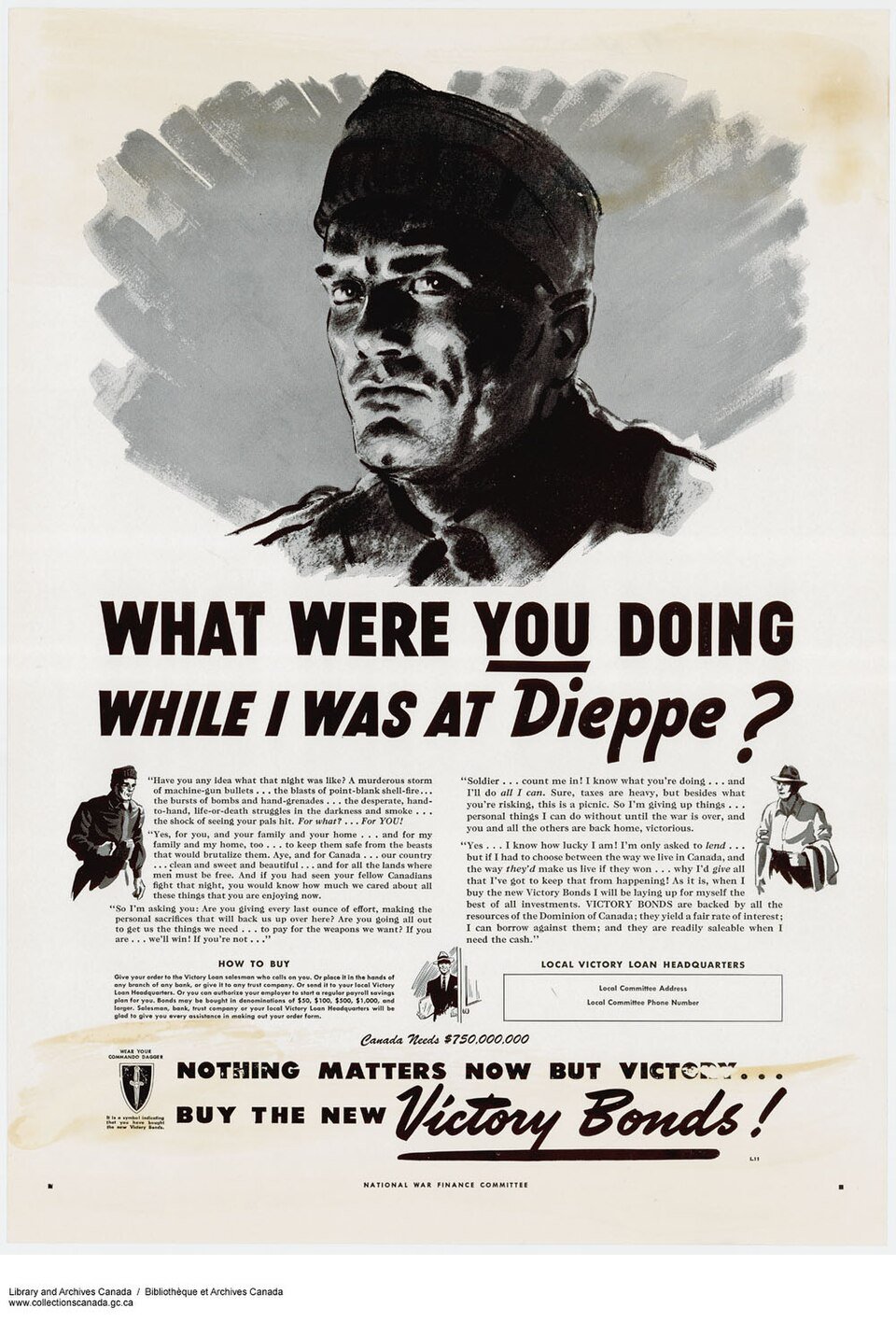
Wartime posters that called Canadians to the Army and to pay for the war. Their wording is historical propaganda, shown as a record.
"Let's go... Canada!" Army recruiting poster by Henry Eveleigh, 1942. Copy from Illinois State University via DPLA and Wikimedia Commons. Public domain. Source file"Canada's New Army Needs Men Like You." Recruiting poster by Eric Aldwinckle and Albert Cloutier, Second World War. Copy from Hennepin County Library via DPLA and Wikimedia Commons. Public domain. Source file"Lick Them Over There! Come on Canada!" Director of Public Information, Ottawa, Second World War. Copy via DPLA and Wikimedia Commons. Public domain. Source fileAdvertisement for the 3rd Victory Bonds campaign, 1942. National War Finance Committee. Library and Archives Canada, MIKAN 3711157, via Wikimedia Commons. Public domain. Source fileVictory Bonds poster, "If Ye Break Faith". Public domain (Department of National Defence). Home-front context.The local example: "Enlist in the 99th", First World War. Library and Archives Canada, e010754202. Public domain in Canada.
War art
Official Canadian war art of Army subjects, now in the public domain, chosen for battles in the local regiment's honours. None of these paintings is identified as showing a Windsor soldier.
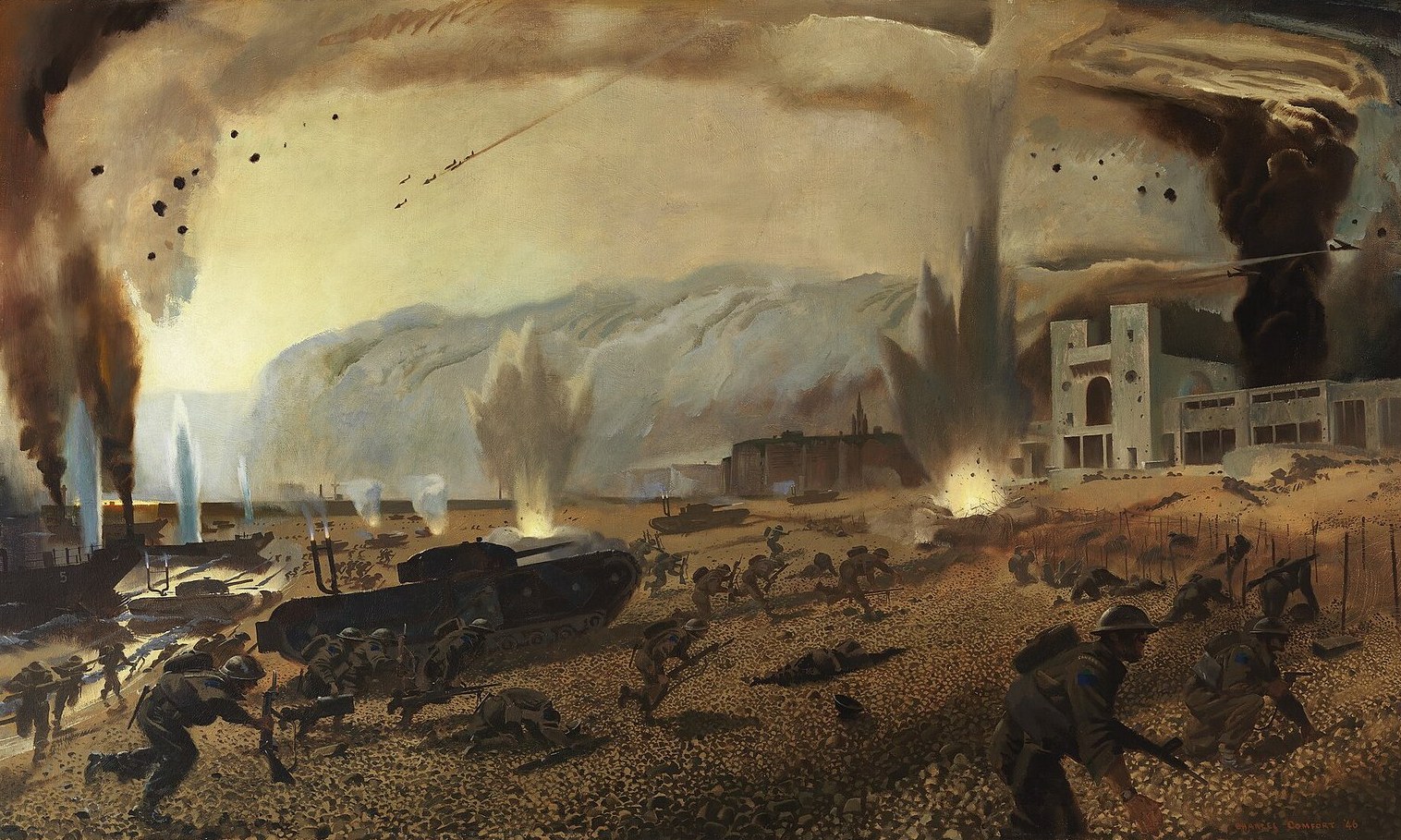
Dieppe Raid, Charles Comfort, 1946. The Canadian War Museum says Comfort "reconstructed the event from written records, personal recollections and photographs." The Essex Scottish landed on Red Beach, in front of the town. Canadian War Museum, Beaverbrook Collection of War Art.65 Public domain (Canadian Crown copyright expired). Colour target and border cropped. Source file
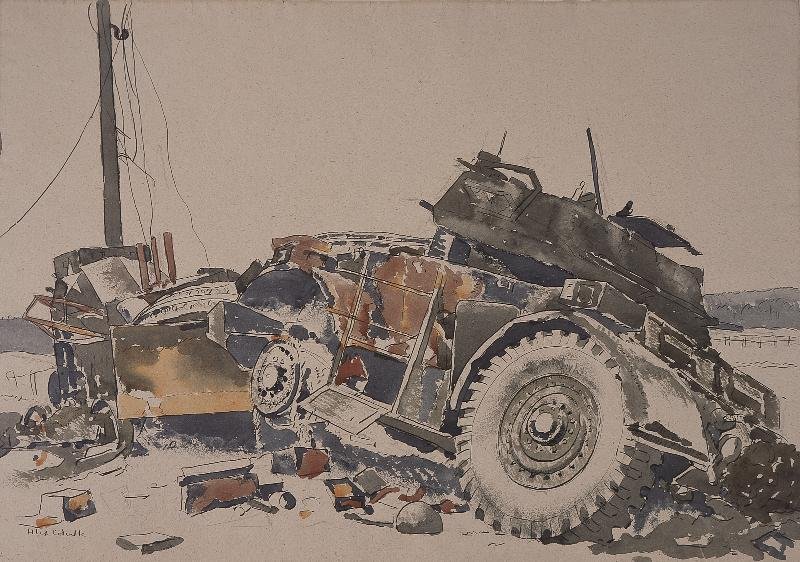
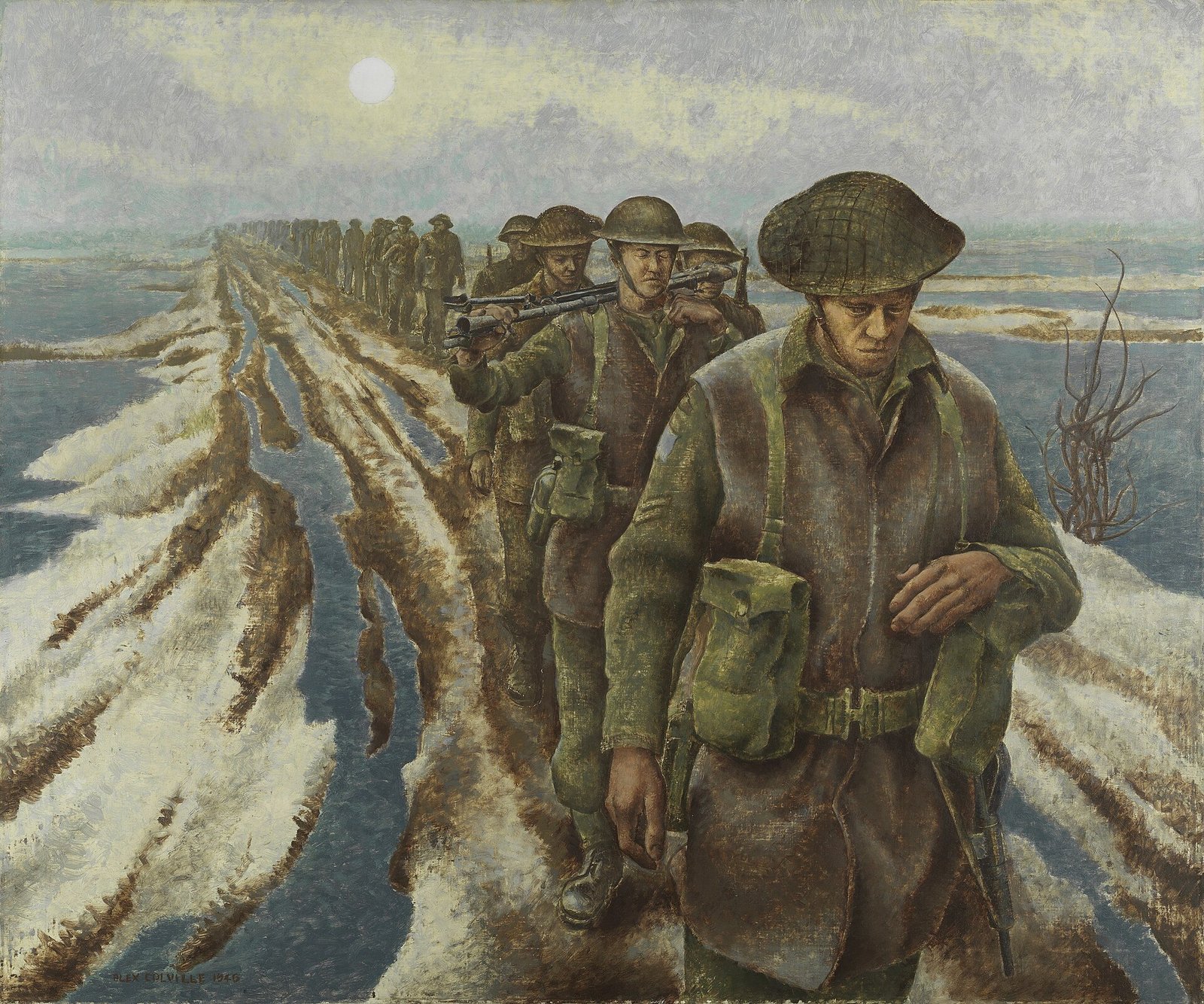
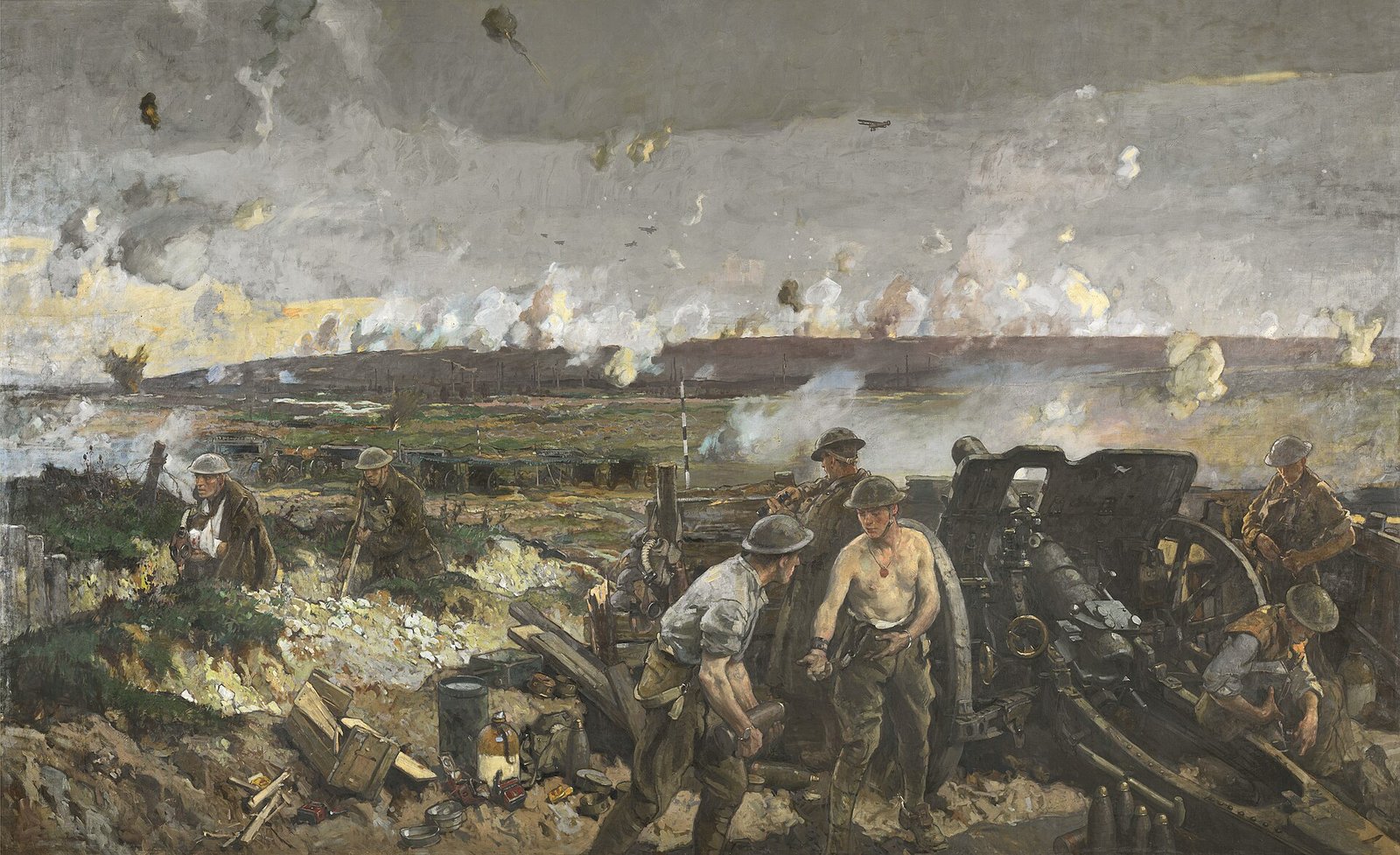
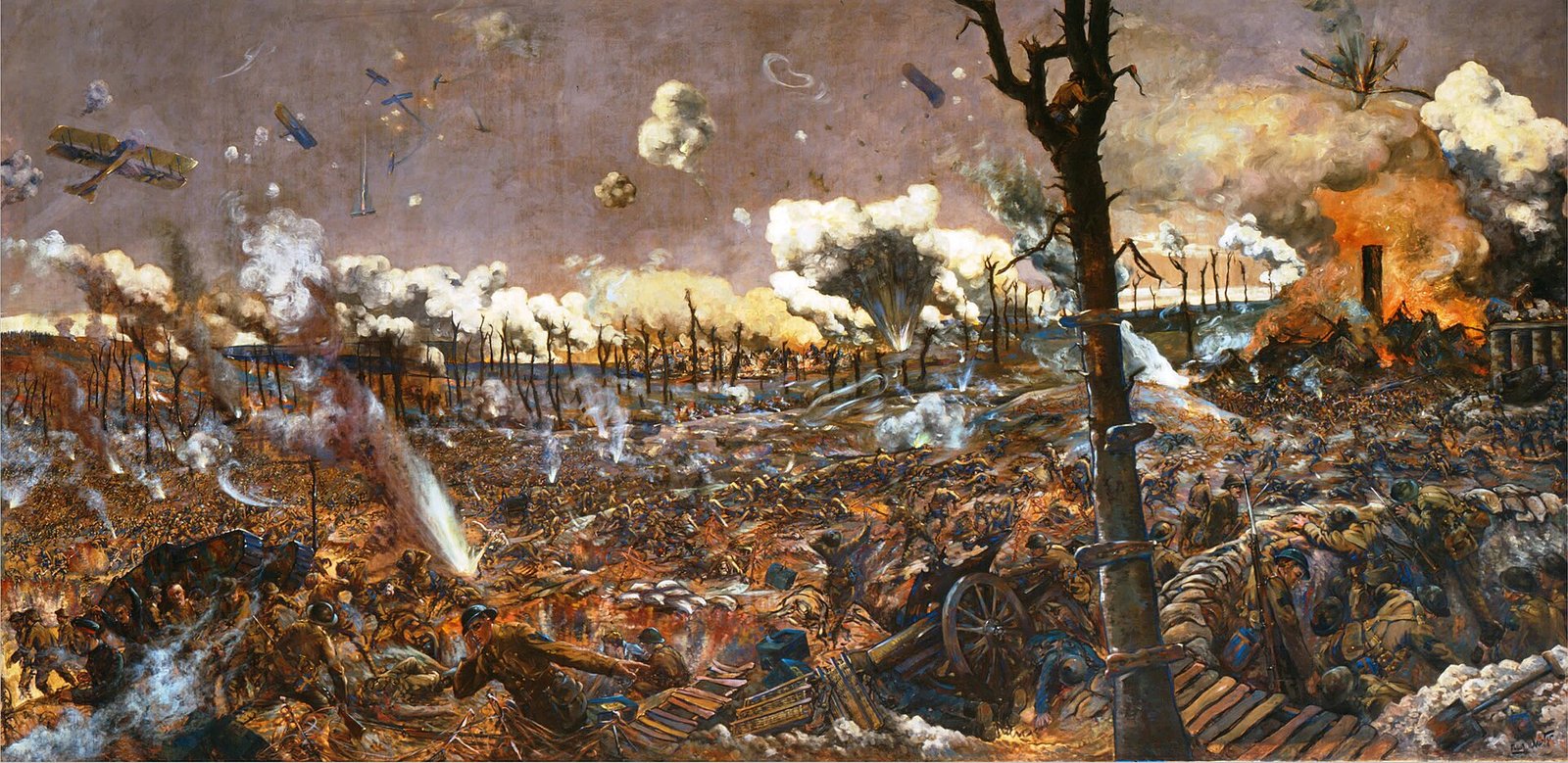
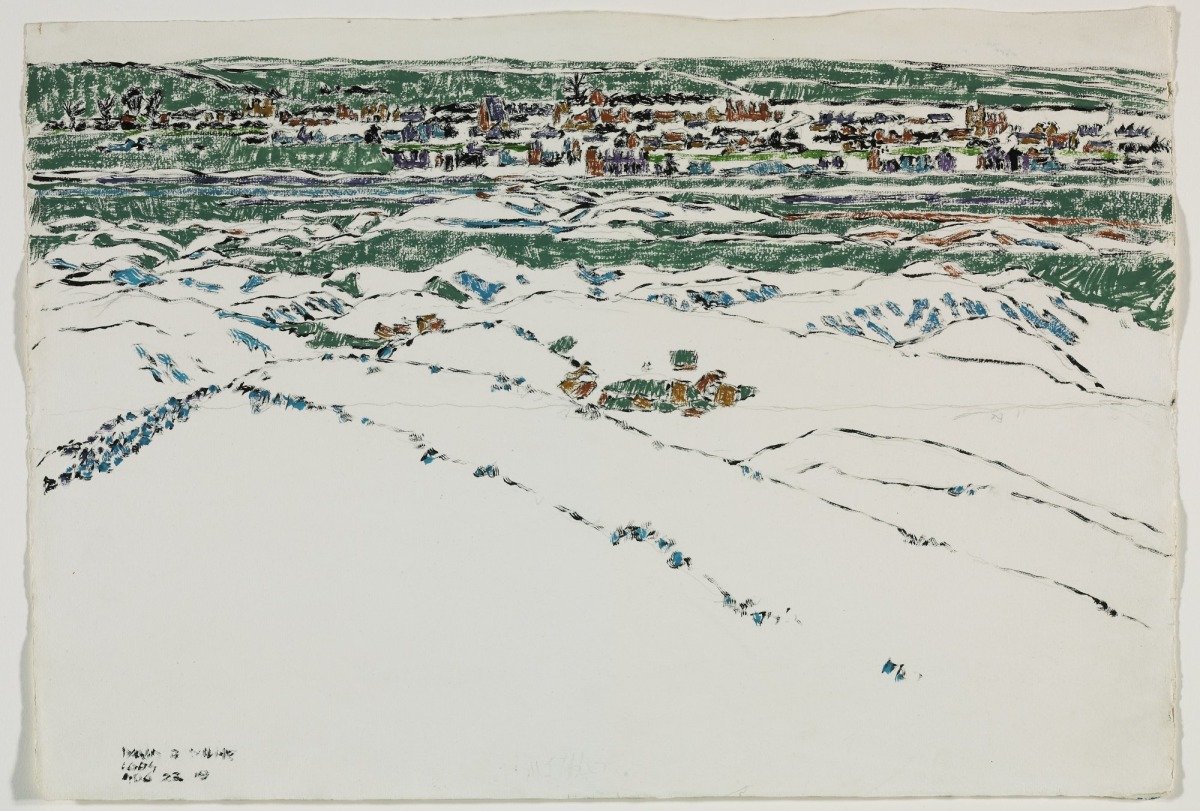
Destroyed Vehicles near Xanten, Germany, Alex Colville. Xanten is one of the Essex Scottish's battle honours; the vehicles are not identified as theirs. Canadian War Museum 19710261-2056. Public domain. Source fileInfantry, near Nijmegen, Holland, Alex Colville, 1946. Canadian infantry in the Netherlands; not identified by unit. Canadian War Museum 19710261-2079. Public domain. Source fileThe Taking of Vimy Ridge, Easter Monday 1917, Richard Jack, 1919. "Vimy, 1917" is one of the regiment's First World War honours. Canadian War Museum 19710261-0160. Public domain. Source fileThe Battle of Courcelette, Louis Weirter, 1918. Flers-Courcelette is one of the regiment's First World War honours. Canadian War Museum 19710261-0788. Public domain. Source fileLoos from the Trenches on Hill 70, David Milne, 23 August 1919, painted after the war. The regimental collection places Abbott Ross's DCM action at Hill 70. National Gallery of Canada. Public domain. Source file
Armouries
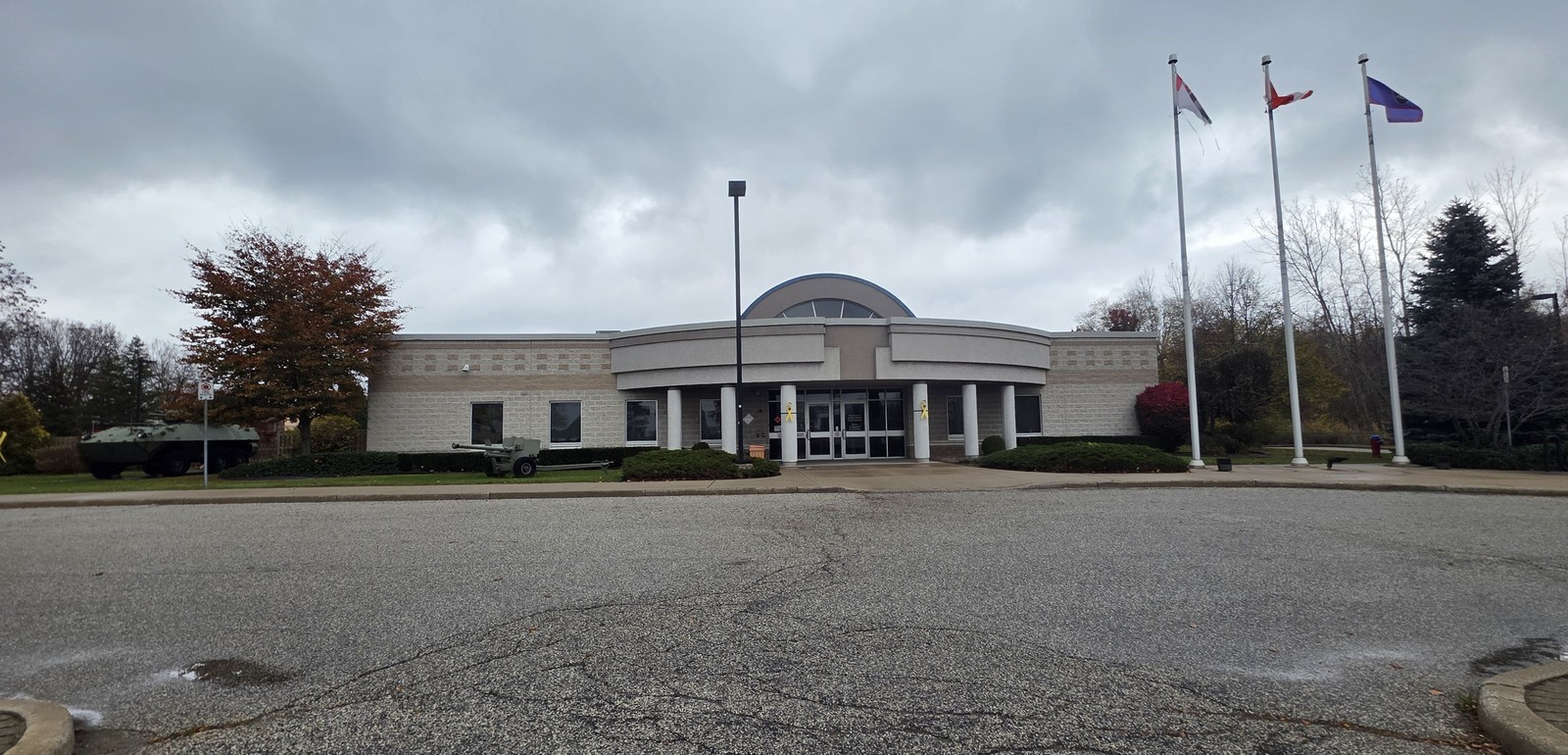
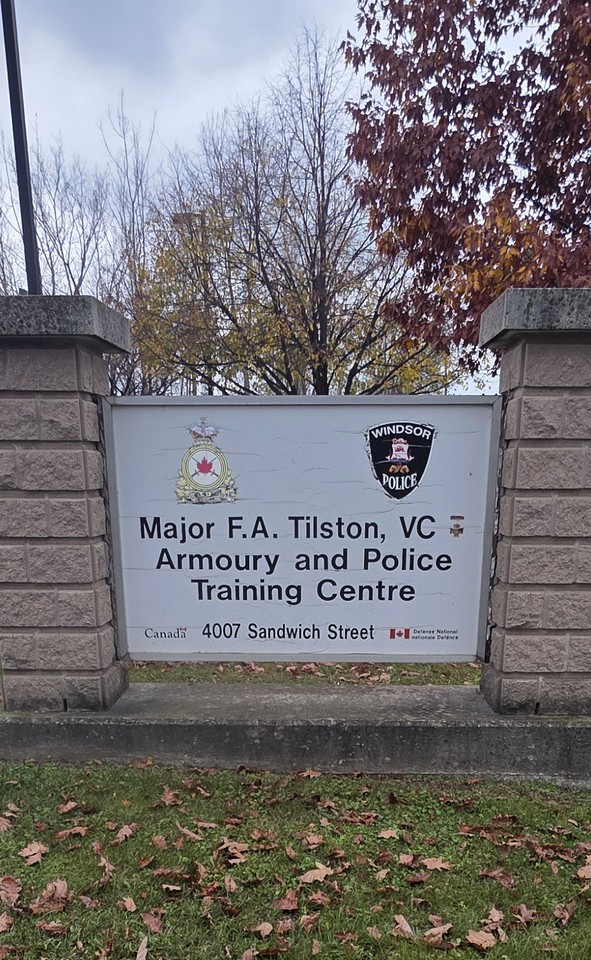
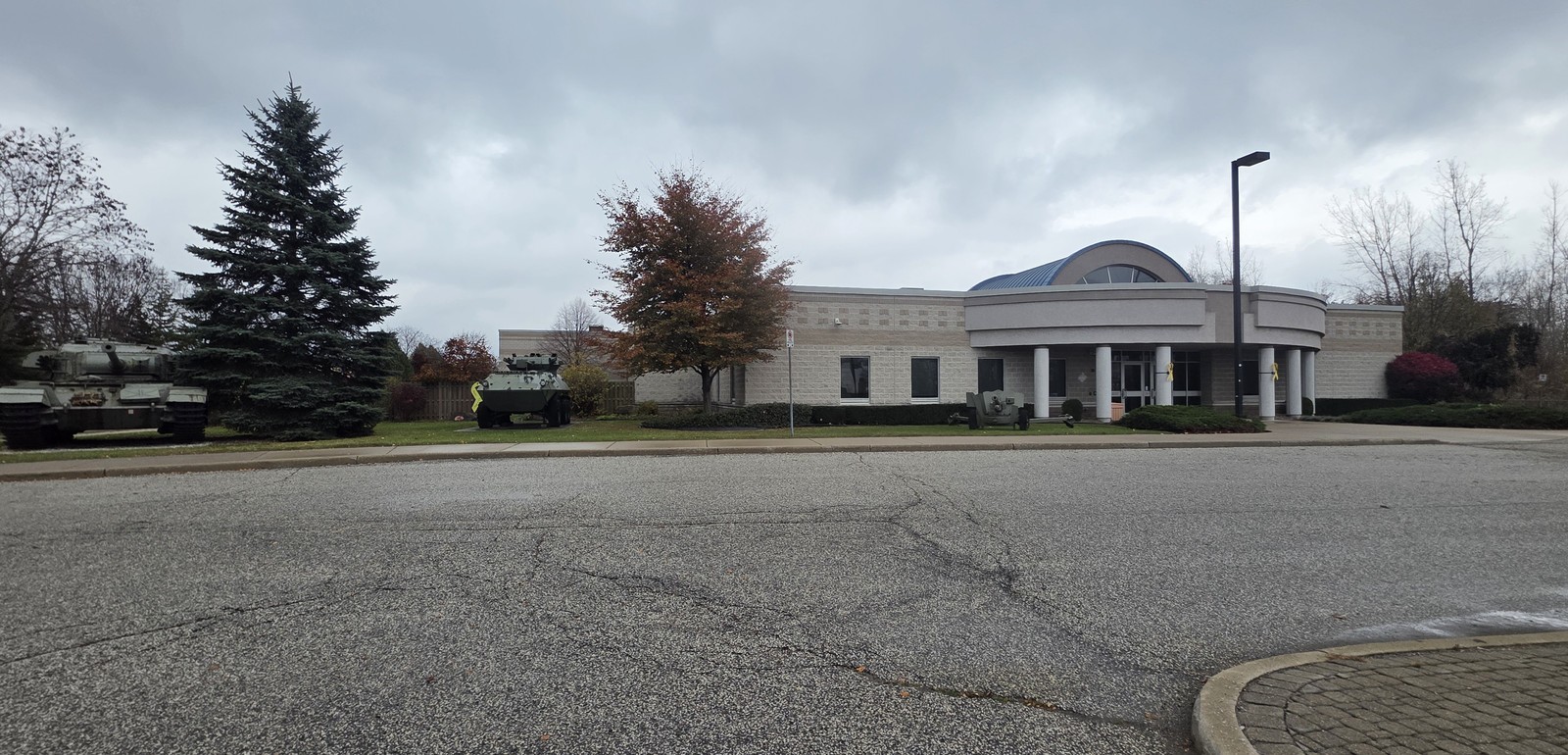
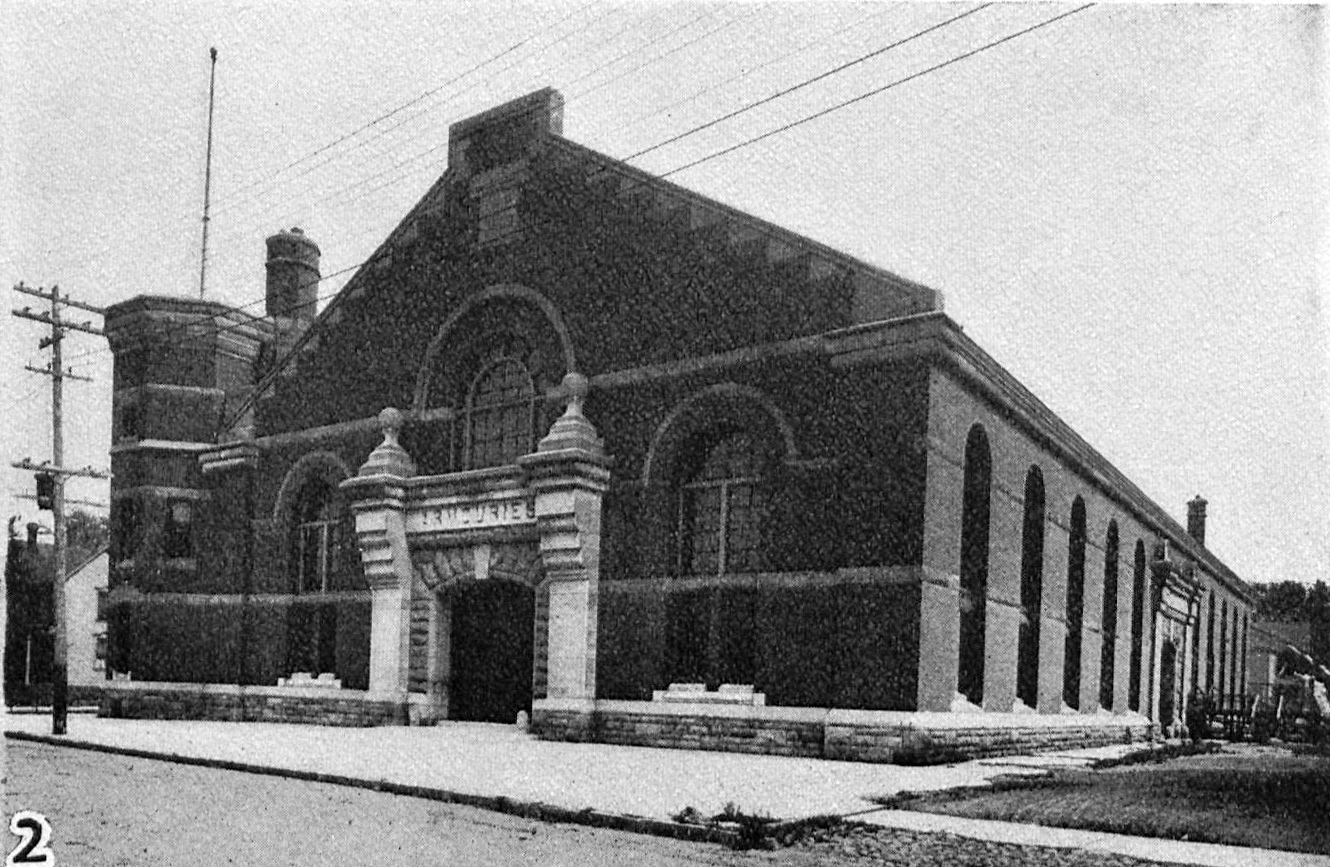
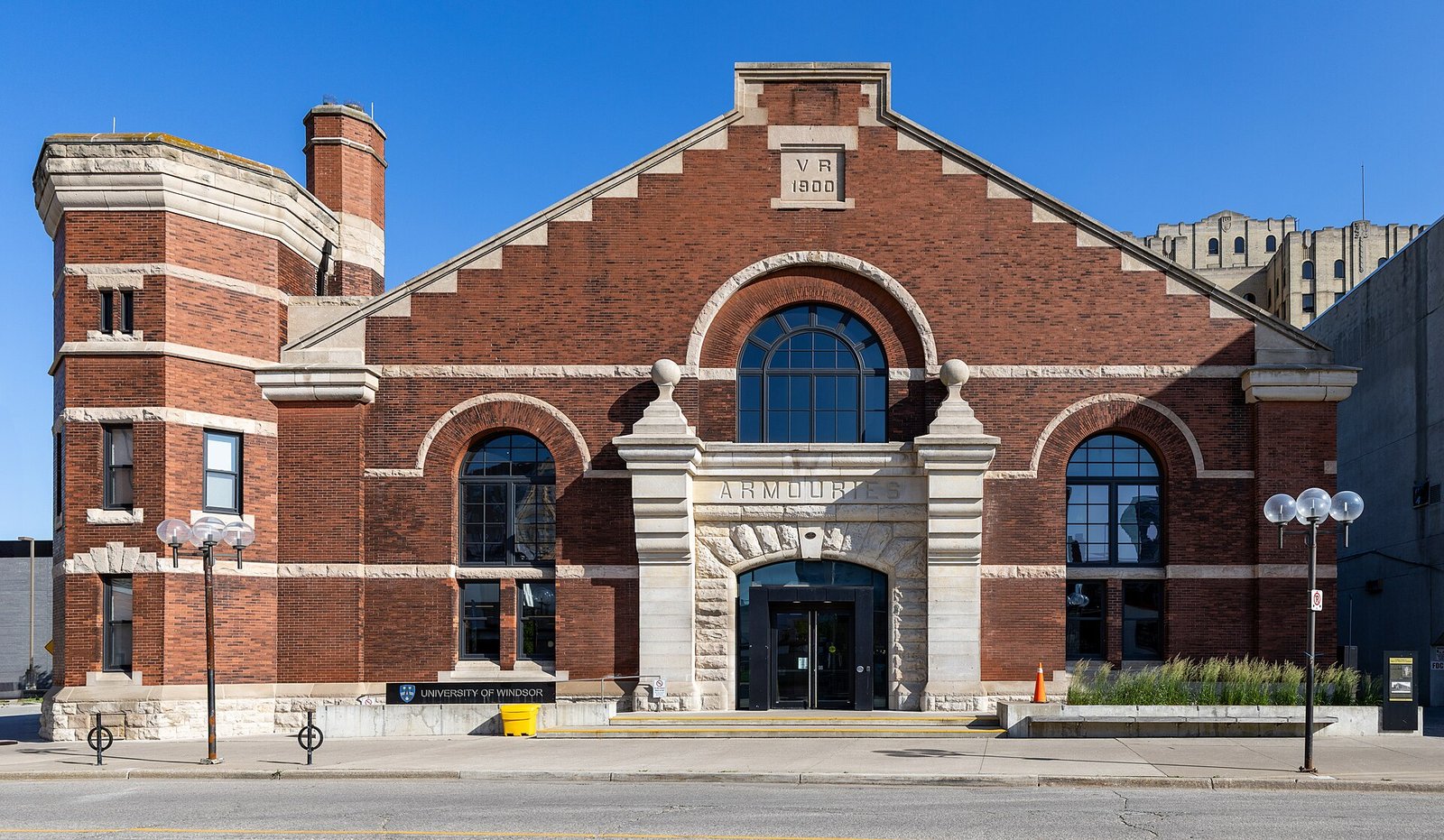
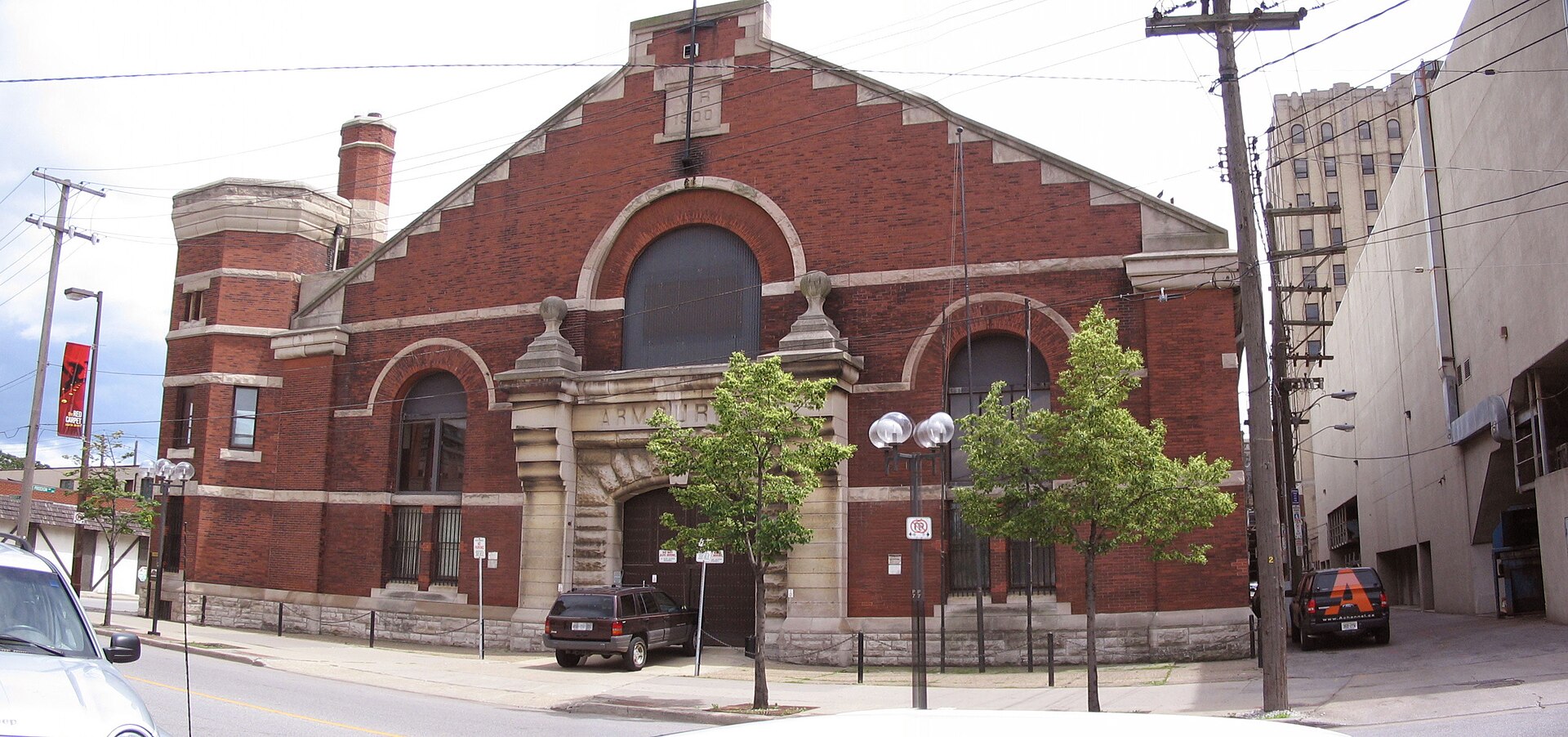
The downtown Windsor Armouries on University Avenue was built between 1900 and 1902. Military use moved to a new building in 2004, and the old armoury became part of the University of Windsor's School of Creative Arts in 2018.6 The new home at 4007 Sandwich Street is the Major F.A. Tilston, VC Armoury and Police Training Centre, shared with the Windsor Police and not open to the public.66 More in the Sandwich Street armoury.
The Major F.A. Tilston, VC Armoury
Photographs from 12 November 2026, taken from the public street. The training centre is not open to the public.
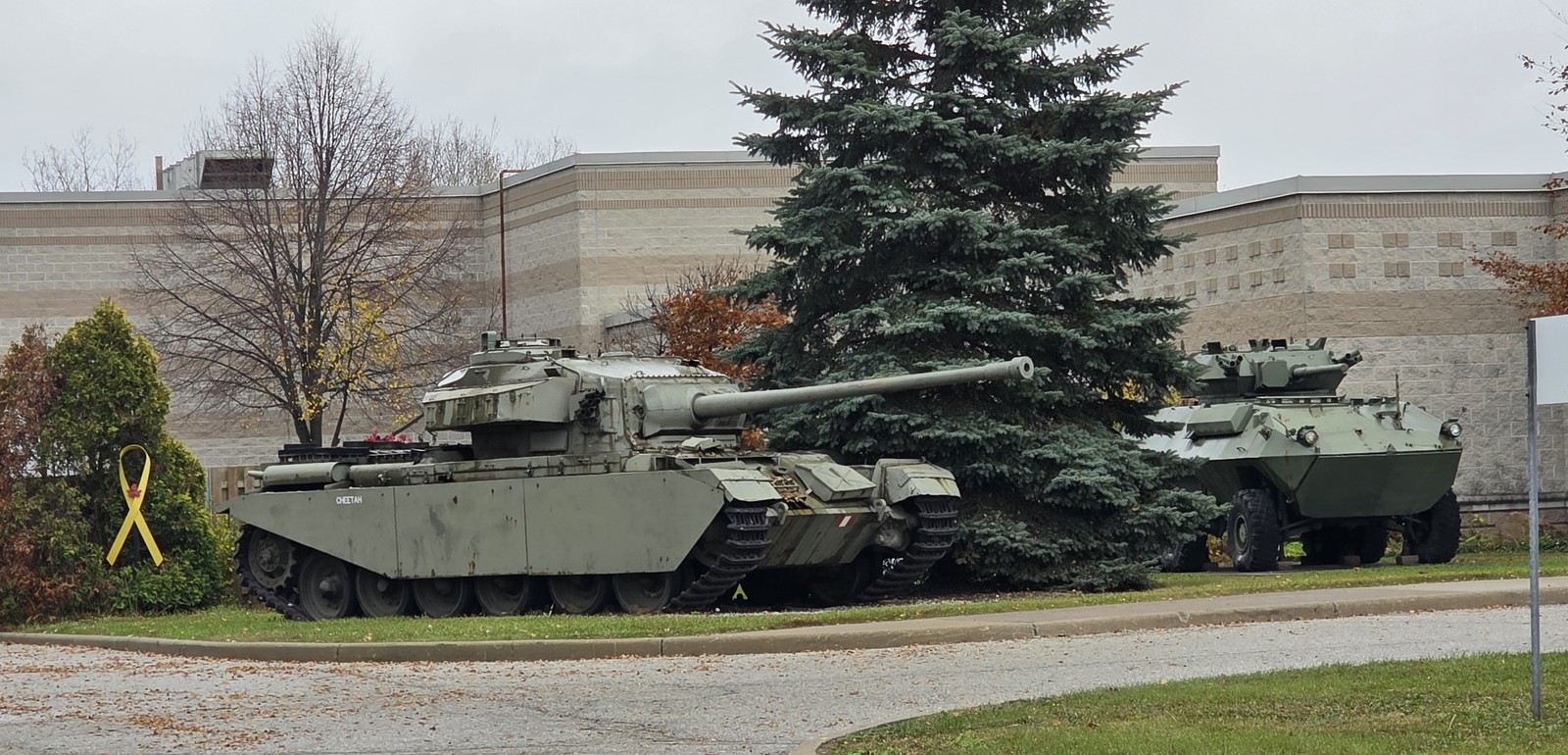
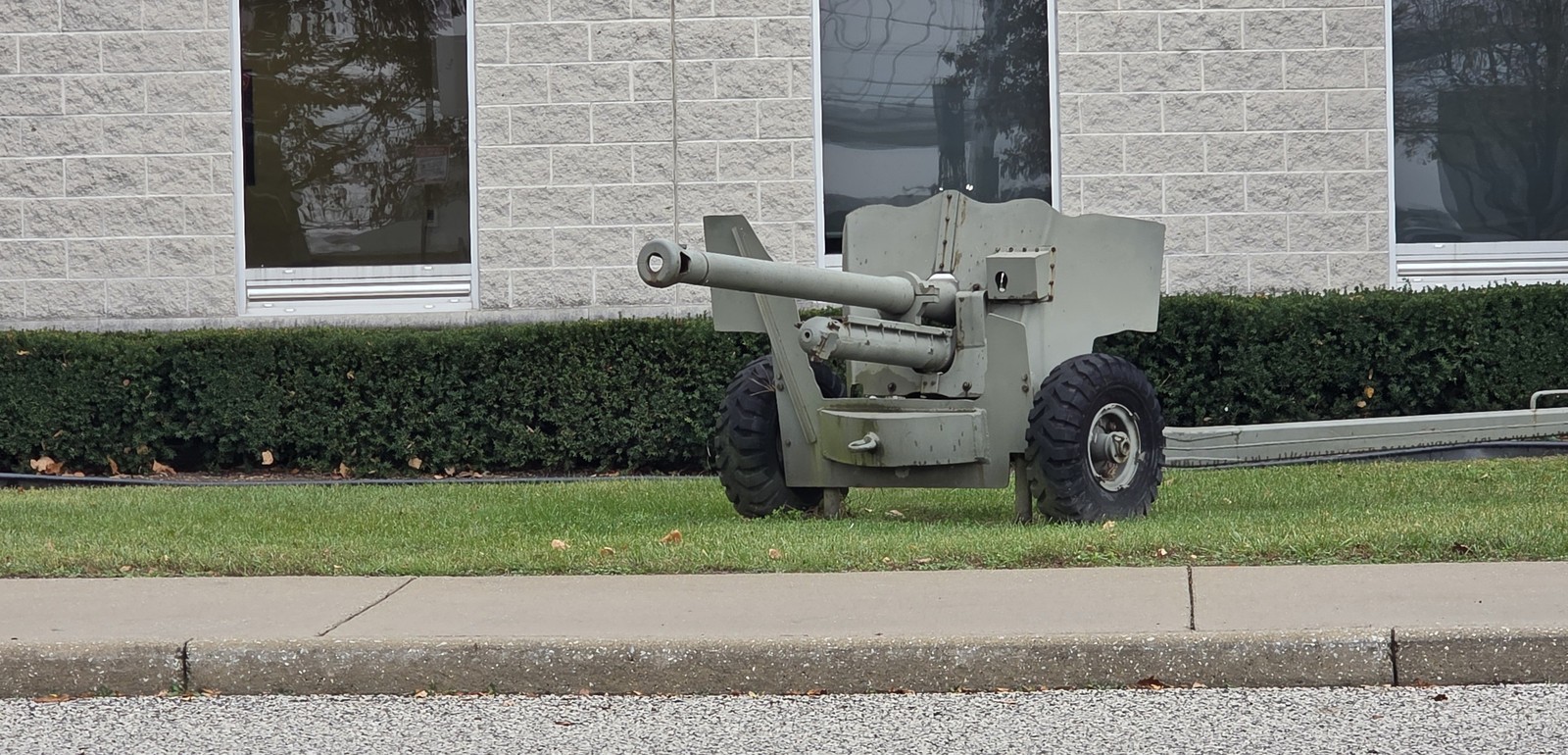
The Major F.A. Tilston, VC Armoury, 4007 Sandwich Street, 12 November 2026. Photo by Kyle L. Stewart, Windsor News.Armoury sign, 4007 Sandwich Street, 12 November 2026. The sign reads Major F.A. Tilston, VC Armoury and Police Training Centre. Photo by Kyle L. Stewart, Windsor News.The armoury, with vehicles on the grounds, 12 November 2026. Photo by Kyle L. Stewart, Windsor News.Armoured vehicles on display outside the armoury, 12 November 2026. Photo by Kyle L. Stewart, Windsor News.A field gun on display outside the armoury, 12 November 2026. Photo by Kyle L. Stewart, Windsor News.
The Windsor Armouries, about 1900 to 1910. The downtown hall on University Avenue, with a date stone for 1900 in the gable. The armoury was built between 1900 and 1902. A pedestrian with an umbrella stands in front. Detroit Publishing Co. / Library of Congress, LC-DIG-det-4a22544. No known restrictions on publication. Source recordThe Armouries, Windsor, about 1910. The printed title is "The Armouries Windsor, Canada." The card is published by G. E. Copeland, Windsor, Ont., as printed on the front. This is a different photograph from the Detroit Publishing Company view of the same hall, about 1900 to 1910, already on this page, and from the 1913 Gardner view. The Toronto Public Library dates this postcard to 1910 and marks it Public Domain. Courtesy of Toronto Public Library, PC_ON_2159, object 278424. Shown at the available size (about 650 pixels wide). Source recordWindsor Armouries, University Avenue, 1913 (Gardner). Public domain. The downtown armoury, not the Sandwich Street building.The Windsor Armouries on University Avenue, 22 June 2025, now part of the University of Windsor. Chris Woodrich, via Wikimedia Commons. CC BY-SA 4.0. Source fileThe Windsor Armouries, University Avenue, in an earlier photograph. Ojleslie, CC BY-SA 3.0. Not the Sandwich Street armoury.
Memorials
Memorials to the local Army story, at home and abroad. Others, including the Korean Veterans War Memorial, are in the chronology.
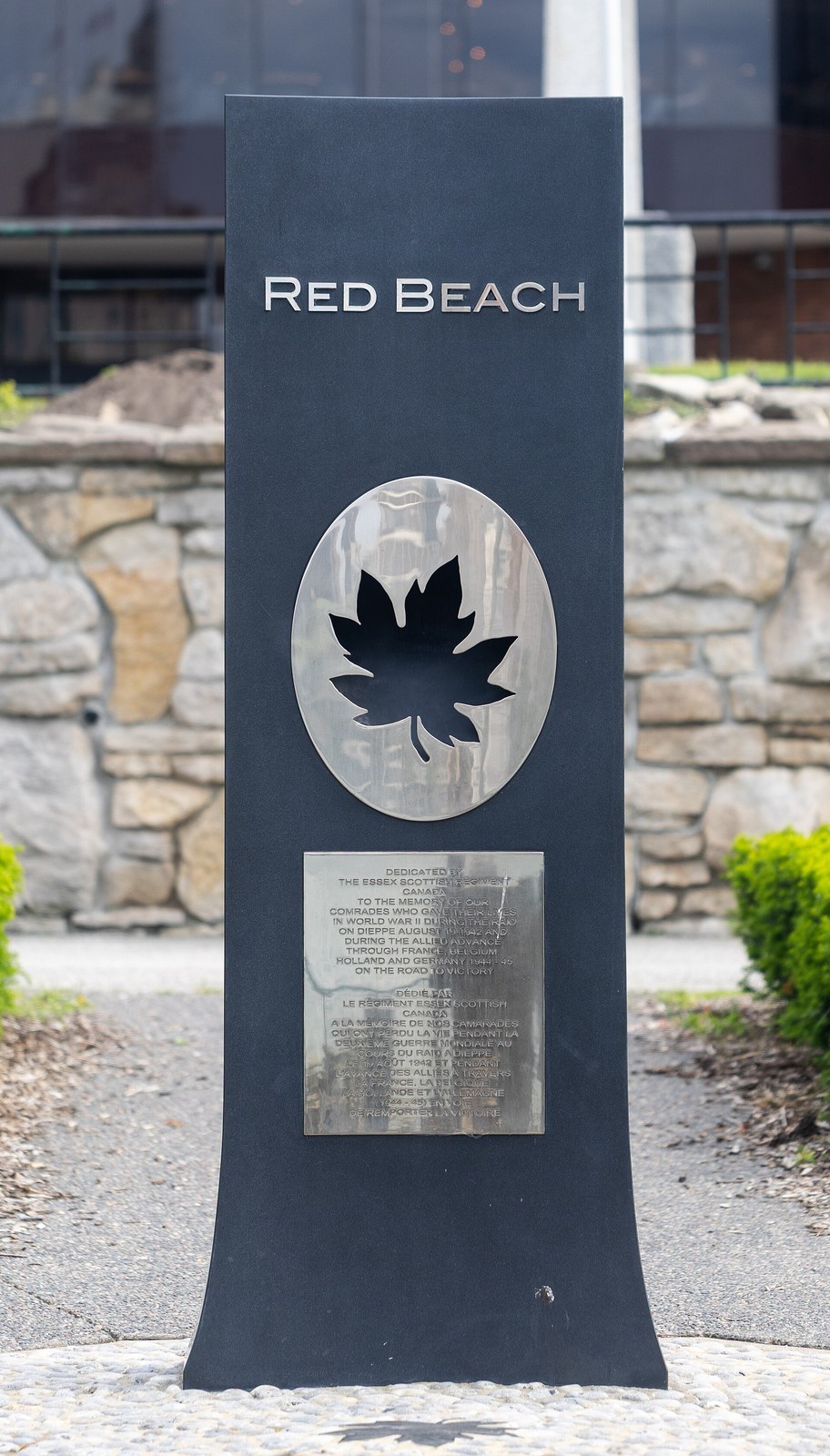
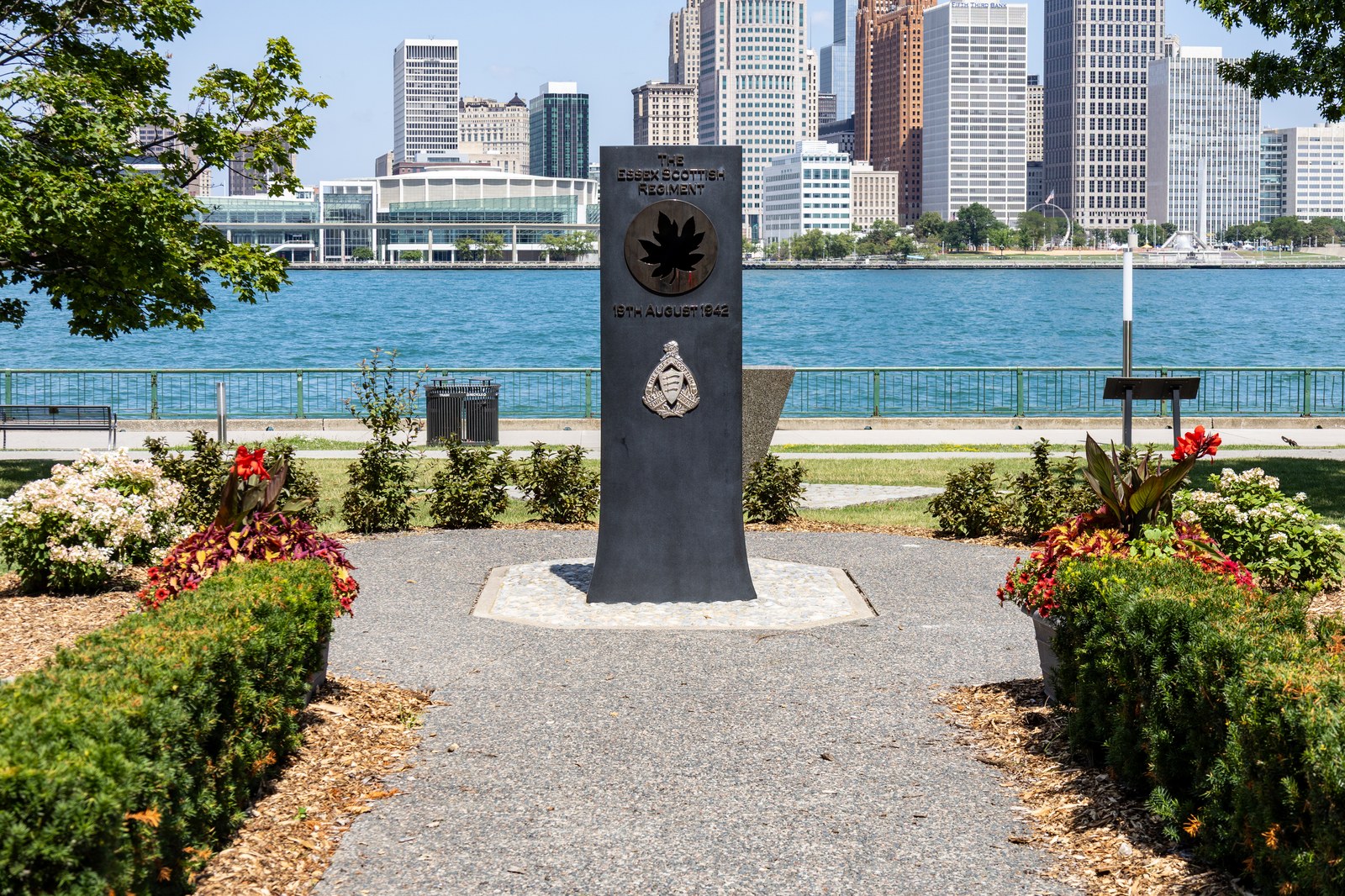
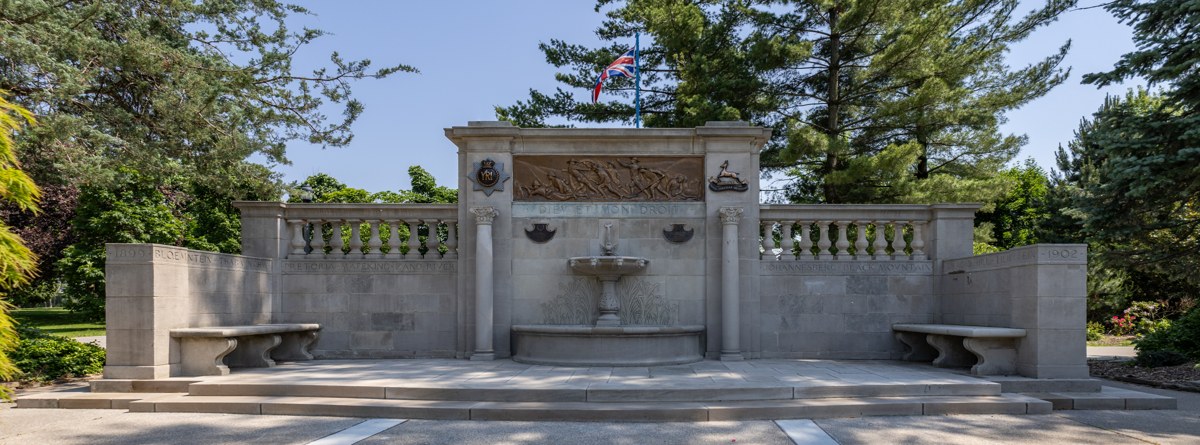
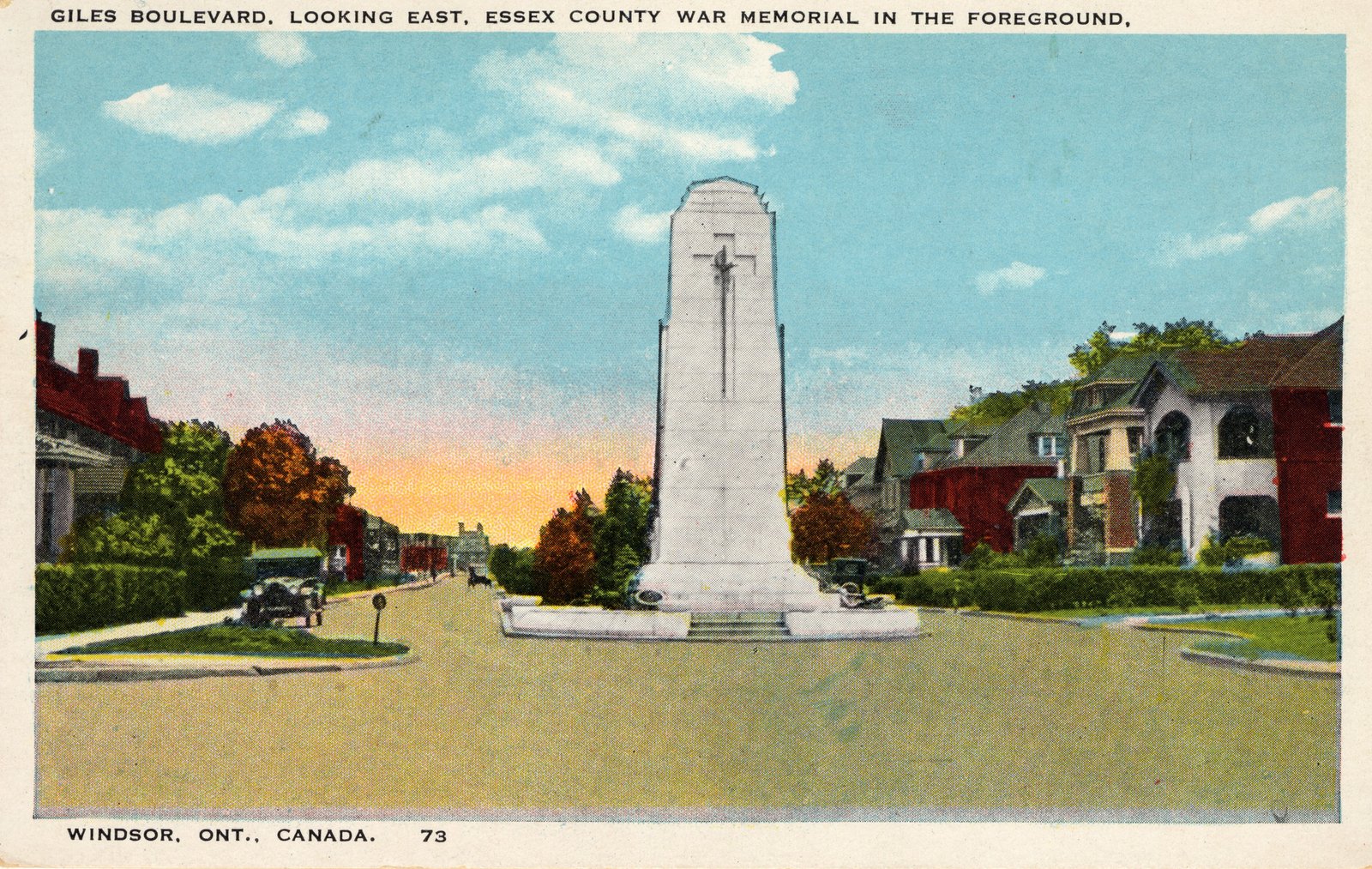
The Red Beach monolith, Windsor, 30 May 2025, a local Dieppe memorial. Chris Woodrich (Crisco 1492), CC BY-SA 4.0, via Wikimedia Commons.Essex County Regiment Monument, Dieppe Park, Windsor, 27 July 2025. Chris Woodrich, CC BY-SA 4.0, via Wikimedia Commons.The Boer War Memorial, Jackson Park, Windsor, 11 June 2025, for Essex County volunteers of 1899 to 1902. Chris Woodrich, CC BY-SA 4.0. Source fileThe Essex County War Memorial on Giles Boulevard, about 1925, for the county's dead of the First World War. It was moved to City Hall Square in 1965. Windsor News Co.; Mike Skreptak Collection; University of Windsor, Leddy Library / SWODA. Public domain. Source record
The Essex Scottish Regiment Memorial at Dieppe, a 2006 sculpture by Rory O'Connor, then a University of Windsor art student, is shown in the chronology, in the Dieppe section. The Canadezenplein howitzer monument in Ekeren, Belgium, is shown in the chronology, in the Northwest Europe section, at the 4 October 1944 date.
What we could not find
A cleared picture of any Essex Scottish, Essex and Kent Scottish or Windsor Regiment cap badge. The official images are not openly licensed.
A free photograph of the Distinguished Service Order or the Sacrifice Medal.
A cleared photograph of the 186th or 241st Battalion, or of the 30th Reconnaissance Regiment (Essex Regiment) in Britain.
The service files of most people named here. Most accounts rest on official memorial records, regimental and town histories, and the war diaries.
Total Essex Scottish casualties for the war, checked against the official returns.
The Museum Windsor photographs of the 99th Battalion and of No. 2 Construction Battalion recruits in Windsor. They are not used without permission.
The Windsor Star archive, which would add many names, was not searchable for free. Windsor Star photographs are not used.
Essex Scottish Regiment War Diaries 1942, Vol. 3 (digitized PDF, 1,263 leaves; copy held offline, SHA-256 a09b9c7c…c46cc9). Original at Library and Archives Canada; digitized collection at UWindsor Leddy Library, https://hdl.handle.net/20.500.14776/18532 . Leaf numbers are PDF positions.
Veterans Affairs Canada, Canadian Virtual War Memorial, Private Ray Ivan McCarthy, https://www.veterans.gc.ca/en/remembrance/memorials/canadian-virtual-war-memorial/detail/2231957. Official fields used here: rank, service number A/607914, age 24, Army, Essex Scottish Regiment, R.C.I.C., date of death 8 March 1945, burial at Groesbeek Canadian War Cemetery grave III. G. 10, and "Son of Charles and Pearl McCarthy; husband of Genevieve McCarthy, of Amherstburg, Ontario." The live Commonwealth War Graves Commission casualty page (casualty 2231957) did not load during this check (HTTP 403), so those fields are taken from Veterans Affairs Canada, which publishes the official memorial record. Gallery items on that page are contributed material and are not used here.
No. 2 Construction Battalion descendants' site, "Men of No. 2" (nominal list: service number, name, enlistment place and date), https://www.no2-cef.ca/men-of-the-no-2/
Essex Scottish Regiment, war diary, 1942, vol. 3, Part II Order No. 58, 29 August 1942, "Strength Decrease" / "X" List, PDF leaf 844. "A22340 Pte. Gleason, J.M." is listed as missing, citing "A. list 190 d/23 Aug 42." Same digitized volume as above.
"Canada's Casualties at Dieppe Total 3,350, Ottawa Indicates," Hamilton Spectator, mid-September 1942, scan at wartimes.ca, retrieved 11 November 2026. The list includes "Pte James Maxwell Gleason Windsor Ont" among the missing from the Western Ontario Regiment. The scan's date line is hard to read in places (16 or 18 September 1942).
Death-notice transcriptions on MesAieux (YourFolks), "Obituary of James-Maxwell Gleason (1918 - 2003)" and "Obituary of James Gleason," https://www.mesaieux.com/genealogy/james_gleason, retrieved 11 November 2026. The transcripts give: James "MICKEY" Maxwell Gleason, 9 October 1918 to 10 October 2003, 85 years, died at Hotel Dieu Grace Hospital; predeceased by Catherine Eileen "Kay" (nee Mullins). This desk has not opened a complete original newspaper page.
Wartime newspaper clipping headed "Harrow Man Is Killed," datelined "HARROW, March 23," family photograph sent by Holly Brush to windsornewsdesk@gmail.com on 10 November 2026, with written permission the same day to use her name and to post the photographs and information. The clipping does not print a newspaper name, year, or page number. The March 23 dateline, read with the 8 March 1945 date of death, places the notice in 1945. The original newspaper's copyright may still apply.
CBC News Windsor, 9 August 2019, Ralph Mayville, cbc.ca
Town of LaSalle, Local Veterans (stories submitted by veterans and families), lasalle.ca
London Gazette, Supplement 35729, 2 October 1942, pp. 4329-4330 (Department of National Defence, Ottawa, 2 Oct 1942: Canadian Army awards for the combined attack on Dieppe). Primary, official. https://www.thegazette.co.uk/London/issue/35729/supplement/4329 and /4330.
Canadian War Museum, Charles Comfort, Dieppe Raid (1946), Beaverbrook Collection of War Art, warmuseum.ca
The Memory Project / Historica Canada, George Edmund "Jim" Marchant, published on The Canadian Encyclopedia, https://thecanadianencyclopedia.ca/en/article/mpsb-george-edmund-jim-marchant. First-person account; he describes himself as a stretcher bearer at Dieppe with the Essex Scottish. Primary testimony, not an official after-action report.
Town of Essex, Local Veterans, entry for George (Jim) Marchant, https://www.essex.ca/discover/local-history/local-veterans/. Municipal page of submitted local-veteran stories. Gives service 1939 to 1945, medical sergeant, wounded in the Dieppe Raid, and later residence in or near Essex. Not a service file.
Vicki Bennett, emails to Windsor News, 11 November 2026, subject "War Chest" (Gmail messages 1a1cb9aa18746b77 and 1a1cc12cb2a7538f). His daughter. Name, Essex Scottish, medical sergeant, Dieppe and return, the memorabilia photograph (including her note that the flag in the picture was a Dieppe remembrance plaque), a wartime portrait she said may be used, dates of birth and death (born in England on 1 August 1921; died on 23 September 2013), and that he was most proud of that medal from King George VI. Credit wording "Courtesy of the Marchant family" approved by her as "perfect."
Gathering Our Heroes, "Thomas, Amos Henry," Chatham-Kent WWI and WWII veterans project, https://www.gatheringourheroes.ca/hero/thomas-amos/, retrieved 11 November 2026. The biography is drawn from a family eulogy, "Eulogy for Amos Thomas - 15 October, 1996," credited to the family and to Bill Siddall, historian. Service with the Irish Regiment of Canada, and the wound, are taken from that eulogy and are not confirmed here by a service file.
Find a Grave, memorial 265917539, Amos Henry Thomas (death 11 October 1996; burial 15 October 1996, Evergreen Memorial Park Cemetery, Leamington, Essex County, Ontario), https://www.findagrave.com/memorial/265917539/amos-henry-thomas, retrieved 11 November 2026. The memorial was added on 29 February 2024. No grave photograph is on the page. The memorial also records a spouse whose given name is garbled; the family eulogy names her Hendrika de Lange. A birth year on the memorial is not used in the profile text.
All pictures on this page are public domain, openly licensed or used with written permission, as stated in each caption and on the credits page. Nothing was paid for. No newspaper photographs are used.