Formation patches stay in their own group. Medals, ribbons, and rank insignia are other groups. Rank is not a service award. Pictures are examples of a type. None is a veteran's own object. This is not a complete set, and it does not imply endorsement. Local regimental badges are not shown. Uniforms and equipment are on the uniforms and equipment page.
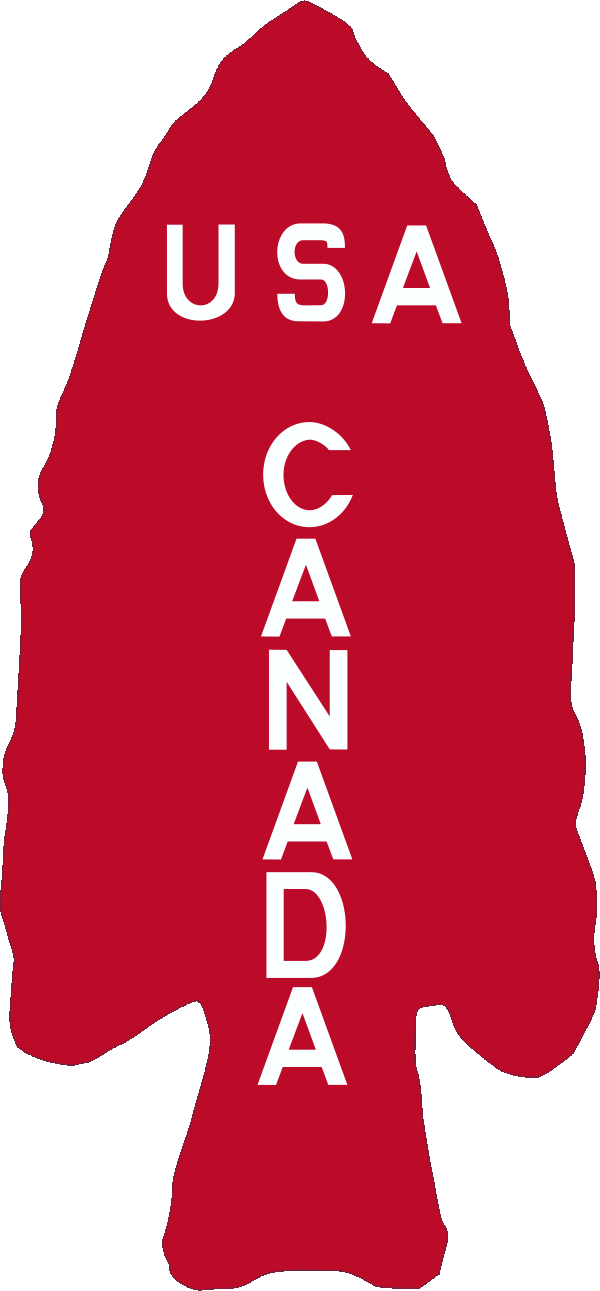
First Special Service Force shoulder sleeve insignia
Official drawing
A modern drawing of a cloth shoulder patch. Not a photograph of a wartime patch, and not a personal patch.
The Institute of Heraldry approved it on 14 September 1942 and rescinded it on 2 April 1959.
The catalogue describes a red spearhead with USA above and CANADA down the centre, in white letters.
Related: Ralph Mayville · 1939–1945
Drawing: U.S. Army Institute of Heraldry, via Wikimedia Commons. Public domain as a U.S. federal work. Source file History source
Illustrates the force insignia only. It does not show a patch Ralph Mayville owned or wore, and it is not an endorsement.

2nd Canadian Infantry Division formation patch
Drawing of a formation patch
A modern flat drawing of a blue rectangle. The blue is an uploader's approximate colour, not a matched wartime shade.
The division's royal blue rectangle is described as adopted in 1916 and issued again for the Second World War in 1941.
A blue rectangle used to associate the Second World War division with the earlier 2nd Division. Veterans Affairs Canada records that the Essex Scottish sailed for England on 16 August 1940 as part of the 2nd Canadian Infantry Division.
Related: The Essex Scottish at Dieppe
Michael Dorosh, vector by Sarang, via Wikimedia Commons. The file is marked public domain as a simple shape. That file licence is not a clearance of every later use of the design. Licence or file page Source file History source
Not a wartime artefact and not evidence of who wore this drawing.

1st Canadian Infantry Division formation patch
Drawing of a formation patch
A modern flat drawing of a red rectangle. Pure red in the file is not a matched wartime shade.
Described as the First World War red patch, with Second World War patches issued from 1941.
A red rectangle, the device called the Old Red Patch for the 1st Canadian Infantry Division.
Related: 1939–1945
Michael Dorosh, vector by Sarang, via Wikimedia Commons. The file is marked public domain as a simple shape. Licence or file page Source file
Not tied to Ralph Mayville. No source places his Royal Canadian Regiment service in the 1st Division, and nothing here says he wore this patch.
A vehicle sign is not a cloth patch.
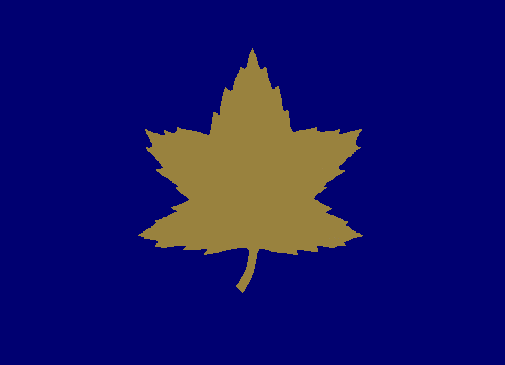
2nd Canadian Infantry Division vehicle formation sign
Reconstruction of a vehicle sign
Not a cloth patch. A modern drawing made from pictures found online.
A Second World War vehicle marking. The uploader dates the sign no later than 1944. Mid-war signs also used a CII device, which this drawing does not show.
A blue rectangle with a gold maple leaf, a vehicle marking in the pattern of the divisional patch.
Related: The Essex Scottish at Dieppe
BFCockburn, via Wikimedia Commons. The file is marked public domain. It is a reconstruction, not a photograph of a surviving sign. Licence or file page Source file
Colours are approximate. Not an artefact photograph.
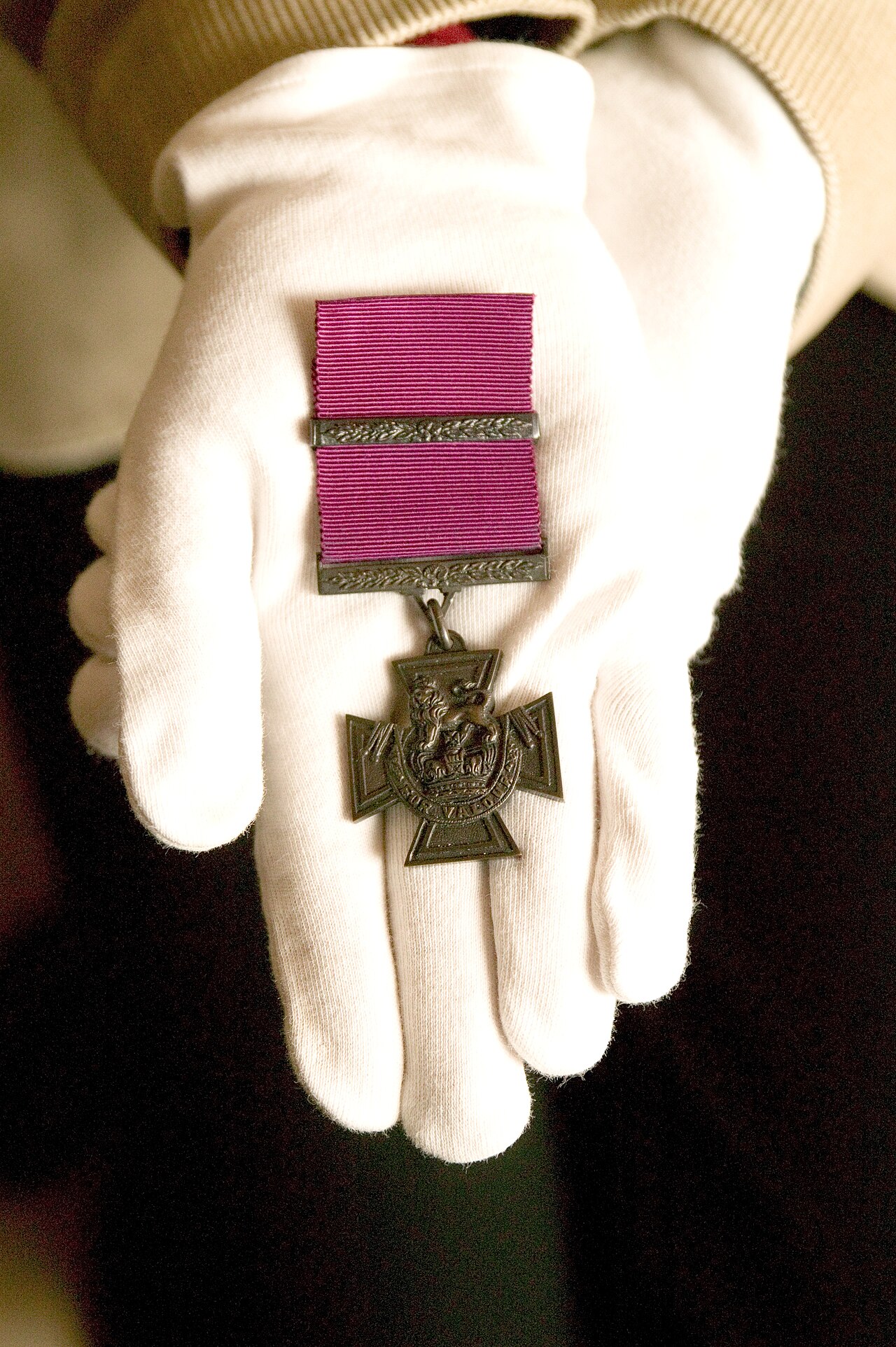
Victoria Cross, specimen
Gallantry decoration
A specimen approved by Queen Victoria. Not Maj. F.A. Tilston's cross.
The London Gazette of 22 May 1945 records Tilston's Victoria Cross.
The image shows the pattern of the decoration. Tilston's own cross is not pictured.
Related: Frederick Tilston, VC
Mike Weston ABIPP / UK Ministry of Defence, Defence Imagery 45149327, via Wikimedia Commons. Open Government Licence v1.0. Licence or file page Source file History source
Example of the award type. Not Tilston's medal.
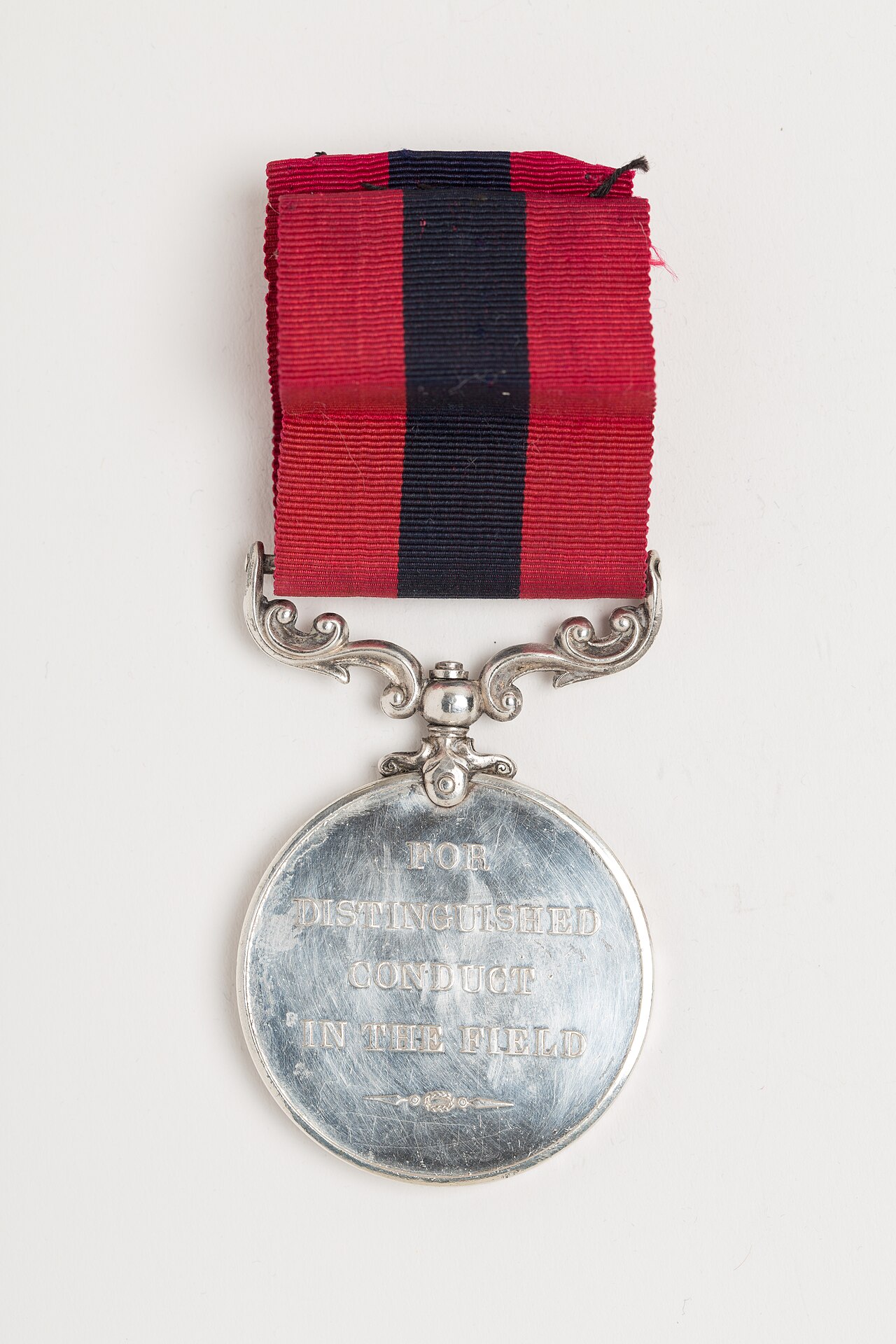
Distinguished Conduct Medal, George V
Gallantry decoration
A museum example. The medal in the photograph was awarded to Private William Simons, Royal Irish Fusiliers. It is not Abbott Ross's medal.
The London Gazette of 26 January 1918 records the Distinguished Conduct Medal for 53187 Company Sergeant-Major A. Ross. Ross's award is the DCM, not the Victoria Cross.
The photograph shows the George V type of the medal. It does not show Ross's own medal.
Related: Abbott Ross, DCM
Auckland War Memorial Museum Tāmaki Paenga Hira, N1502, via Wikimedia Commons, CC BY 4.0. Licence or file page Source file History source
William Simons's specimen. There is no Ross Victoria Cross.
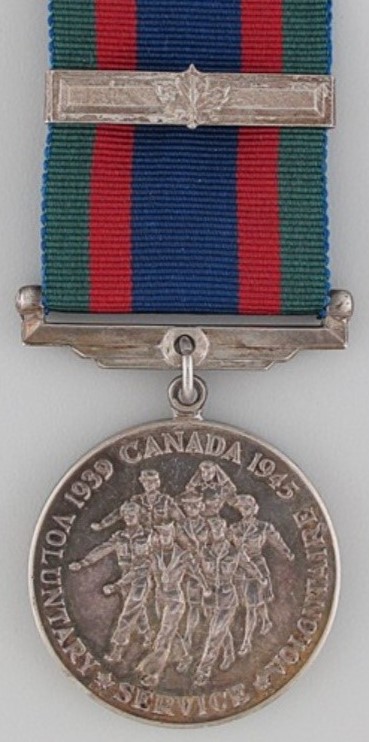
Canadian Volunteer Service Medal
Service medal
General Second World War context. Not attributed to any one person.
A 1943 service medal.
The obverse of the medal, with the overseas clasp in this photograph. No named Windsor recipient is verified for this image.
Related: 1939–1945
Hsq7278, via Wikimedia Commons, CC BY-SA 4.0. Licence or file page Adaptations of this image stay under the same licence. Source file
Example only. Not a named veteran's medal.
The ribbon is a drawing of a type named on two records. It is not those soldiers' medals.
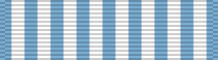
United Nations Service Medal (Korea), ribbon
Drawing of a medal ribbon
Not a patch. A modern drawing of the ribbon type. Not a particular person's medal.
Korea, 1950–1953.
The Canadian Virtual War Memorial lists the United Nations Service Medal (Korea) among the citations for Private Earl Alva McIntyre and Private Joseph Wilfred Major.
Related: 1950–2008
Drawing by Borodun, via Wikimedia Commons, CC BY 4.0. The ribbon design is treated as a public-domain medal ribbon. The file licence is not a claim that this drawing is their medal. Licence or file page Source file History source
Shown only as the ribbon type named on those two records.
Rank is not a service award. The drawing is the 1920–1953 pattern, not the 2014 Canadian Army pattern.
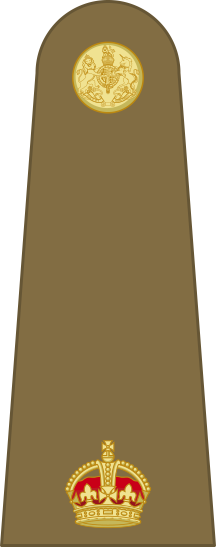
Major, rank insignia, 1920–1953
Rank insignia, not an award
A modern drawing of the historical crown worn as a major's rank badge in that period. Not a medal.
The 1920–1953 Commonwealth pattern. Not the 2014 Canadian Army pattern.
The investiture photograph identifies Frederick Tilston as a major. This drawing shows that period's rank badge, not an award and not a badge taken from his uniform.
Related: Frederick Tilston
Sodacan, via Wikimedia Commons, CC BY-SA 4.0. Licence or file page Adaptations of this image stay under the same licence. Source file History source
Rank, not a decoration. Not Tilston's own badge.