
Remembrance concept. Not a badge, not issued equipment, and not an endorsement.
Windsor War Chest
Introduction
Windsor and Essex County sit on one of the most contested waterways in North America, the Detroit River. This project is still mapping how often armed conflict touched the region. So far the researched record documents fighting on or near Essex soil and water during Pontiac's War (1763), the War of 1812 and the Patriot raids of 1837–38. Earlier Indigenous conflicts and diplomacy aren't yet covered in enough depth to summarize. Throughout the 20th century the region's war history is mostly about people who served abroad, the ships and vehicles built here, and the families who mourned their dead. Each story carries one of these tags:
- On local soil or water
- Border region: across the river at Detroit
- Local people abroad: service overseas by people with a documented local link
- Home front
Nations of the strait
Dates in this chapter run from about 1701 to November 2020. It is not a single year, and earlier conflicts are not summarized.
1. Nations of the strait
[On local soil] [Indigenous-authored sources first] Caldwell First Nation describes itself as the Chippewas of Point Pelee and Pelee Island. It is part of the Anishinaabe people and a member of the Three Fires Confederacy, and it writes that "Point Pelee and Pelee Island are the heart of our ancestral territory."cfn1 The Nation also writes: "During the War of 1812, the Caldwell people fought as allies of the British under Colonel William Caldwell and were promised land in return. Despite their service, they were forcibly removed from their traditional lands in the 1920s." Its land claim, "based on exclusion from the 1790 McKee Treaty", was settled in 2010. A 200-acre parcel was designated reserve land in November 2020.cfn2
The Wyandot of Anderdon Nation traces its ancestors to peoples "variously known as Hurons, Tionnontatés, Neutrals and Petuns". They returned to Fort Pontchartrain at Detroit "around 1701" and settled "along both sides of the Detroit River, on islands like Bois Blanc Island and Grosse Ile". The Nation dates the start of settlement on the Anderdon Reserve near Amherstburg to 1790 and writes that an 1836 treaty reduced it from 23,330 to 7,770 acres.wan
Odawa (Ottawa) presence: by 1732 the Odawa at Detroit lived "across from [the French fort], on the other side of the river, in a community of 800 to 1,000 inhabitants". That's the south shore, where Windsor is today.dcbp Editorial note: This chapter is incomplete. The archival documents linked by Caldwell First Nation and its 1988 history haven't been read yet. Walpole Island First Nation (Bkejwanong) is in Lambton County, so it isn't treated as an Essex nation here.
1763
Pontiac's War. The Bloody Run date stays uncertain.
2. Pontiac's War, 1763
[Border region / On local soil] In 1763 the Odawa war chief Pontiac led a coalition against British rule. Gladwin, the British commander at Detroit, was forewarned. "On 7 May Gladwin nevertheless let some 300 of the factious Indians into the fort, but he had doubled the guard," and a siege followed.dcbp

- On local soil: Lt Abraham Cuyler's supply convoy reached the region in late May. "A party of Ottawas surprised them at Point Pelee; 46 of the English were taken prisoner and two boats were captured."dcbp
- Border region: Capt. James Dalyell set out with 247 men, and "a bloody encounter ensued on the bridge across Parent's Creek (later called Bloody Run) ... Among the numerous dead was Dalyell." The date is uncertain: the Dictionary of Canadian Biography gives "the night of 1 August"; other accounts give 31 July.dcbp
- General Jeffery Amherst wrote: "Could it not be contrived to send the small pox among the disaffected tribes of Indians?"dcbp On 31 October 1763 Pontiac sent the British a letter accepting peace.dcbp
1796–1815
Fort Malden, the navy yard, and the War of 1812. The fort section also records closure dates of 1851 and 1858, which stay unresolved.
3. Fort Malden and the Amherstburg Navy Yard
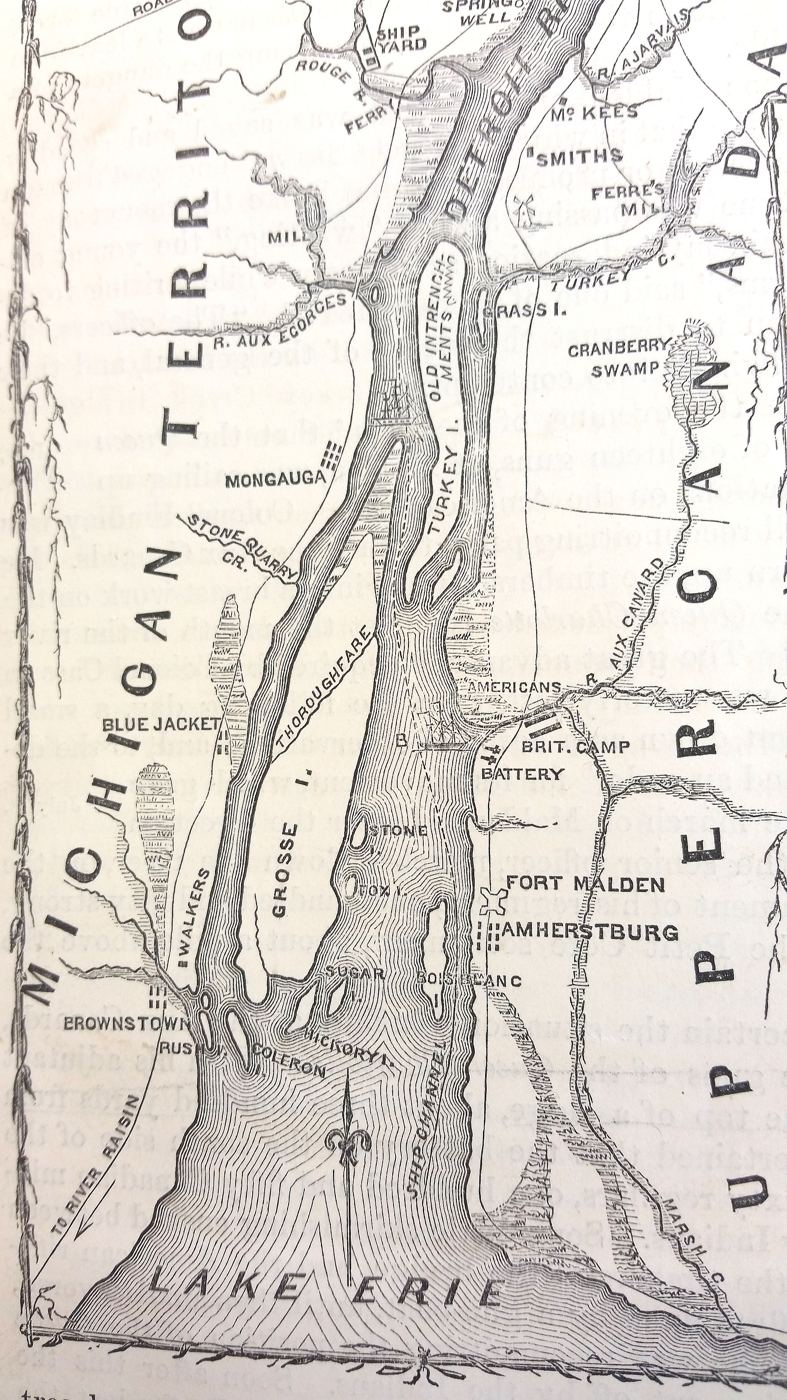

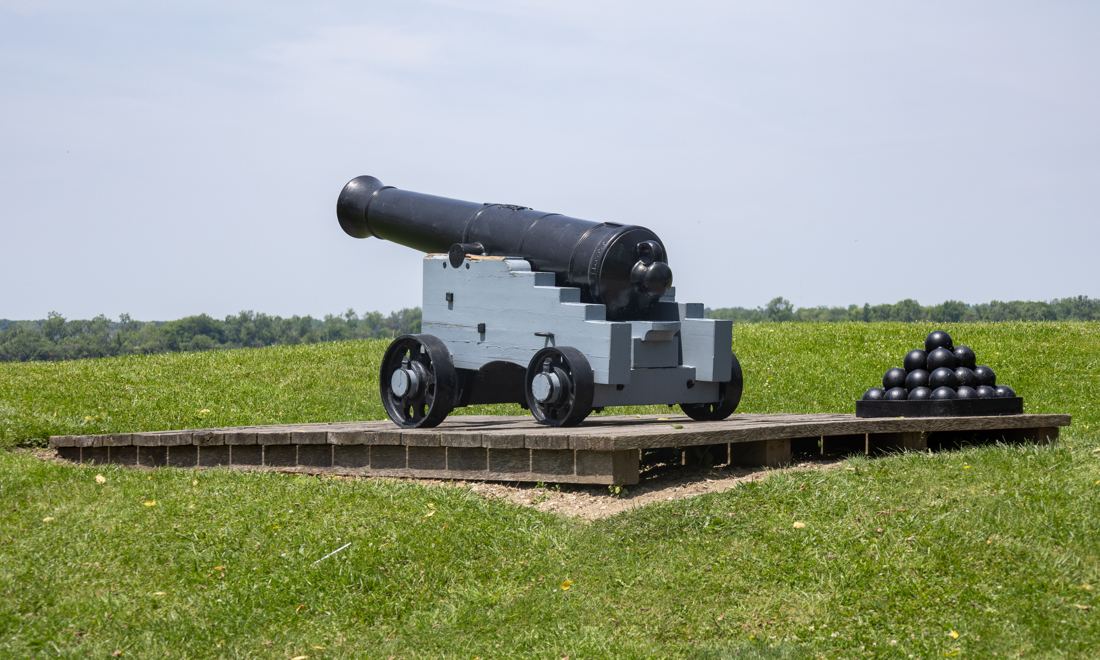

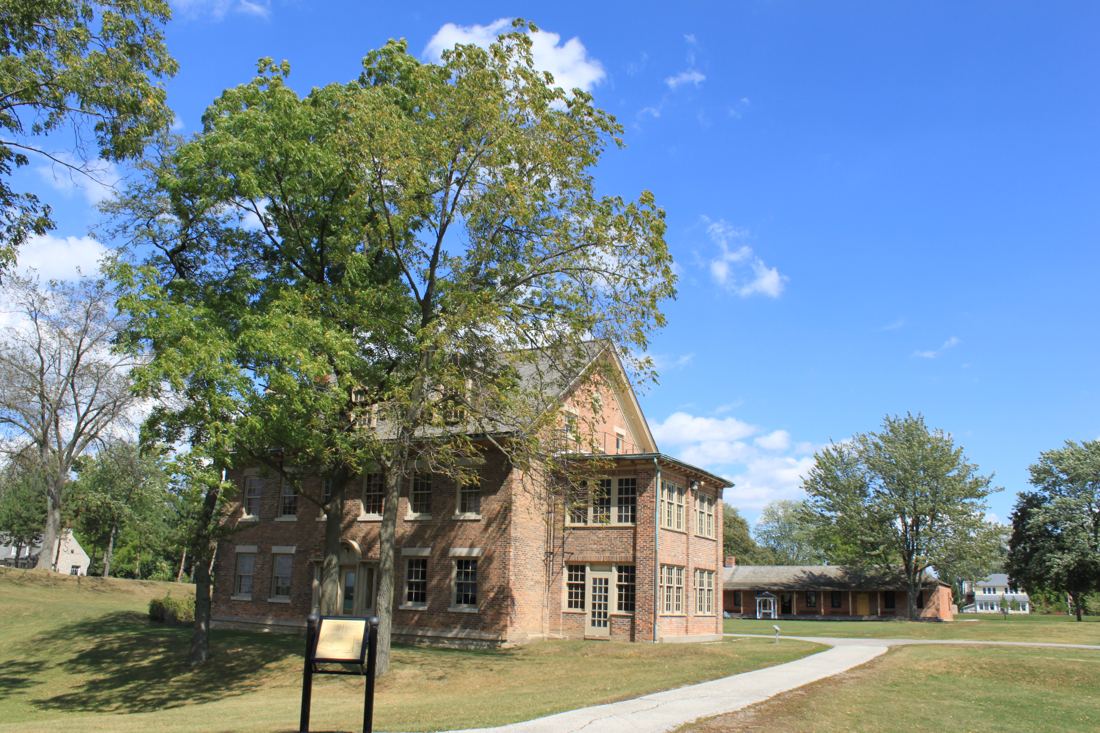

[On local soil / Home front] Fort Amherstburg (Fort Malden) was founded in 1796. In the War of 1812 it was "headquarters for the Right Division of the British Army in Upper Canada". The British destroyed it when they retreated in September 1813, and US forces occupied it "from October 1813 until July 1815". It was rebuilt in 1838–40.pcmalden (Parks Canada's fort page says the last regulars left in 1851. Its navy yard plaque text gives 1858 for the fort's military closure. The two dates may describe different stages.pcmaldennavyyard)
From 1796 to 1813 the Amherstburg Navy Yard was "the British Naval station for Lakes Erie and Huron". "Here were built the King's ships Maria, Hope, Earl, Camden, General Hunter, Queen Charlotte, Lady Prevost, Chippewa, Little Belt and Detroit." It had a large storehouse, two blockhouses, a timber yard with a saw pit, and a wharf. In 1812 the General Hunter and Queen Charlotte took part in the capture of Detroit. After the British defeat on Lake Erie, they burned the yard on 22 September 1813.navyyard A cairn at 268 Dalhousie Street marks the site.cairn
4. The War of 1812 on the Essex shore
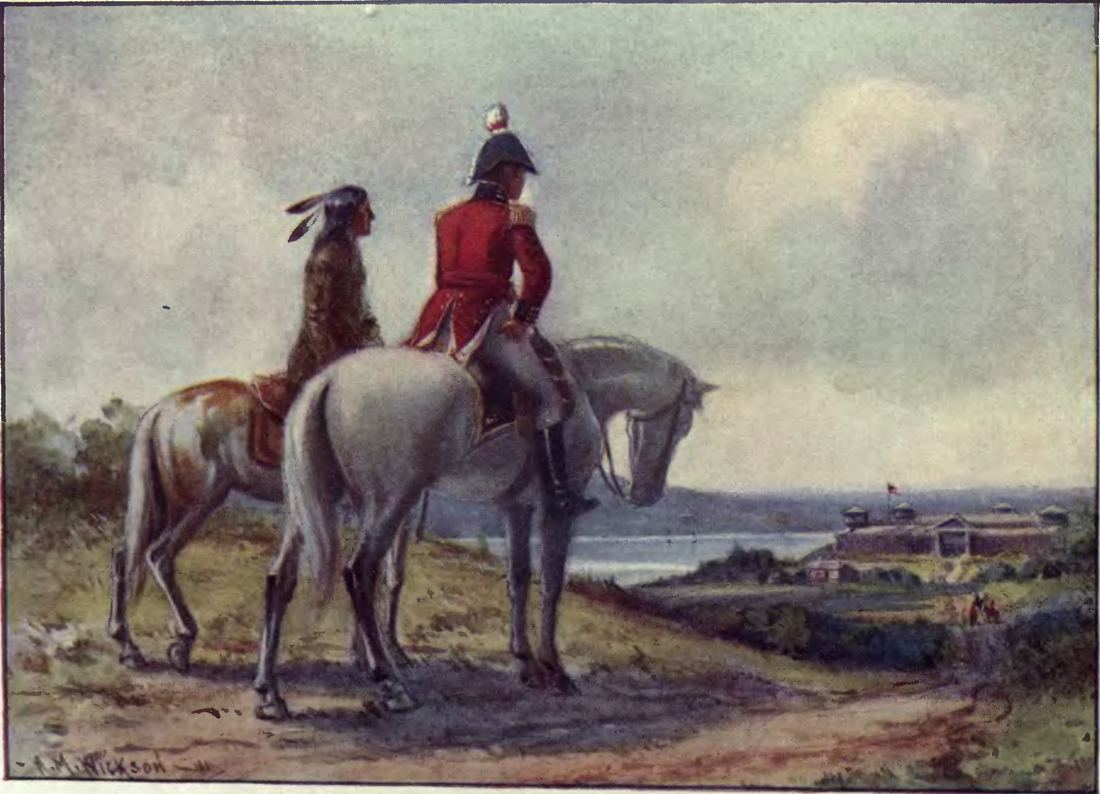

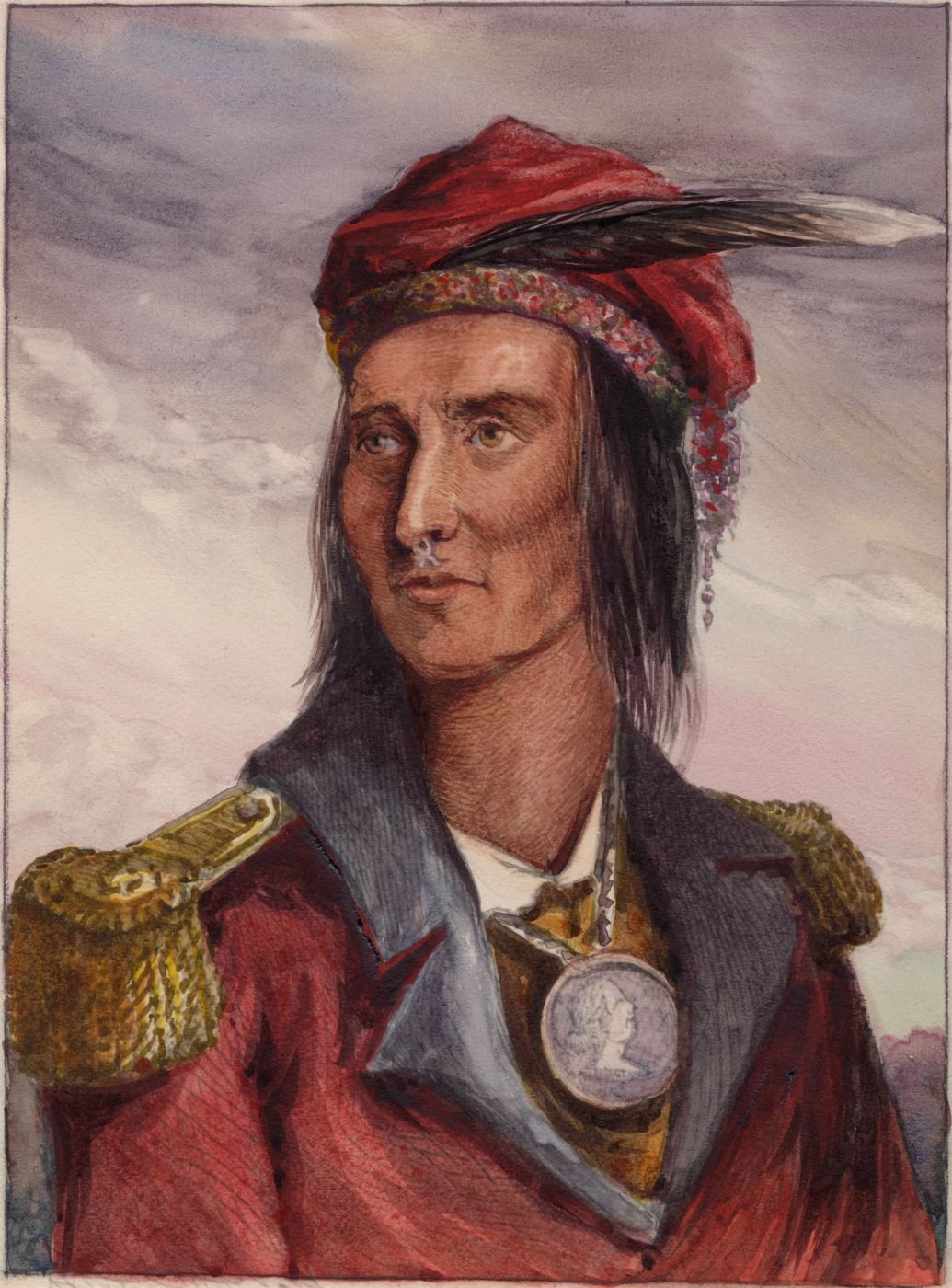

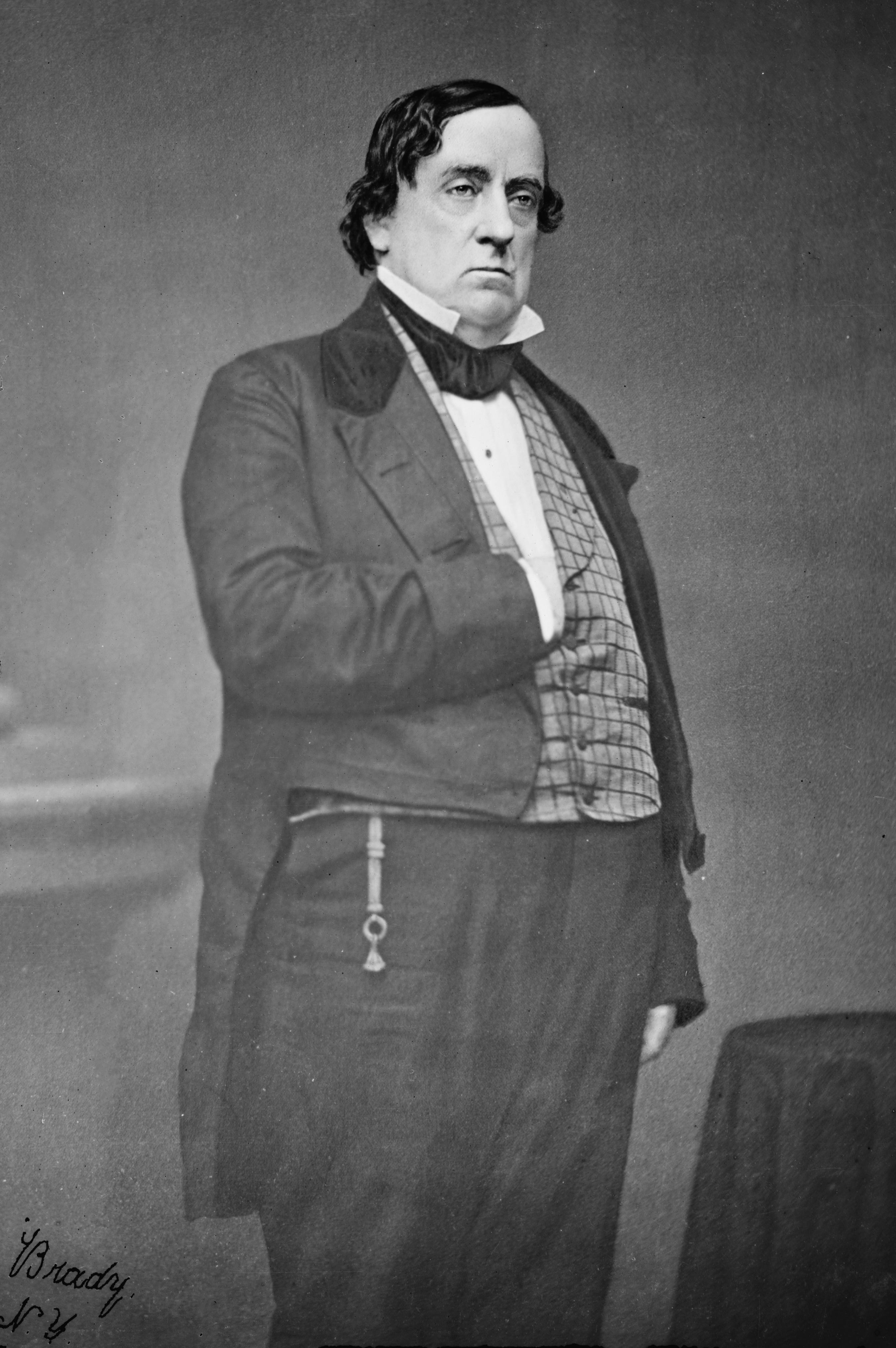
[On local soil] US General William Hull invaded on 12 July 1812. On 16 July Col. Lewis Cass and "about 280 enemy troops" attacked the British outpost at the Canard River. A federal plaque calls this "the first engagement in Canada involving British and American forces in significant numbers."canard At Sandwich, Hull's officers used François Bâby's house as their headquarters. It was "the first solid brick building in the Detroit area". Hull withdrew on 8 August. Brock arrived on 13 August and ordered two batteries built, and on 15 August they opened fire on Detroit.baby In his dispatch to Sir George Prevost, dated "Head Quarters, Detroit, Aug. 17, 1812", Brock reported:
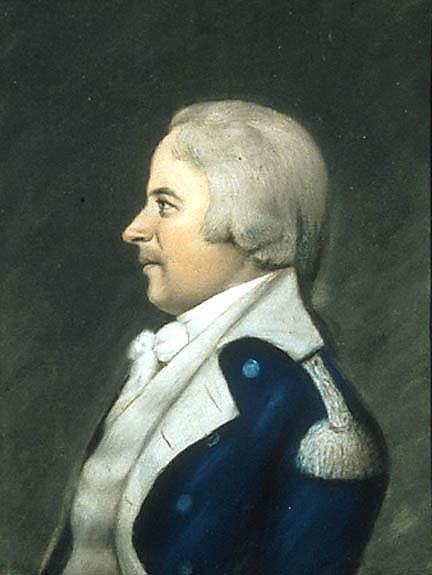


- The batteries opposite Fort Detroit held "one 18-pounder, two 12, and two 5-1/2-inch mortars" and opened fire on the evening of the 15th.
- His force landed at Spring Well the next morning, "three miles west of Detroit". It numbered "30 artillery, 250 41st regiment, 50 royal Newfoundland regiment, 400 militia, and about 600 Indians".
- Hull proposed "a cessation of hostilities" and surrendered a force Brock estimated at "not ... less than 2,500 men", along with 33 pieces of ordnance.brock1812
The surrender itself happened across the river, in the border region. Ships built at Amherstburg took part.navyyard Caldwell First Nation counts its people among the British allies of this war.cfn2 The red coats. A popular story says Brock dressed militia in red coats so they would look like regulars. His own dispatch doesn't mention it. The American side, however, recorded seeing exactly that:
- At General Hull's 1814 court-martial, Major Thomas Jesup testified that the British white force was "about 750, exclusive of Indians", and that "a part of the militia force was dressed in red coats as regulars."hulltrial
- Colonel Lewis Cass wrote to the Secretary of War on 10 September 1812 that the British had "twenty nine platoons, twelve in a platoon, of men dressed in uniform. Many of those were evidently Canadian militia."hulltrial
So hostile eyewitnesses support the red-coated militia, though they don't say whether it was a deliberate ruse. - A participant's account: John Richardson, then a young volunteer with the 41st, wrote in 1842 that after the landing only "550 men of all arms" were counted at first, and later 750, "including the militia who were employed in rowing the boats". The column then "moved forward by sections, at nearly double distance, in order to give to our little force a more imposing appearance."richardson This is a documented deception by spacing. He wrote it thirty years later.
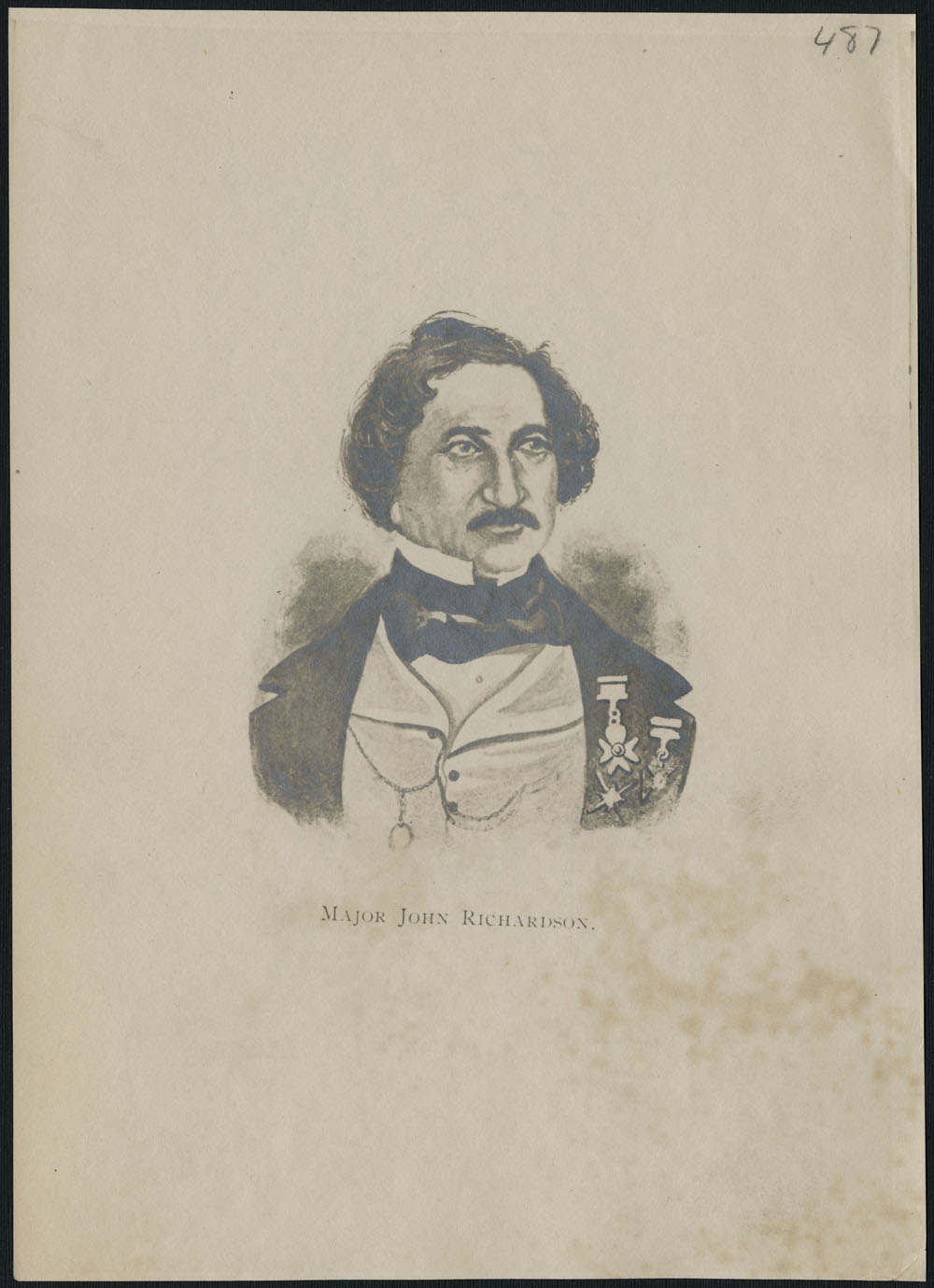

- Brock's summons to Hull, as printed by Richardson's editor: "you must be aware that the numerous body of Indians, who have attached themselves to my troops, will be beyond my control the moment the contest commences."richardson
The companion story, that warriors were paraded past a gap several times to look more numerous, hasn't been found in a primary source and is not included.
1837–1838
The Patriot raids. The execution count stays disputed.
5. The Patriot raids of 1837–38
[On local soil] After the 1837 rebellions, armed "Patriot" raiders crossed from the United States. John Prince, who settled at Sandwich in 1833, helped capture the rebel schooner Anne on 9 January 1838. He also served at Fighting Island (25 February) and Pelee Island (3 March).dcbprince
Black volunteers. Historian Irene Moore Davis records that "Josiah Henson's company of black volunteers attached to the Essex Militia was part of the group that captured the rebel schooner Anne". It also "defended Fort Malden ... from Christmas 1837 to May 1838". Afterwards "another company of 123 black volunteers, Captain Caldwell's Coloured Corps," was stationed there.afm One of Caldwell's volunteers was John Joseph Mulder, born enslaved in Maryland and the first known Black resident of Colchester.afm This service took place against local hostility. In 1835 white Amherstburg residents had complained of "the very numerous and troublesome black populations".afm
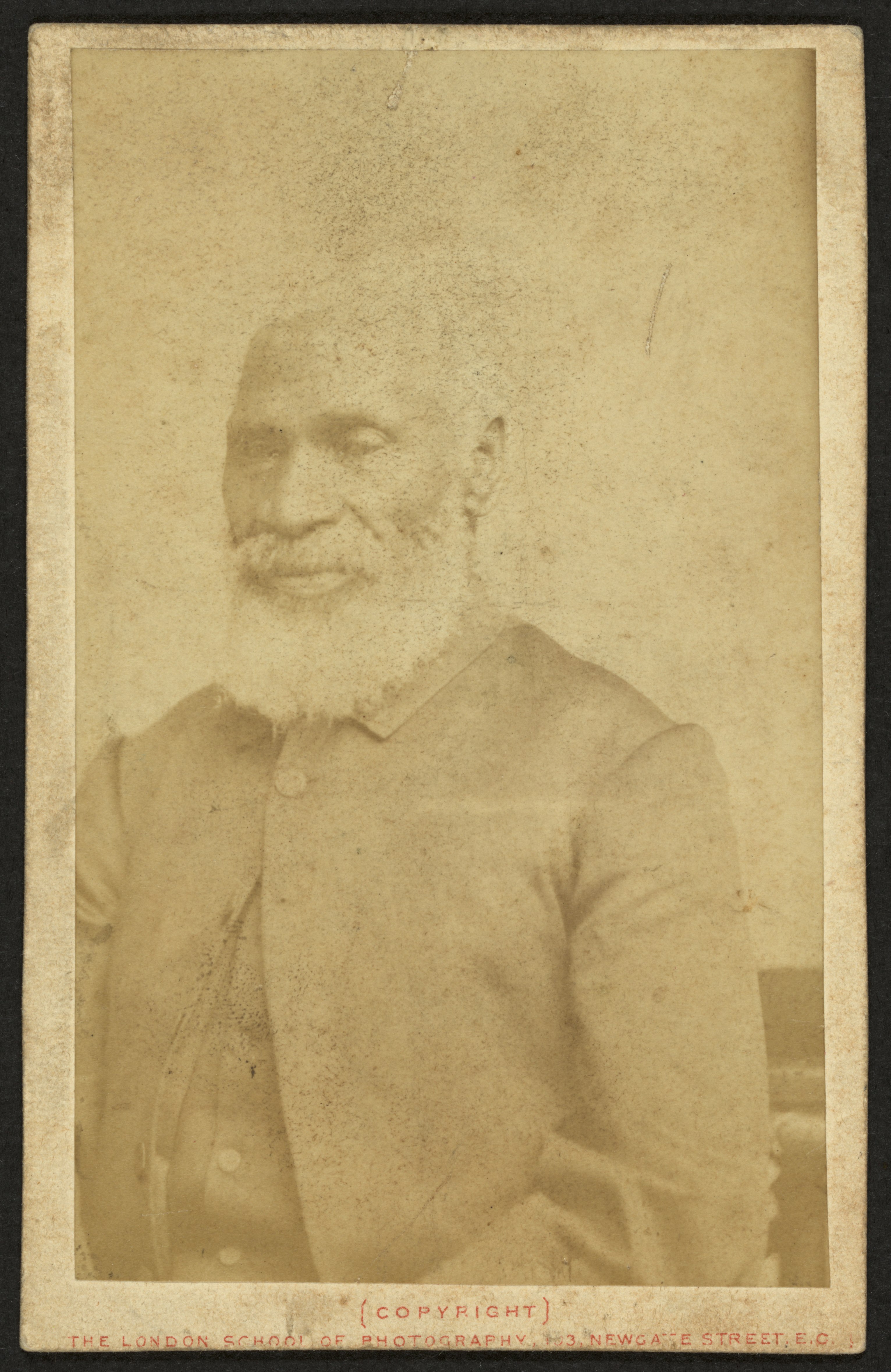
Pelee Island, 3 March 1838. Raiders had occupied the island. A force of 126 under Capt. George Browne, made up of regulars, militia and Indigenous allies, attacked them on the ice. "Browne's force lost five; the enemy's, at least eleven killed, including its leader, and eleven taken prisoner."pelee
Windsor, 4 December 1838.
- The official and scholarly record: the Dictionary of Canadian Biography says "more than 150 Patriots crossed to Windsor", and that 27 of them were killed.dcbprince The 1966 plaque gives about 140 invaders and about 130 militia.bowplaque
- A raider's eyewitness account: Robert Marsh, one of the raiders, published his memoir in 1848. He wrote that "164 men landed on the Canada shore three miles above Windsor." At the militia barracks, "the centry hailed, and without waiting an answer, fired". Soon "Capt Lewis fell, he was the second man from me." The barracks "was set on fire", which Marsh called "the only act which was not generally approved of", and "a steam boat [was] burned to the memory of the Caroline."marsh Marsh was a hostile, partisan witness writing ten years later. His claim that 44 defenders were killed has no independent support.
- The executions: Prince ordered prisoners shot without trial. The sources give different numbers. The 1966 plaque says four.bowplaque The DCB says five.dcbprince Marsh heard "four or five".marsh A Patriot memoir by Daniel Heustis quotes Prince's own report: "twenty-one were killed, besides four, who were brought in just at the close ... all of whom I ordered to be shot upon the spot."heustis Ross's The Patriot War (1890, p. 60) reproduces a report attributed to Prince describing four prisoners ordered shot. The original despatch has not been examined; other accounts give five, so the total remains disputed.rbross On pages 54–57 Ross reprints the Patriot committee's account from the Detroit Journal, which says four prisoners were shot and seven were spared. A diary entry attributed to Prince for 4 December is quoted on the Battle of Windsor marker (citing R. Alan Douglas's biography; the original diary hasn't been seen): "We attacked them & killed 27 & took about 20 prisoners. I ordered the first 5 taken to be shot."bowhmdb Fennings Taylor's 1867 biography, written in Prince's lifetime, says Prince "ordered the five prisoners to be shot", and quotes his letter: "They were shot accordingly."taylor1867 In 1907 a paper printed by the Essex Historical Society said "four or five shot by order of Colonel Prince".ehs1907b The accounts attribute four or five. They do not settle one total. The number stays disputed. Lt-Gov. Sir George Arthur called the executions "a most unwise proceeding". A court of inquiry cleared Prince in March 1839.dcbprince - A local eyewitness broadside, 1838: a printed sheet titled Battle of Windsor survives in Library and Archives Canada's collection. Canadiana catalogues it as "[S.l. : publisher not identified, 1838?]", a single sheet of 43 × 34 cm.canadiana51827 The text says "several weeks have elapsed" since the battle. The marker records it as "Published at Detroit", with a transcript at LAC RG5 B39. Its unnamed authors called themselves "eye-witnesses and actors in that affair". They were openly hostile to Prince. Everything below is the broadside's claim, not settled fact.bowbroadsidebowhmdb It describes:
- Captain Lewis's barracks: when the raiders approached, the sentinel (named as Osterbury) and an advancing raider aimed at each other, and "by a singular coincidence the pieces of both parties missed fire". Osterbury was later wounded in the left arm.
- Mills: "An inoffensive colored man, named Mills", was taken by the raiders and, "on refusing to join them was barbarously shot."
- Dr. Hume: Dr. Hume of the medical staff drove up to the raiders believing them to be militia. A young woman warned his companion, Mr. Morse. Hume was shot and his body mutilated. The broadside rejects the story that he was mistaken for Prince as "a fabrication".
- The spared prisoners (as the broadside tells it): seven raiders were captured in the woods to cries of "bayonet them". "Martin, one of the Indian braves" (the broadside's words; his Nation and full identity aren't recorded there) replied: "No, we are christians—we will not murder them—we will deliver them to our officers". When Prince ordered them shot, Samuel James pleaded: "For God's sake do not let a white man murder what an Indian has spared." Prince relented.
- The count: the broadside describes five separate killings of prisoners on Prince's orders. It puts the enemy dead, including those shot afterwards, at 32, and the defenders' loss at "4 killed, and 4 wounded".
- Reminiscences fifty years on: in 1907 the Essex Historical Society printed accounts written "almost fifty years after the battle". Its president, Francis Cleary, warned that this "will account, in some part, for the disagreements of the writers."ehs1907
- Miller: Windsor resident John D. Sullivan, a boy at the time, described a wounded raider named Miller lying in the Baby orchard. Miller told him: "Yes, I'm one of the Rebels, and I'm sorry for it." Francois Baby and Mr. Johnston carried him to Johnston's house and gave him coffee and toast. "Later, the man was shot." This matches the 1838 broadside's report of a wounded prisoner taken from "Mr. Wm. Johnson's" house and shot on Prince's order. The two accounts appear to describe the same man, but they spell the householder's name differently.
- Dr. Hume's death: the accounts conflict. The 1838 broadside says a raider named Bennett shot him. Sullivan saw him caught hiding in a cask and stabbed, and wrote: "I did not hear the report of a gun." John H. Harmon, a former raider interviewed by the Detroit Free Press in 1884, said Hume refused to surrender "to a set of rebels" and was shot.
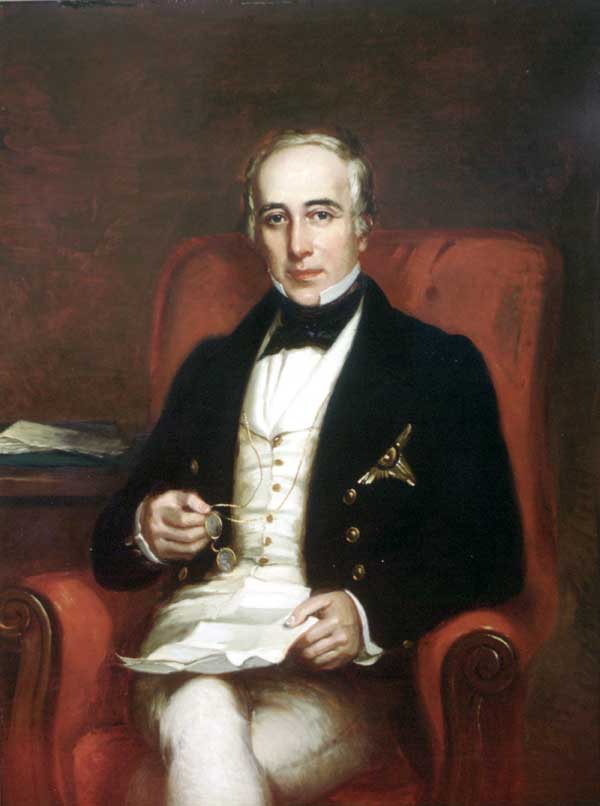

The broadside's details come from one partisan source. The figures disagree with Prince's despatch and diary and are recorded here, not reconciled.
- According to Heustis, seven of the captured raiders were later court-martialled and executed at London, Upper Canada.heustis
1914–1918
Ross, then Windsor's battalions. Ross's DCM action date stays unresolved.
6. Local people abroad: documented acts of gallantry
[Local people abroad] A person appears here only if three things are documented: a local link, a gallantry award, and a specific deed in an official or primary citation.
Sgt (C/S/M) Abbott Elmer Ross, DCM: First World War, 18th Battalion CEF
Local link (secondary research blog): born in Gosfield in 1891; afterwards a plumber in Windsor, where he died in 1974.ross18 Citation (London Gazette, 26 Jan 1918; service no. 53187):
"For conspicuous gallantry and devotion to duty when two platoons were ordered to establish posts in the enemy's line. Owing to very heavy shelling the party suffered several casualties, and he displayed fine leadership in keeping them under control and reorganising them. After reaching the objective he took charge of a bombing party and advanced towards the enemy's support line, clearing the dug-outs, and finally encountering vastly superior numbers. After the party had inflicted many casualties on the enemy he caused a barricade to be placed in the trench and held it until the newly-occupied position was consolidated. To his initiative and fine leadership can be attributed much of the success of the operation."lg30495
In his own words: Ross later wrote a memoir, Memories of an Old Soldier, which the regiment holds.ekrossitem According to the regimental collection's retelling, he described attacking with only twenty-two men left and recalled: "Had the Germans known how few of us there were, they would have wiped us out."ekross (This is an old soldier's later recollection, not an official record.) Uncertainty: The London Gazette citation of 26 January 1918 gives no date for the action. The regiment's collection places it on 17 August 1917, at Hill 70. A research blog gives 22 October 1917.ekrossross18 A published transcription of the 18th Battalion's 1917 war diary, not the Essex Scottish diary of 1942, describes a two-platoon attack on 16–17 August 1917, made under heavy shellfire, after which posts were established. For 18–22 October it records the battalion out of the line, training at Frevillers. The transcription is not an original scan. The diary does not name Ross, and his service file has not been read, so the date remains unconfirmed.wd18augwd18oct His service number, 53187, falls within the 18th Battalion's block of 53001–55000.mcc
11. The First World War: Windsor's battalions
[Home front / Local people abroad] Windsor's militia regiment was authorized on 12 June 1885 as the 21st "Essex" Battalion of Infantry, later the Essex Fusiliers. It became the Essex Scottish in 1927 and is today's Essex and Kent Scottish.dhhek In the First World War the area helped raise several battalions of the Canadian Expeditionary Force (CEF). The regiment now carries their lineage:
- 18th Battalion. A badge-collectors' study says it began recruiting in southwestern Ontario on 1 October 1914, "recruited by the 21st Essex Fusiliers". It sailed on 18 April 1915 with 36 officers and 1,081 other ranks under Lt-Col E.S. Wigle.mcc Sources disagree on whether it mobilized at Windsor or at London, Ontario. Ross's regimental profile says new recruits went to Wolseley Barracks in London for training.ekross Wigle was born in Gosfield South in 1859, practised law in Windsor and, according to a period biographical sketch, served as the city's mayor. He commanded the battalion in France until the summer of 1916.wigle Sgt Abbott Ross, DCM (see §6) served in this battalion.
- 99th Battalion (Essex). It was authorized on 22 December 1915 and sailed on 31 May 1916. In England its men were absorbed into the 35th Reserve Battalion and sent on as reinforcements, and the battalion was disbanded in 1917.dhhek A Museum Windsor catalogue record says its recruits were housed in the former Windsor fairgrounds exhibition building at Ouellette and Tecumseh, with a tent city along Ouellette.mw
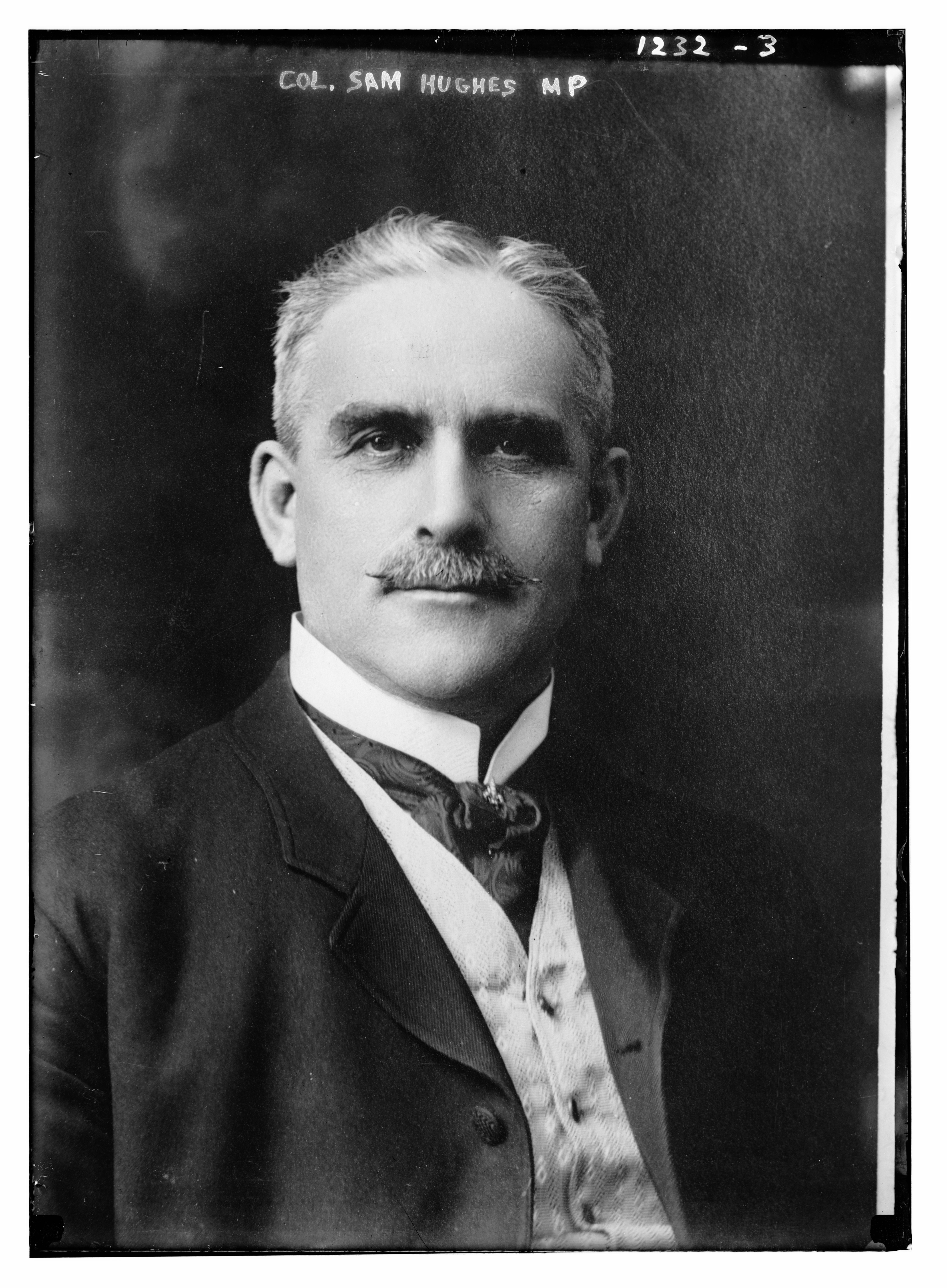
- 241st Battalion (Canadian Scottish Borderers). It was authorized on 15 July 1916 and sailed in late April 1917. On 7 May 1917 its men were absorbed into the 5th Reserve Battalion.dhhek The regimental collection calls it "the third battalion raised in the Windsor area". It was a kilted unit, and the kilts were paid for locally because the Minister of Militia, Sam Hughes, wouldn't fund them. By October 1916 it had only about 500 men. The collection gives 552 men sailing on the S.S. Olympic, and says "twenty-seven percent of the battalion was American, most being from Michigan." It also records 75 former members killed after being sent to front-line units.ek241 (Its sailing date of 1 May 1917 differs from the official 29 April.)
Because the 99th and 241st were broken up for reinforcements, they didn't fight as units. Their men served with other battalions.
1939–1945
Home front, women, service at sea, Dieppe, the 1942 diary, Myers, and Tilston. Dieppe column counts stay provisional name counts, not deaths or strength. Stacey's figures and the regimental association's figures stay unresolved with each other.
10. The home front
HMCS Hunter. Windsor's naval reserve division was formed in March 1940. It was commissioned as HMCS Hunter on 1 November 1941 and became an independent shore establishment on 1 September 1942.rcnhunterdhhhunter Because Windsor is a border city, Hunter "trained a large contingent of Polish-American volunteers who eventually transferred to the Polish Navy". In 1981 Cdr Marilyn O'Hearn became the first woman to command a Naval Reserve Division.rcnhunter Universal Carriers. The Canadian War Museum holds a Universal Carrier Mk II built by the Ford Motor Company of Canada in July 1943. It notes that "Ford of Canada and the Dominion Bridge Company made 29,000 Mk II Universal Carriers".cwm (Another museum page says "more than 28,000 were produced in Windsor". The figures conflict, so the Canadian War Museum artifact record is the one used.) Three wartime National Film Board photographs held by LAC (March 1941 and July 1942) show a carrier on the test slope, workers on a military vehicle assembly line, and track-link castings. Library and Archives Canada titles the assembly-line frame Universal Carriers (MIKAN 3195715). The vehicle in that frame is a wheeled truck, so it is not called a tracked carrier. LAC records the place as "Windsor, Ont."lacford Keep these production figures separate, because they measure different things:
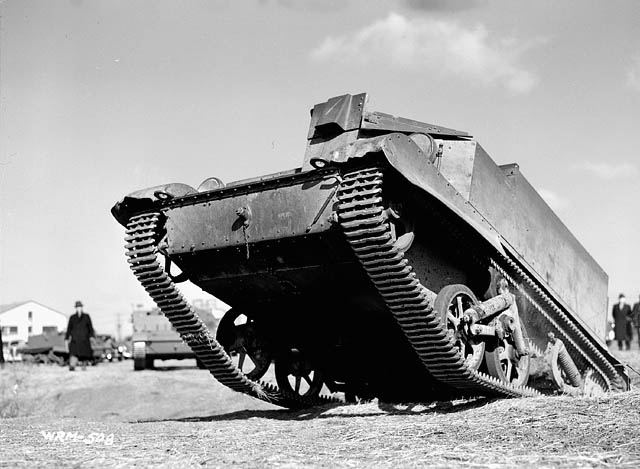
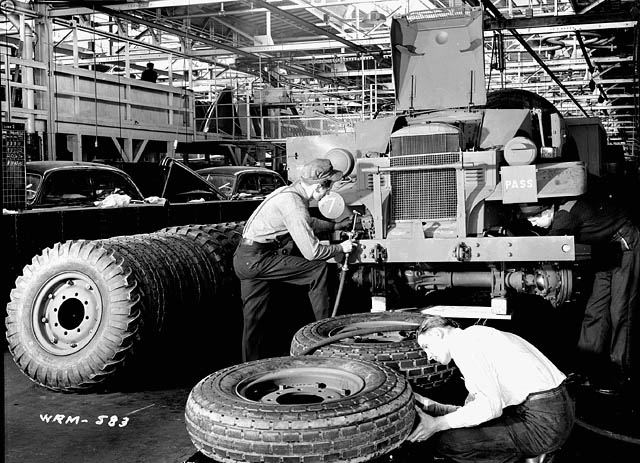
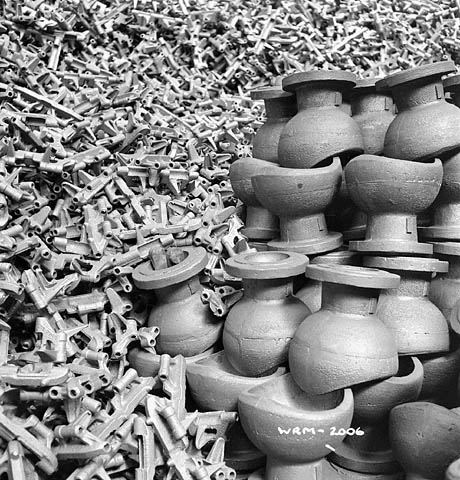
- Ford of Canada's total output: Ford's own heritage page says the company "produced some 335,000 vehicles for defence", including Canadian Military Pattern (CMP) trucks and Universal Carriers.fordca That is a company-wide figure, not one for Windsor alone.
- The Windsor Carrier: this was a longer, Ford-built development of the Universal Carrier, with "one extra bogie wheel per side". The Department of Munitions and Supply's own wartime Design Record describes it.dmsdesign A secondary museum source says Ford Canada built it in a single batch of 5,000 in 1944–45.muralwindsor
- National totals disagree: 815,729 military vehicles (Canadian Encyclopedia) against 857,970 (a secondary compilation that also gives 28,992 Universal Carriers). These are Canada-wide figures and are left unreconciled.
- Production in 1941: in the House of Commons on 4 November 1941, a government speaker said universal carriers "came into production in the middle of the year, and already over 1,500 have been delivered."hansard1941
Wartime boatbuilding. A private naval-history archive records that the Canadian Bridge Company of Windsor built small craft during the Second World War. They included tugs for the Royal Navy, the RCN oilers Dundalk and Dundurn (launched 1943), and the tugs Riverton, Maxwell and Clifton (1944). The archive itself is unsure where the yard was.nma
12. Women in service and war work
[Home front / Local people in service]
- War production. A Windsor Public Library exhibit records that during the Second World War labour shortages, "women found greater opportunity for employment at Chrysler, Auto Specialties, General Motors". Women built Browning machine guns at Border Cities Industries, a government-owned plant managed by General Motors, while "the machine set-up and 'most vital inspection work' was performed by men." Ford was the exception. It "employed two-hundred women in its office", but after workers struck in defence of equal pay, it "decided it would rather hire no women at all than pay them men's wages."wplwomen A 1994 exhibition chronology dates that wildcat strike by UAW Local 200 to November 1942 and calls it "probably the first industrial action over equal pay for women in Canada". That claim is the exhibition's own, and it hedges it.donegan
- Lance Corporal Dorothy Helena James, Canadian Women's Army Corps, was born in Langton, Ontario, in 1922. Her parents lived in Windsor. She died in Ontario on 23 September 1944, aged 22, and is buried in Windsor's Grove Cemetery.djames
- Further CWAC and RCAF Women's Division service by Windsor women is under research. That roll is still incomplete.
Nursing sisters (first documented names; not a complete roll).
- Captain (Nursing Sister) Beatrice A. Girard, RCAMC, 1942–45 (Town of LaSalle: "born and raised in LaSalle"; a Hôtel-Dieu nursing graduate, 1928). LaSalle's tribute says she served in hospitals in South Africa and Egypt with the South African Military Nursing Service, and went to England in 1945.girard (A municipal tribute; her service record hasn't been seen.)
- Nursing Sister Gertrude Billyard, CAMC, First World War (born in Windsor, according to her CEF service file as cited by a secondary source; her adult life was in the Prairies). She enlisted in London, England, in February 1915 and served in England, France and Salonika.billyard The primary file hasn't been opened yet. Her date of birth varies across records; that is unresolved, and family genealogy is not used here.
9. At sea: Windsor's merchant mariners and sailors
[Local people abroad] This is a first sample from the CVWM, not a complete roll.
- Chief Radio Officer Frank (Francis George) Taylor (CVWM: born in Windsor; parents "from Windsor"), born in 1913, served in the Canadian Merchant Navy aboard M.V. Victolite. The ship was torpedoed on 11 February 1942 about 260 nautical miles north-northwest of Bermuda. There were "no survivors out of a crew of 47".taylor
- Oiler John O'Brien (CVWM: born in Windsor; "From Windsor") was aboard USAT Henry R. Mallory. It was torpedoed on 7 February 1943 in convoy SC-118 southwest of Iceland.obrien
- Fireman Walter Varley Standing (CVWM: born in Chinguacousy, Ont.; parents "of Windsor". Family link only; it doesn't establish that he lived here) died aboard S.S. Arandora Star when it was torpedoed on 2 July 1940.standing
- Royal Canadian Navy (Volunteer Reserve): AB Charles Brannagan Dowell (HMCS St. Croix, died 20 Sep 1943; parents and wife of Windsor) and Stoker Stanley Lewandowski (HMCS Athabaskan, died 29 Apr 1944; enlisted in Windsor).navy
- Ordinary Seaman Walter Brozovich, RCNVR, HMCS Clayoquot, died 24 December 1944, aged 20 (CVWM: born in Gorski Kotar [Croatia]; parents "of Windsor". Family link only).brozovich
- Able Seaman Frederick Francis Monroe Taylor, RCNVR (V/19524), HMCS Ottawa, died 13 September 1942, aged 22 (CVWM: parents "of Essex, Ontario". Family link only).fftaylor
The HMCS Hunter roll. Windsor's Naval Monument Plaza has plaques headed "HMCS HUNTER PERSONNEL WW II", listing 50 names, as transcribed in VAC's memorial inventory.nmp A research matrix checks each name against its CVWM profile. As of 7 Nov 2026, 48 of the 50 are matched or probably matched (two, Anderson W.J. and Bostelnic W.M., have no CVWM naval match and are not described here). 35 of those 48 have a Windsor–Essex connection in the CVWM: born or enlisted here, or parents or a wife "of" Windsor, Riverside, Roseland, Sandwich East, Leamington, Harrow, Tilbury or Essex. Others list families in Sarnia, Chatham, Wallaceburg, Toronto, Regina and Michigan, which suggests Hunter also trained men from beyond the county. They were naval personnel (RCN/RCNVR), not merchant mariners. The monument's separate ship-loss plaques (77 merchant ships and 1,629 lost; also "70 merchant vessels") are national lists and do not mean the crews were local. Burial and memorial places differ from name to name (several are on the Halifax Memorial; others are buried in France, Iceland, Newfoundland or Windsor). Some plaque spellings differ from the CVWM (e.g. SILK "MAJES" E. = James Ernest Silk; SORREL / Sorrell). The plaque rank "L CDR" appears to mean Leading Coder, not Lieutenant-Commander. How each person is connected to Windsor is labelled from the record; a parent's address isn't proof the person lived here.
CSM Cornelius "Con" Stapleton, DCM: Dieppe, 19 August 1942, Essex Scottish
Local link: born in Goderich in 1914; moved to Windsor in 1938; enlisted in the Essex Scottish in 1939.ekstap The official historian wrote that "only one party of the battalion got across the Promenade and into the buildings. This consisted of about a dozen men led by C.S.M. Cornelius Stapleton, who, as reported in a letter from Lt.-Col. Jasperson, 'accounted for a considerable number of enemy in transport and also enemy snipers'."stacey He was taken prisoner. He received the DCM "in recognition of gallant and distinguished services at Dieppe".lg37499 The cost: word of his party's progress reached the force commander "in this extremely exaggerated form": "Essex Scottish across the beaches and in houses". The official history says this was "responsible for his decision to land the floating reserve".stacey
The Essex Scottish at Dieppe
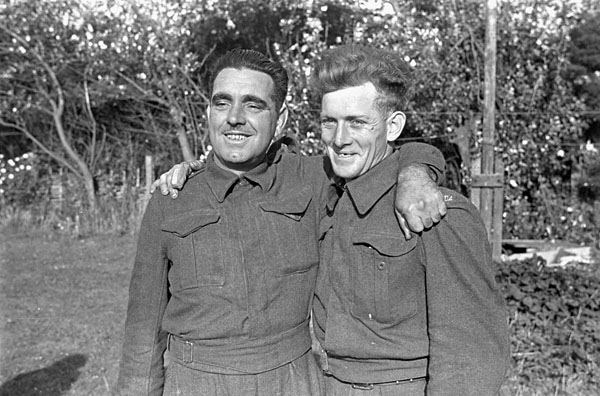
By the regimental association's and the official historian's figure, 553 Essex Scottish all ranks embarked for Dieppe (a retrospective total; the scope is not stated).ekdieppe The official historian (C.P. Stacey, Official Historical Summary, 1948, written after the war from the records) says that "out of 553 all ranks, it brought back only 52, of whom 28 were wounded."stacey The regimental association's pages give different figures for killed and captured (121 killed, with either 388 or about 382 prisoners), so no combined total is given here.ekdieppe Pte Eugene Cousineau told the Windsor Star that men on the beach were "making bets on who'd get it next".ekdieppe
7. Local people abroad: awards without a documented deed
From the battalion's own 1942 war diary. The digitized 1942 war diary. The entries below are cited by PDF leaf number and were checked against the page images, not the OCR.diary1942
- The rear party's view (18–21 Aug 1942, leaf 862). The diary entry was written by the battalion's rear party in Sussex. It does not narrate the battle; it refers readers to an appendix: "The glorious attack on DIEPPE is colourfully painted by Capt. D.F. MacRae, S.D. & G. Highrs." On 20 August, "the rear party are beginning to surmise that their own bn has at last taken active part", and "only several men began to straggle back from Southern England ports. Rumours filtered through that casualties were high." On 21 August, to rebuild a cadre of officers, several were taken on strength, among them Lieut. F.A. Tilston, the future Victoria Cross recipient. The rear party "were filled with apathy when it became evident that it was no more rumour that casualties were high."
- Interim status, not final fate (leaf 840). Part II Order No. 58 (29 Aug 1942) lists officers who "failed to return from Jubilee Operation". It shows Lt-Col F.K. Jasperson as "Missing believed killed". He was in fact a prisoner (see below). The list records what the battalion knew ten days after the raid, not what happened to each man.
- First awards (leaf 968). Regimental Order No. 125 (3 Oct 1942) announces the first Dieppe awards to the battalion:
- MC: Capt. D.F. MacRae (typed "MC RAE") (S.D.&G. Highrs, attached) and Capt. (now Major) H.J. Kennedy
- DCM: A21509 Pte J. Maier
- MM: seven men
- Mentions in despatches: including Major J.A. Willis and Lieut. J.C. Palms, "(killed in action)"
- Every name on this list matches the London Gazette Supplement 35729 (2 Oct 1942), pp. 4329–4330 (MC MacRae and Kennedy; DCM Maier; MM Hussey, Dixon, Carle, Baker, De Laurier, Marchant, Mizon; MiD Willis, Palms, Campbell, Donaldson, Jones, Mellott, Brown, Carley, Cousineau, Crockett, Ferrari).lg35729 The Gazette spells it MacRae; the diary has "MC RAE".
- Stapleton's DCM and Jasperson's DSO are not on this 1942 list. They were gazetted later (see the Gazette citations above). The diary does not give their citations.
- Windsor's Christmas message (leaf 1228). Order No. 162 (28 Dec 1942) records a greeting signed by Mayor Arthur J. Reaume: "Our gallant Essex Scottish Regiment has written its name gloriously upon the sands of Dieppe. We the people of their home town pay tribute to the memory of those who were lost and pray for the safe return of those who are now prisoners of war."
- Counts: see the roll-count note below. The diary rolls give provisional counts of names in each order's columns, not death or regiment-strength totals. The conflict between Stacey's 553/52 and the regimental association's figures stays unresolved.
Lt-Col Frederick Kent Jasperson, DSO, ED
He was born in Kingsville in 1900 and practised law in Windsor from 1925 to 1939.barrettjaspheritage He commanded the Essex Scottish at Dieppe and was "taken prisoner for three years".jaspheritage His DSO was gazetted "in recognition of gallant and distinguished services at Dieppe".lg37499 No individual citation has been found, so this site describes no particular act.
Flying Officer William James "Bill" Myers, DFC: 441 Squadron RCAF
Local link: born in Windsor on 23 March 1923. An RCAF caption of the time gives his home as 3236 Linwood Place, Windsor. He enlisted in Windsor on 5 May 1941.ffyl Service: After air training in Ontario (No.1 ITS, No.20 EFTS, No.6 SFTS) he went overseas in January 1942. He was commissioned on 1 September 1943 and served with No.403 Squadron, then No.441 "Wolf" Squadron. He was released on 1 October 1945 and joined the RCAF Auxiliary (No.401 Squadron) in 1946.ffyl The action: On 13 July 1944, over Normandy, 441 Squadron was led by S/L Tommy Brannagan, reported as "of Windsor". It caught a formation of 12 FW190s near Argentan and shot down 10. A Canadian Press dispatch called it "largely a Border City triumph", and Myers destroyed three. CP also described him as "a veteran of between 80 and 90 operational flights".ffyl Citation (London Gazette, 17 Oct 1944):
"This officer has displayed a high standard of skill and efficiency. He has completed very many sorties and has at all times pressed home his attacks with great determination inflicting much damage on the enemy. On one occasion his squadron encountered 12 enemy aircraft. Flying Officer Myers destroyed two before his aircraft sustained damage. Nevertheless, he continued the combat and destroyed a further enemy aircraft, bringing his total to three destroyed. This officer has set a worthy example."lg36750
Contradictions noted: an RCAF orders transcription gives his total as "3.5 destroyed". One modern victory table calls the 13 July aircraft "Me109s", while both wartime dispatches say FW190s.ffyl A wartime light moment, as RCAF publicity told it: when his guns jammed behind an FW190, Myers "flew wingtip to wingtip with him and made a derogatory motion of the fingers". He said afterwards: "I was so mad I could have cried."ffyl (RCAF publicity caption PL-26650, not an independent record.)
Major Frederick Albert Tilston, VC: Essex Scottish, the Hochwald, 1 March 1945
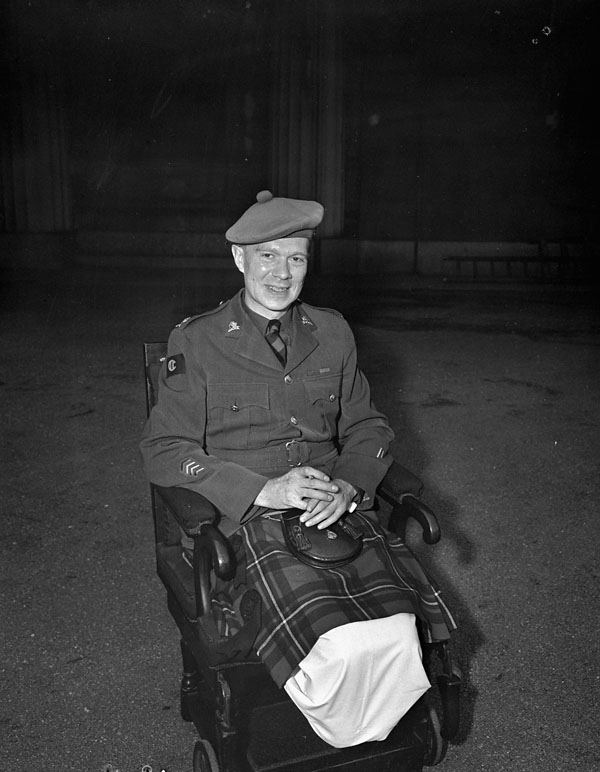


Link: regiment only. He was born in Toronto on 11 June 1906 and died there on 23 September 1992. He served with Windsor's regiment.dndtil Context: The Hochwald forest was "Germany's last defensive position on the west bank of the Rhine River". The Essex Scottish attacked its northern half. Tanks of the Sherbrooke Fusiliers couldn't support them because the ground was too soft.dndtil Citation (London Gazette, 22 May 1945), extracts:
"Across approximately 500 yards of flat open country, in face of intense enemy fire, Major Tilston personally led his Company in the attack, keeping dangerously close to our own bursting shells in order to get the maximum cover from the barrage. Though wounded in the head he continued to lead his men forward, through a belt of wire ten feet in depth to the enemy trenches ... he was first to reach the enemy position and took the first prisoner ... As he approached the woods he was severely wounded in the hip and fell to the ground. Shouting to his men to carry on without him and urging them to get into the wood, he struggled to his feet and rejoined them ... the Company was now reduced to only 26 men, one quarter of its original strength ... When the supply of ammunition became a serious problem he repeatedly crossed the bullet swept ground to the Company on his right flank to carry grenades, rifle and Bren ammunition to his troops and replace a damaged wireless set ... He made at least six of these hazardous trips ... On his last trip he was wounded for the third time, this time in the leg. He was found in a shell crater beside the road. Although very seriously wounded and barely conscious, he would not submit to medical attention until he had given complete instructions as to the defence plan."lg37086
Before this action: he had been wounded in training, and by a land mine near Falaise in 1944.dndtil
Ralph Mayville and the First Special Service Force
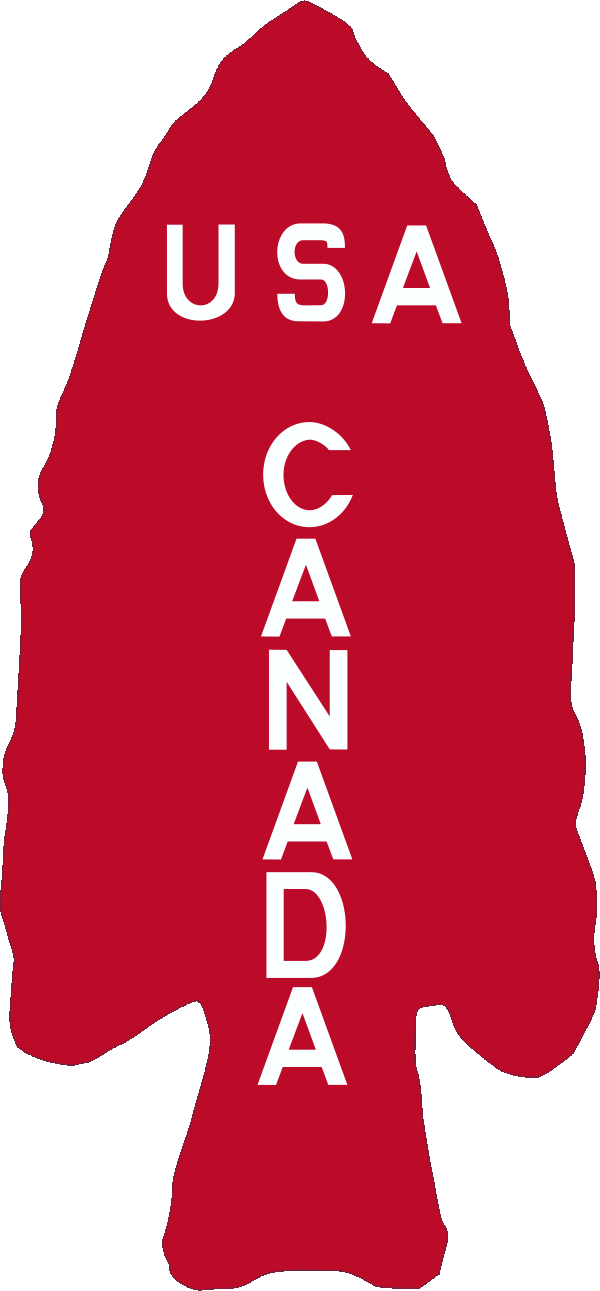
First Special Service Force shoulder sleeve insignia
Official drawing
A modern drawing of a cloth shoulder patch. Not a photograph of a wartime patch, and not a personal patch.
The Institute of Heraldry approved it on 14 September 1942 and rescinded it on 2 April 1959.
The catalogue describes a red spearhead with USA above and CANADA down the centre, in white letters.
Drawing: U.S. Army Institute of Heraldry, via Wikimedia Commons. Public domain as a U.S. federal work. Source file History source

Illustrates the force insignia only. It does not show a patch Ralph Mayville owned or wore, and it is not an endorsement.
The First Special Service Force was a combined Canadian–American force of the Second World War, not a division. A Department of National Defence account says it was stood up at Fort William Henry Harrison, near Helena, Montana, on 19 July 1942, and disbanded at Villeneuve-Loubet in France on 5 December 1944. That account describes three regiments and lists service in the Aleutians, Italy, and southern France. It also reports that on 3 February 2015 the force, as a unit, was awarded the Congressional Gold Medal (account).
CBC News, in a report published on 9 August 2019, says Ralph Mayville was born on 21 August 1921, grew up in Amherstburg, and later lived in Windsor. Citing records at the Windsor Public Library, CBC says he joined the Essex Scottish in 1940 and then the Royal Canadian Regiment, and that in 1944 he was with the force in Italy. CBC says he was trained as a paratrooper and did not make his first jump until 2014. That sentence is not entitlement to parachute wings. The same report says he had died; the headline gives his age as 97 (CBC). A service file has not been read. The report does not give a birthplace.
CBC wrote that he was awarded the Congressional Gold Medal in 2015. The defence account above says the medal went to the force as a unit. It is not a personal decoration. A Windsor Star story whose title says he recalled a sniper role could not be reopened on 7 Nov 2026, because the site refused the check. The sniper description is that paper's, not a finding from a service file. No roster of other force members is published here.
The drawing with this section is the Institute of Heraldry's shoulder-sleeve insignia for the force. It is not a wartime patch and it is not Mayville's own. The same drawing is in the [patches and insignia gallery](patches.html).
1950–2008
Korea and Afghanistan, then peacekeeping. The Korea count stays unreconciled. The peacekeeping search stays incomplete. Regiment records through 2014 follow, and they do not settle those limits.
8. In memoriam: Windsor–Essex dead, Korea and after
[Local people abroad] These are records of service and loss. They aren't claims of particular heroic acts. Local links are given exactly as the Canadian Virtual War Memorial (CVWM) states them.
Korean War
| Name | Unit | Local link (CVWM) | Died |
|---|---|---|---|
| Pte Earl Alva McIntyre | 1 PPCLI | Born in Windsor, 1931 | 15 Jan 1952, South Koreamcintyre |
| Pte Robert James Jones | RCR | Father of Windsor | 11 Oct 1951, South Korearjjones |
| Pte Kenneth Bryant Jones | RCASC | Raised in Windsor by his aunt and uncle; also a WWII veteran (Italy, NW Europe) | 8 Jan 1952, South Koreakbjones |
| Pte Joseph Wilfred Major | R22eR | Parents of Windsor | 19 Aug 1952, South Koreamajor |
| Gnr Clifford Donald Weir | RCA | Parents of Windsor | 3 May 1953, South Koreaweir |
| Pte Robert Frederick Thomas Girard | 3 RCR | Born in Amherstburg, 1932 | 3 May 1953, Hill 187, South Koreagirard |
| Pte Leo Joseph Tellier | PPCLI | Born in Tilbury; family of Belle River | 16 May 1953, Belle River, Ontariotellier |
| Pte Clifford Joseph Laframboise | Black Watch (RHR) | Born in Windsor, 1931 | 14 Jun 1954, South Korea (after the armistice)lafr |
How many? Local reports put the Windsor–Essex dead at seven.cbcws2007 The CVWM shows eight people with a local link, including one who died after the armistice and one who died in Ontario. The 2007 Windsor Star list and the CVWM share six names: McIntyre, Weir, Robert James Jones, Kenneth Bryant Jones, Tellier, and Laframboise. The CVWM also records Major and Robert F.T. Girard. The 2007 list names "H. Girard, 20". Whether that is Robert F.T. Girard has not been established.ws2007 A CBC report in 2018 names four: McIntyre, Weir, Robert James Jones, and Tellier, whom it calls Joseph Tellier.cbc The Veterans Affairs transcription of the 2009 monument shows a local dot on three names: McIntyre, Weir, and Major.kormem Which seven names are starred on that monument has not been confirmed. A name missing from one of these lists is not evidence about the others. The lists may have been drawn up on different bases. Neither is the complete total. The count hasn't been reconciled. Weir and Robert F.T. Girard died on the same day, 3 May 1953. The CVWM records his death at Hill 187; it gives no place for Weir beyond South Korea. The Windsor and Essex County Korean Veterans War Memorial on Riverside Drive West was unveiled on 30 May 2009. It lists all 516 Canadian dead.kormem
Afghanistan Cpl Andrew Paul Grenon, 2nd Battalion PPCLI, was born in Windsor on 19 January 1985.grenon On 3 September 2008 he was one of three soldiers killed "after an insurgent attack on their armoured vehicle while they were conducting a security patrol in Zharey district". The other two were Cpl Michael Seggie and Pte Chadwick Horn.dnd2008 He was awarded the Sacrifice Medal (posthumous) and is buried in Windsor.grenon A redbud tree at 4007 Sandwich Street, dedicated on 21 June 2009, carries the words "Local Son, National Hero".grenontree
Korean War memorial, further records
The count of Windsor–Essex dead above stays unreconciled. A star or a dot on the monument is not that count. The City of Windsor records the Korean Veterans War Memorial as dedicated on 30 May 2009 in Dieppe Gardens, in honour of 516 Canadians (city page). A Windsor Star report says seven names are starred for Windsor and Essex County (report). Veterans Affairs Canada's transcription of the monument, read on 7 Nov 2026, uses a dot for "WINDSOR AREA FALLEN" and shows that dot on three names only: Joseph W. Major, Earl A. McIntyre, and Clifford D. Weir (transcription). The other four are not identified in that transcription. This is not a roll of all seven stars. A named organizer is omitted until two spellings of the surname are reconciled.
The Canadian Virtual War Memorial records Private Earl Alva McIntyre, 1st Battalion, Princess Patricia's Canadian Light Infantry, as born in Windsor on 8 October 1931. It records that he died in South Korea on 15 January 1952, aged 20 (record). It does not use the word killed for him.
The same memorial records Private Joseph Wilfred Major, Royal 22e Régiment, as born in Kirkland Lake, Ontario, on 29 April 1928, and as the son of Joseph and Rose Alma Major of Windsor. His parents' address is not a Windsor birth. It records that he died in South Korea on 19 August 1952, aged 24, and that he is buried in the United Nations Cemetery in Busan (record).
Gunner Clifford Donald Weir, Royal Canadian Artillery, carries one of the three dots. The Virtual War Memorial records his birth as St. Thomas, Ontario, on 24 November 1931, and names his parents, Clifford Boyce and Jeanette Weir, as of Windsor. He died in South Korea on 3 May 1953 (record). The Windsor link stated there is his parents' address, together with the dot on the monument.
A CBC report published on 19 April 2018 says the Korean War Veterans Association in Windsor was looking for families, and it says: "Last November, seven trees were planted near the highway in honour of soldiers from Windsor-Essex who died during the Korean War" (report). The report does not give a calendar year for that November.
Chuck Milks, as the Town of LaSalle describes him
The Town of LaSalle lists Chuck Milks among its local veterans (page). The page says he enlisted in the Royal Canadian Navy in February 1948, held the rank of leading seaman, spent 18 months in Korea, and left the navy in February 1953. It says he enlisted in the Royal Canadian Air Force in 1954, remained until 1969, reached the rank of sergeant, and that much of that career was in the Northwest Territories with Air Defense Command, which is the page's spelling. The page does not name a duty he performed in Korea beyond those 18 months. A service file has not been seen. The town says he died in 2022 and was buried at sea in Halifax.
Pictures to come.
13. Peacekeeping
[Local people abroad] Cpl John Marc Henry Béchard, 2nd Battalion PPCLI, was born in Leamington in 1969 and enlisted in Windsor in 1988. He served on United Nations missions in Cyprus and the former Yugoslavia and died on 6 August 1993 while serving with UNPROFOR.bechard The national peacekeepers' Wall of Honour lists him under Croatia.wallhonour He was awarded the Dag Hammarskjöld Medal and is buried at St. Joachim.bechard This is the only Windsor–Essex peacekeeping death found so far; the search isn't complete.
Essex and Kent Scottish deployments, 1977–2005
The Essex and Kent Scottish, the reserve infantry regiment of the Windsor and Chatham area, publishes a list of members' overseas deployments (list). The list gives no hometowns. It is the regiment's record of its contribution. It is not proof that every person on it lived in Windsor or Essex, and the names are not published here.
For 1977–2005 the list records the United Nations Emergency Force in Egypt (1977–79); the United Nations peacekeeping mission in Cyprus, Operation SNOWGOOSE (1985–93); the United Nations mission in Croatia, Operation HARMONY (1993–95); and the NATO-led stabilization force in Bosnia and Herzegovina, Operations PALLADIUM and BOREAS (1998–2005). Those are the mandates named on the list. The list does not describe each day. A peace-support mandate is not a statement that the work was free of danger.
Afghanistan and the two Windsor regiments, 2002–2014
Canada's mission in Afghanistan included combat, security, and training phases. The phases were not the same in every year.
The Department of National Defence lineage of The Windsor Regiment (RCAC) says: "From 2002 to 2014, The Windsor Regiment reinforced various CAF units deployed to Afghanistan." The same page records the theatre honour AFGHANISTAN (lineage). On 9 May 2014 the government announced that eligible units would receive the theatre honour AFGHANISTAN, and it named both The Windsor Regiment (RCAC) and The Essex and Kent Scottish. For Army units the stated test was a cumulative contribution of at least 20 per cent of effective strength. The announcement also said Canada's operations in Afghanistan drew to a close in March 2014 (backgrounder). That announcement is not a count of Windsor names, and it is not used here to extend the mission past March 2014.
Canada's mission changed during these years. Under Operation ATHENA, Canada fought a counter-insurgency in Kandahar Province from 2005 until July 2011 (announcement, 1 December 2011). From May 2011 to March 2014, under Operation ATTENTION, the contribution was a NATO training mission for the Afghan army, air force, and police, based mainly in Kabul, with teams in Mazar-e-Sharif and Herat (Operation ATTENTION).
The Essex and Kent Scottish list, read on 7 Nov 2026, has 34 entries for tours dated 2008–09 through 2013–14. J.J. Day appears twice, in 2008–09 and in 2010. A.K. Chronopoulis appears twice, as a master corporal in 2009 and as a corporal in 2011. Counting each of those names once, the 34 entries name 32 people. The list gives no hometowns. It records the regiment's contribution. It is not a count of Windsor residents.
Twelve of the entries are dated 2008–09 and name Kandahar. Four are dated 2009 and name Kandahar, one of them a United States task force. Twelve are dated 2010 and name Kandahar. One is dated 2011 and names Kandahar. Five entries, dated 2012 through 2013–14, are labelled Op Attention. Four of those name Kabul and one names Kandahar.
The Kandahar tours on the list are mostly labelled Op Archer, which is the regiment's own label. The national pages call the Kandahar fighting Operation ATHENA, and they call the later training mission Operation ATTENTION. Each name is left as its source writes it.
Sgt. Rich Sharpe of The Windsor Regiment served in Kandahar in 2009. That is the Windsor Star photo caption of 8 May 2014 (caption).
Cpl. Steve Cunningham of the Essex and Kent Scottish was attached to 1st Battalion, The Royal Canadian Regiment, for a seven-month tour in Kandahar Province in 2010. That is the lead of a Windsor Star article of 14 November 2012 (article).
Cpl. James Meloche of The Windsor Regiment served in Kandahar from September 2008 to March 2009. The Town of LaSalle says he guarded the main gate at Kandahar Airfield and then drove an RG-31 armoured vehicle on 45 convoy escorts (Local Veterans).
Lt.-Col. Morris Brause of the Essex and Kent Scottish served in Afghanistan from June 2013 to March 2014, according to the Town of LaSalle. In June 2013 the Windsor Star reported him leaving for Kabul on a nine-month assignment training and mentoring senior Afghan army and police officers (report). A Windsor Star photograph shows him arriving home on 23 February 2014 (caption). The February date is the day of that arrival. The Town's dates for the service run through March 2014.
Other records from these years are still being read.
A quotation identified only by a surname is omitted until that person is fully identified.
Cpl Andrew Paul Grenon is already entered above. The Canadian Virtual War Memorial records his burial at Heavenly Rest Roman Catholic Cemetery in Windsor (memorial). The Military Museums' Mural of Honour says he graduated from St Joseph's High School in 2002 and that the 2008 tour was his second (panel). CBC reported the opening of the Cpl. A.P. Grenon and Canadian Veterans Memorial Rink (report). That coverage may not be a complete list of Windsor deaths in Afghanistan.
Windsor Police and military service
Two local examples of military service by people who also served with the Windsor Police. This is not a complete list.
Chief John "Jack" Shuttleworth
John "Jack" Shuttleworth, retired Chief of Police in Windsor, died on 8 March 2022 at the age of 98. He served in the air force during the Second World War. On his return to Canada he joined the Windsor Police Department, and he retired 38 years later as Chief of Police (Families First obituary).
Pictures to come.
Senior Constable Mike Akpata
Senior Constable Mike Akpata of the Windsor Police was at the same time Master Corporal Mike Akpata of the Essex and Kent Scottish, an army reserve regiment. From January 2007 to August 2007 he served in Afghanistan during Operation Athena, Roto 3 (Portraits of Honour). CBC Windsor reported on 2 October 2020 that he served in Afghanistan in 2007. That report describes him as a LaSalle town councillor and a former Windsor police officer (CBC Windsor, 2 October 2020).
Pictures to come.
Life after service
Four later lives, kept apart from the deployment chronology. The Town of LaSalle publishes Local Veterans from stories submitted by veterans and their families, and the Town says it makes efforts to verify them. Bruce Moncur’s record is from CBC Windsor.
Ralph Roberts
Ralph Roberts died in 2012. The Town of LaSalle says he served in the Royal Canadian Navy from 1950 to 1971, in ships including HMCS Crescent, HMCS Iroquois, and HMCS Bonaventure. It says that after his discharge he worked for the Royal Canadian Legion for 13 years, and that in retirement he served as its Service Officer for more than 18 years.
Pictures to come.
Morris Brause
The Town of LaSalle says Morris Brause joined the Canadian Forces in 1974 and became a career infantry officer with the Princess Patricia's Canadian Light Infantry. It says he commanded a combat team in Bosnia-Herzegovina in 1994, and that in 2000–01 he was chief of operations for the United Nations mission on the Iraq–Kuwait border. It says he served in Afghanistan from June 2013 to March 2014. Posted to Windsor in 2005, he commanded the Essex and Kent Scottish and the Windsor garrison. He retired in 2014 after more than 40 years. He went on to help connect first responders and their families with support for operational stress injuries, as the southwestern Ontario facilitator for the Respect Forum, and to serve as president of Royal Canadian Legion Branch 594.
Pictures to come.
James Meloche
The Town of LaSalle says James Meloche grew up in LaSalle and served with the Windsor Regiment from 2003 to 2018. It says he deployed to Afghanistan from September 2008 to March 2009, first guarding the main gate at Kandahar Airfield and then driving an RG-31 armoured vehicle on 45 convoy escorts. After he returned from Afghanistan he worked for a Windsor locksmith company. His recorded reserve service continued to 2018.
Pictures to come.
Bruce Moncur
CBC Windsor reported on 19 March 2014 that Bruce Moncur, a Windsor Afghanistan veteran, was a founding member of the Afghanistan Veterans Association of Canada, set up to help returning soldiers after Veterans Affairs offices closed. He said: "Someone who is lost or hopeless or doesn't know what to do can come to me and I can lead them in the right direction." (CBC Windsor, 19 March 2014)
Pictures to come.
After 2014
Sources for this chapter were read on 7 Nov 2026. The regiment's list runs through 2024. No Windsor or Essex deployment in 2026 is documented here. This chapter is after 2014. Service in 2009–2014 is recorded in the Afghanistan section. It is not a full roll of local service.
Current missions, status on 7 Nov 2026
The Essex and Kent Scottish list still gives no hometowns, and its names are not published here. The regiment's list includes entries from 2015 through 2024 on Operation REASSURANCE, Operation UNIFIER, and Operation IMPACT. Those entries name Latvia, Ukraine, and Lebanon.
On 7 Nov 2026 the Department of National Defence page for Operation REASSURANCE called it the Canadian Armed Forces' largest overseas mission and said the Prime Minister announced its extension through 2031 at the NATO summit in Ankara in July 2026. That page describes the mission as NATO deterrence and defence, and it describes the Latvia brigade as combat-capable and prepared to defend Alliance territory (Reassurance). The department's page for Operation UNIFIER calls it a military training, professionalization, and capacity-building mission in support of Ukraine, extended through 2029. That mandate is not a Canadian combat deployment (Unifier).
Local entries in the regiment's list run through 2024. A unit name alone is not treated as a local posting. No Windsor–Essex participant in the 1990–91 Gulf War is documented in this account. That is not a claim that none existed.
Footnotes
- Caldwell First Nation, "Who We Are", https://www.caldwellfirstnation.ca/who-we-are.html
- Caldwell First Nation Pow Wow, "About Caldwell First Nation", https://caldwellpowwow.ca/
- Wyandot of Anderdon Nation, "History", https://www.wyandotofanderdon.com/wp/history/
- Louis Chevrette, "PONTIAC", Dictionary of Canadian Biography, vol. 3, https://www.biographi.ca/en/bio/pontiac_3E.html
- Parks Canada, Fort Malden NHS, "History", https://parks.canada.ca/lhn-nhs/on/malden/culture/histoire-history
- Veterans Affairs Canada, Amherstburg Navy Yard Cairn, https://www.veterans.gc.ca/en/remembrance/memorials/canada/amherstburg-navy-yard-cairn
- VAC, Skirmishes at the Canard River plaque, https://www.veterans.gc.ca/en/remembrance/memorials/canada/skirmishes-canard-river-plaque
- Windsor Public Library, "François Bâby House", https://projects.windsorpubliclibrary.com/digi/war1812/contents/surrender/baby.htm
- "PRINCE, JOHN", Dictionary of Canadian Biography, vol. 9, https://www.biographi.ca/en/bio/prince_john_9E.html
- Amherstburg Freedom Museum, "Mulder Family", https://amherstburgfreedom.org/mulder-family/ (quoting Irene Moore Davis)
- VAC, Battle of Pelee Island 1838 plaque, https://veterans.gc.ca/en/remembrance/memorials/canada/battle-pelee-island-1838-plaque
- VAC, Battle of Windsor plaque, https://www.veterans.gc.ca/en/remembrance/memorials/canada/battle-windsor-memorial-plaque
- Robert Marsh, Seven Years of My Life, or Narrative of a Patriot Exile (Buffalo, 1848), ch. II, https://archive.org/details/cihm_38048
- Daniel D. Heustis, A Narrative of the Adventures and Sufferings of Captain Daniel D. Heustis (Boston, 1848), pp. 84–86, https://archive.org/details/narrativeofadven00heus
- Fennings Taylor, "Colonel the Hon. John Prince", in Portraits of British Americans, vol. 2 (Montreal: W. Notman, 1867), pp. 173–174, https://archive.org/details/portraitsofbriti02tayluoft
- "Address" (Battle of Windsor section), Essex Historical Society, Papers and Addresses, vol. 2 (Windsor, 1907), https://archive.org/details/EssexHistoricalSocietyPapersAndAddressesVolume2
- War diary of the 18th Battalion, August 1917, published transcription by the Fighting Eighteenth project. The original diary is at Library and Archives Canada. This page uses the transcription, not an original scan. https://18thbattalioncef.blog/2017/07/27/war-diary-of-the-18th-battalion-august-1917/
- War diary of the 18th Battalion, October 1917, published transcription by the Fighting Eighteenth project. https://18thbattalioncef.blog/2017/09/30/war-diary-of-the-18th-battalion-october-1917/
- 18th Battalion CEF research blog, "Ross, Abbott", https://18thbattalioncef.blog/soldiers-found-from-other-sources/ross-abbott-service-no-53817-distinguished-conduct-medal/
- London Gazette, suppl. 30495, p. 1344, 26 Jan 1918, https://www.thegazette.co.uk/London/issue/30495/supplement/1344/data.pdf
- Essex & Kent Scottish Collection, "CSM 'Con' Stapleton at The Dieppe Raid", https://ekscot.org/collection/story/csm-stapleton
- C.P. Stacey, The Canadian Army 1939–1945: An Official Historical Summary, ch. V (transcription), https://ibiblio.org/hyperwar/UN/Canada/CA/OpSumm/OpSumm-5.html
- London Gazette, suppl. 37499, p. 1367, 14 Mar 1946, https://www.thegazette.co.uk/London/issue/37499/supplement/1367/data.pdf
- Canadian Fighter Pilot & Air Gunner Museum, "William James 'Bill' Myers", https://flyingforyourlife.com/pilots/ww2/me/myers/ (transcribes RCAF records, CP dispatches of 9 Apr, 14 Jul and 16 Oct 1944, and caption PL-26650)
- London Gazette, suppl. 36750, p. 4748, 17 Oct 1944, https://www.thegazette.co.uk/London/issue/36750/supplement/4748/data.pdf
- National Defence, "Frederick Albert Tilston", https://www.canada.ca/en/department-national-defence/services/medals/victoria-cross-recipients/frederick-albert-tilston.html
- London Gazette, suppl. 37086, p. 2608, 22 May 1945, https://www.thegazette.co.uk/London/issue/37086/supplement/2608/data.pdf
- E&K Scot Collection, "The Essex Scottish Regiment in the Dieppe Raid", https://ekscot.org/collection/story/dieppe-raid
- M.K. Barrett, "Lt-Col F.K. Jasperson", https://matthewkbarrett.com/2024/02/14/lt-col-f-k-jasperson/
- City of Windsor designation notice, Jasperson-Appel House (Ontario Heritage Act register), https://www.heritagetrust.on.ca/oha/details/file?id=2026
- CVWM, Earl Alva McIntyre, https://www.veterans.gc.ca/en/remembrance/memorials/canadian-virtual-war-memorial/708845
- CVWM, Robert James Jones, https://www.veterans.gc.ca/en/remembrance/memorials/canadian-virtual-war-memorial/708763
- CVWM, Kenneth Bryant Jones, https://www.veterans.gc.ca/en/remembrance/memorials/canadian-virtual-war-memorial/708762
- CVWM, Joseph Wilfred Major, https://veterans.gc.ca/en/remembrance/memorials/canadian-virtual-war-memorial/708833
- CVWM, Clifford Donald Weir, https://veterans.gc.ca/en/remembrance/memorials/canadian-virtual-war-memorial/detail/80000475
- CVWM, Robert Frederick Thomas Girard, https://www.veterans.gc.ca/en/remembrance/memorials/canadian-virtual-war-memorial/708718
- CVWM, Leo Joseph Tellier, https://www.veterans.gc.ca/en/remembrance/memorials/canadian-virtual-war-memorial/708994
- CVWM, Clifford Joseph Laframboise, https://www.veterans.gc.ca/en/remembrance/memorials/canadian-virtual-war-memorial/708783
- CBC Windsor, 19 Apr 2018, https://www.cbc.ca/news/canada/windsor/windsor-korean-veterans-searching-for-next-of-kin-of-fallen-soldiers-1.4626784
- Sharon Hill, Windsor Star, Feb 2007, as reposted at http://toyoufromfailinghands.blogspot.com/2007/02/lest-we-forget.html (the original wasn't opened)
- VAC, Korean Veterans War Memorial (Windsor), https://www.veterans.gc.ca/en/remembrance/memorials/canada/korean-veterans-war-memorial
- CVWM, Andrew Paul Grenon, https://www.veterans.gc.ca/en/remembrance/memorials/canadian-virtual-war-memorial/684651
- Government of Canada news release, 3 Sep 2008, https://www.canada.ca/en/news/archive/2008/09/three-canadian-soldiers-killed-five-injured-afghanistan.html
- VAC, Memorial 35099-043, https://veterans.gc.ca/en/remembrance/memorials/canada/memorial-35099-043-windsor
- CVWM, Frank Taylor, https://www.veterans.gc.ca/en/remembrance/memorials/canadian-virtual-war-memorial/659199
- CVWM, John O'Brien, https://veterans.gc.ca/en/remembrance/memorials/canadian-virtual-war-memorial/658165
- CVWM, Walter Varley Standing, https://www.veterans.gc.ca/en/remembrance/memorials/canadian-virtual-war-memorial/659087
- Royal Canadian Navy, "HMCS Hunter", https://www.canada.ca/en/navy/services/history/ships-histories/hunter.html
- DND/DHH official lineage, HMCS Hunter, https://www.canada.ca/en/department-national-defence/services/military-history/history-heritage/official-military-history-lineages/lineages/list-commissioned-ships/hunter.html
- Canadian War Museum, artifact 19720030-001, https://www.warmuseum.ca/collections/artifact/1042973
- Naval Marine Archive, "Emergency Boatbuilders of World War II", https://navalmarinearchive.com/sbh/canadayards/wwtwo.html
- DND/DHH, official lineage, The Essex and Kent Scottish, https://www.canada.ca/en/department-national-defence/services/military-history/history-heritage/official-military-history-lineages/lineages/infantry-regiments/essex-and-kent-scottish.html
- Military Collectors Club of Canada, "4th Infantry Brigade" (CEF badges), https://www.mccofc.ca/WWI-CEF-Badges/P5f-2nd-Div-4th-Brigade.pdf
- 18th Battalion CEF blog, "Wigle, Ernest Solomon", https://18thbattalioncef.blog/soldiers-listed-in-diary/wigle-ernest-samuel-lieutenant-colonel/
- Museum Windsor catalogue, P6337, http://windsormuseum.ca:8080/mwebcgi/mweb.exe?request=record%3Bid%3D35566%3Btype%3D101
- E&K Scot Collection, "241st Battalion, Canadian Scottish Borderers, C.E.F.", https://ekscot.org/collection/story/241st-battalion
- Windsor Public Library, "Some Assembly Required", Part 8: Women in Auto, https://projects.windsorpubliclibrary.com/digi/sar/part8.htm
- Donegan, Ford City / Windsor (exhibition, 1994), OCAD University Open Research, https://openresearch.ocadu.ca/id/eprint/1832/1/Donegan_FordWindsor_1994.pdf
- CVWM, Dorothy Helena James, https://www.veterans.gc.ca/en/remembrance/memorials/canadian-virtual-war-memorial/656062
- CVWM, John Marc Henry Béchard, https://www.veterans.gc.ca/en/remembrance/memorials/canadian-virtual-war-memorial/678559
- VAC, Wall of Honour, Peacekeepers Park, Angus ON, https://veterans.gc.ca/en/remembrance/memorials/canada/wall-honour-1
- Brock to Prevost, 17 Aug 1812, printed in F.B. Tupper (ed.), The Life and Correspondence of Major-General Sir Isaac Brock (1845/1847), Project Gutenberg e-text 14428, https://www.gutenberg.org/ebooks/14428
- Robert Budd Ross, The Patriot War (1890), Google Books 8d8BAAAAMAAJ, https://books.google.com/books?id=8d8BAAAAMAAJ. Pages 54–57 were read from photographs of the book. Page 60 is that later printing, not an original despatch.
- E&K Scot Collection, "CSM Abbott Ross, DCM, 18th Battalion CEF", https://ekscot.org/collection/story/csm-abbott-ross
- E&K Scot Collection, item "Memories of an Old Soldier, CSM Abbott Ross", https://ekscot.org/collection/item/01921c61-a942-7b40-8a8e-c0a6fb081c73 (accession 2019.571, formerly T19.571)
- Historical Marker Database, "The Battle of Windsor" (mural and marker at Mill St. and Sandwich St., Windsor; the text cites R. Alan Douglas, John Prince 1795–1870), https://www.hmdb.org/m.asp?m=278974
- Battle of Windsor [printed ephemera, 1838], CIHM microfiche 51827, filmed from the original held by the Library of the Public Archives of Canada, https://archive.org/details/cihm_51827
- Ford Motor Company of Canada, "Military Vehicles" (heritage page), https://www.ford.ca/about-ford/heritage/ford-trucks/military-vehicles/
- Department of Munitions and Supply, Army Engineering Design Branch, Design Record: Canadian Developed Military Vehicles, World War II, Vol. 2, https://electriccanadian.com/forces/Design_Record02.pdf
- Mural of Honour, "87 Windsor Carrier", https://mural.themilitarymuseums.ca/panels/row5/87-windsor-carrier
- House of Commons Debates, 4 Nov 1941 (via Lipad), https://www.lipad.ca/full/1941/11/04/3/
- Essex Historical Society, Papers and Addresses, Vol. 2 (Windsor, 1907), "The Battle of Windsor", read by Francis Cleary, 20 Sept 1907, https://archive.org/details/EssexHistoricalSocietyPapersAndAddressesVolume2
- Report of the Trial of Brig. General William Hull (New York, 1814), testimony of Maj. Jesup, and the appended letter of Col. Lewis Cass, 10 Sept 1812, https://archive.org/details/reportoftrialofb00hulluoft
- John Richardson, War of 1812 (1842); reprinted as Richardson's War of 1812, ed. A.C. Casselman (Toronto, 1902), pp. 52–54, https://archive.org/details/richardsonswaro00richuoft
- Canadiana, "Battle of Windsor." (oocihm.51827), https://www.canadiana.ca/view/oocihm.51827 (persistent URL https://n2t.net/ark:/69429/m0ns0ks6p43s)
- CVWM, Walter Brozovich, https://veterans.gc.ca/en/remembrance/memorials/canadian-virtual-war-memorial/648782
- Town of LaSalle, "Local Veterans", https://www.lasalle.ca/recreation-culture-and-community/history/lasalle-remembers/local-veterans/
- Canadian Military Heritage Project, "WW1 Nursing Sister Gertrude Billyard", https://canadianmilitaryproject.com/ww1/ww1-biographies/ww-1-tributes/ ; Olive Tree Genealogy (2016), http://olivetreegenealogy.blogspot.com/2016/01/honouring-ww1-nursing-sister-gertrude.html
- CVWM, Frederick Francis Monroe Taylor, https://veterans.gc.ca/en/remembrance/memorials/canadian-virtual-war-memorial/659200
- Essex Scottish Regiment War Diaries 1942, Vol. 3 (digitized PDF, 1,263 leaves; copy held offline, SHA-256 a09b9c7c…c46cc9). Original at Library and Archives Canada; digitized collection at UWindsor Leddy Library, https://hdl.handle.net/20.500.14776/18532 . Leaf numbers are PDF positions.
- VAC, National Inventory of Canadian Military Memorials, "Naval Monument Plaza", Windsor, https://www.veterans.gc.ca/en/remembrance/memorials/canada/naval-monument-plaza (crowd-sourced inventory; transcription errors are possible, e.g. "JACKGUES" for Jacques)
- Essex Scottish Regiment, war diary, 1942, vol. 3 (typed Part II Orders issued by Canadian Section GHQ 2nd Echelon), Order No. 58 (29 Aug 1942), PDF leaves 840–850, and Order No. 60 (4 Sep 1942), PDF leaves 884–894. Archival primary source, digitized: University of Windsor Leddy Library, "1942 Volume 3", https://hdl.handle.net/20.500.14776/18532 (file Essex_Scottish_Regiment_War_Diaries_1942_Volume_3_Final.pdf); Internet Archive mirror: https://archive.org/details/essex-scottish-regiment-war-diaries-1942-volume-3_202402. Leaf numbers are PDF positions, not archival foliation.
- London Gazette, Supplement 35729, 2 October 1942, pp. 4329–4330 (Department of National Defence, Ottawa, 2 Oct 1942: Canadian Army awards for the combined attack on Dieppe). Primary, official. https://www.thegazette.co.uk/London/issue/35729/supplement/4329 and /4330.
- Library and Archives Canada, National Film Board of Canada fonds, WRM series, MIKAN 3195684 (WRM 508), 3195715 (WRM 583), 3196094 (WRM 2006, photo Nicholas Morant). Item records opened 7 Nov 2026: https://recherche-collection-search.bac-lac.gc.ca/eng/home/record?app=fonandcol&IdNumber=3195684 (and the matching IdNumber for the others).
Roll count (diary Part II Orders, transcribed 7 Nov 2026; unverified for publication). Part II Order No. 60 (4 Sep 1942) lists 28 officers and 520 other ranks in the battalion's own columns as embarked for France (column scope only: one officer, Capt. J.F.S. Walmsley, is typed "(R.C.A.M.C.)", so the column is not a count of Essex Scottish members) on 18 August 1942, plus three attached men. Of these, 2 officers and 51 other ranks are listed as disembarked in England on 19 August. Order No. 58 (29 Aug 1942) records "Killed: Nil" and places 26 officers and (after one cancellation) 469 other ranks on the "X" list. Most are recorded as "Missing", and six as "Missing believed killed". These were administrative statuses at the end of August 1942, not final outcomes. "Missing" is not a death count, and "embarked" does not mean landed or fought. All figures here are provisional transcription counts, not settled battle figures. Published totals elsewhere (553, 570, 52, 54) use different scopes and are left unreconciled.roll