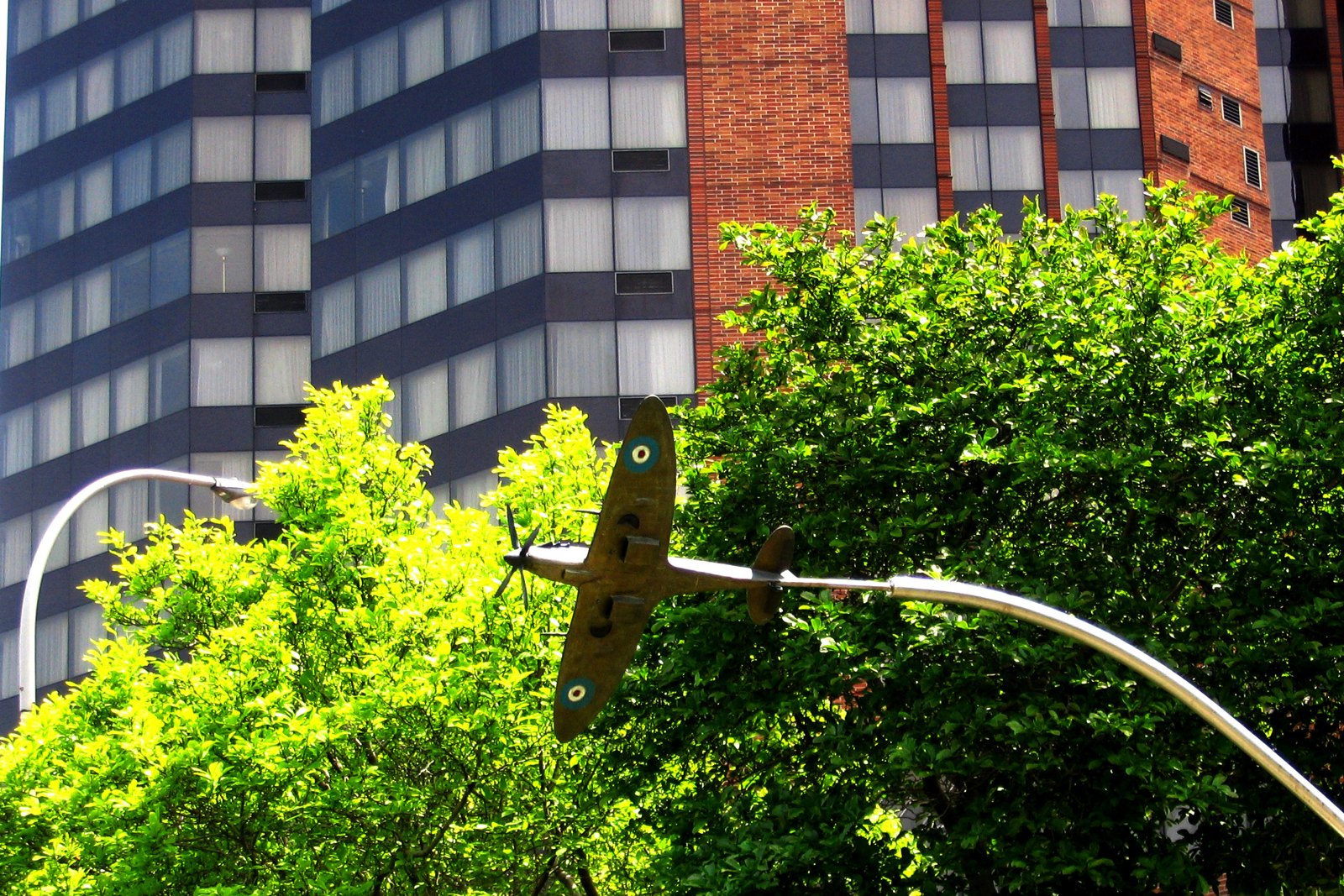
From a Windsor-born pilot on a 1921 air force mail flight, through the flying school at Walker Airport and Windsor's own Spitfire squadron, to the Lancaster that stood in Jackson Park for forty years. This page gathers the area's air force history and the people from here who flew, navigated, cooked and served. Every statement has a source. Where sources disagree, both are shown. Where we could not find something, we say so.
This page links to the chronology, the honour roll, the navy page and uniforms. It does not repeat them. Pictures of aircraft and bases are context: unless a caption names a local person, the picture does not show one.
A 30-second montage that opens with restored Spitfires filmed at an air show in 2011 (not 417 Squadron aircraft), followed by wartime and later photographs and newsreel film, with added ambient music. Captions on screen name each source. Music: “Dreams Become Real” by Kevin MacLeod (incompetech.com), licensed under Creative Commons: By Attribution 3.0. Credits and rights
Allan Gordon McLerie was born in Windsor on 7 December 1888 and had served in the 21st Essex Fusiliers before he signed on with the Royal Flying Corps in Toronto on 5 March 1918. He trained at schools in Hamilton, Leaside, Beamsville and Armour Heights, was appointed temporary second lieutenant in the Royal Air Force that October, and served in Canada. The Kenora Great War Project records that on 2 January 1921 he flew an air force mail flight from Camp Borden to Leaside, about 40 minutes, part of an effort to show that winter air mail was possible.1 He died in Kenora in 1926.1
Walker Airport and No. 7 Elementary Flying Training School
Walker Airport opened on 8 September 1928. When the British Commonwealth Air Training Plan was organized, National Defence recommended Windsor for an Elementary Flying Training School, and No. 7 EFTS was set up at Windsor Airport in 1940.2
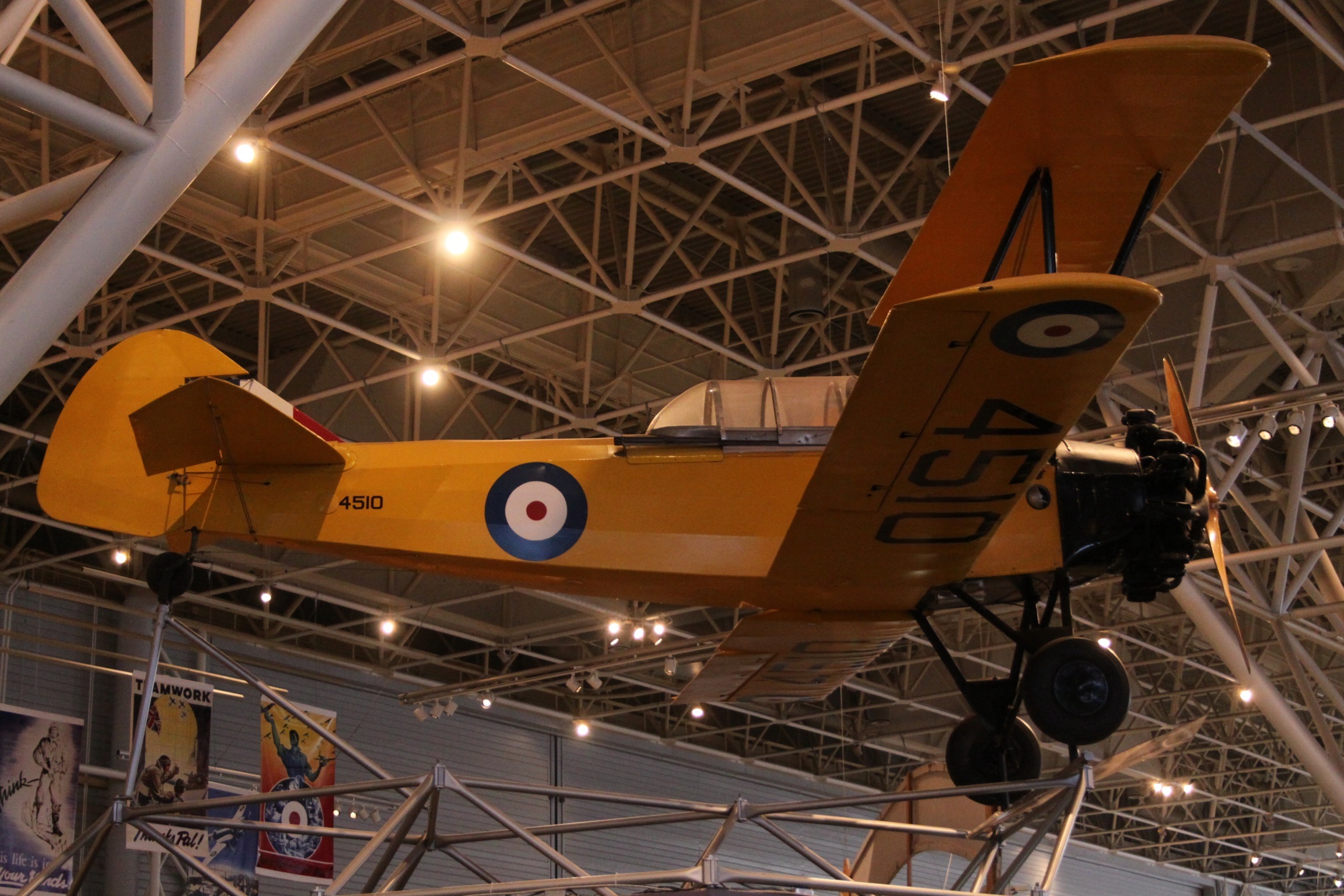
The school opened on 22 July 1940. It was sponsored and run by the Windsor Flying Club and flew the Fleet Finch.3 The Canadian Aviation Museum says 2,267 Commonwealth trainees passed through and 1,673 went on to Service Flying Training Schools; its hangar is the school's, the only original building left on the site.4 A 2015 report gave almost 2,300 trainees, 1,673 pilots and about 400 other aircrew, from Canada, South Africa, Norway, Belgium, Poland and France.5
Sources differ on the closing date. RCAF.Info gives 15 December 1944.3Biz X gives 24 October 1944.6 Not settled.
At least one Windsor man learned to fly there: Alexander Roy Neilson, later awarded the DFC, graduated from No. 7 EFTS on 7 February 1941 (see below).7
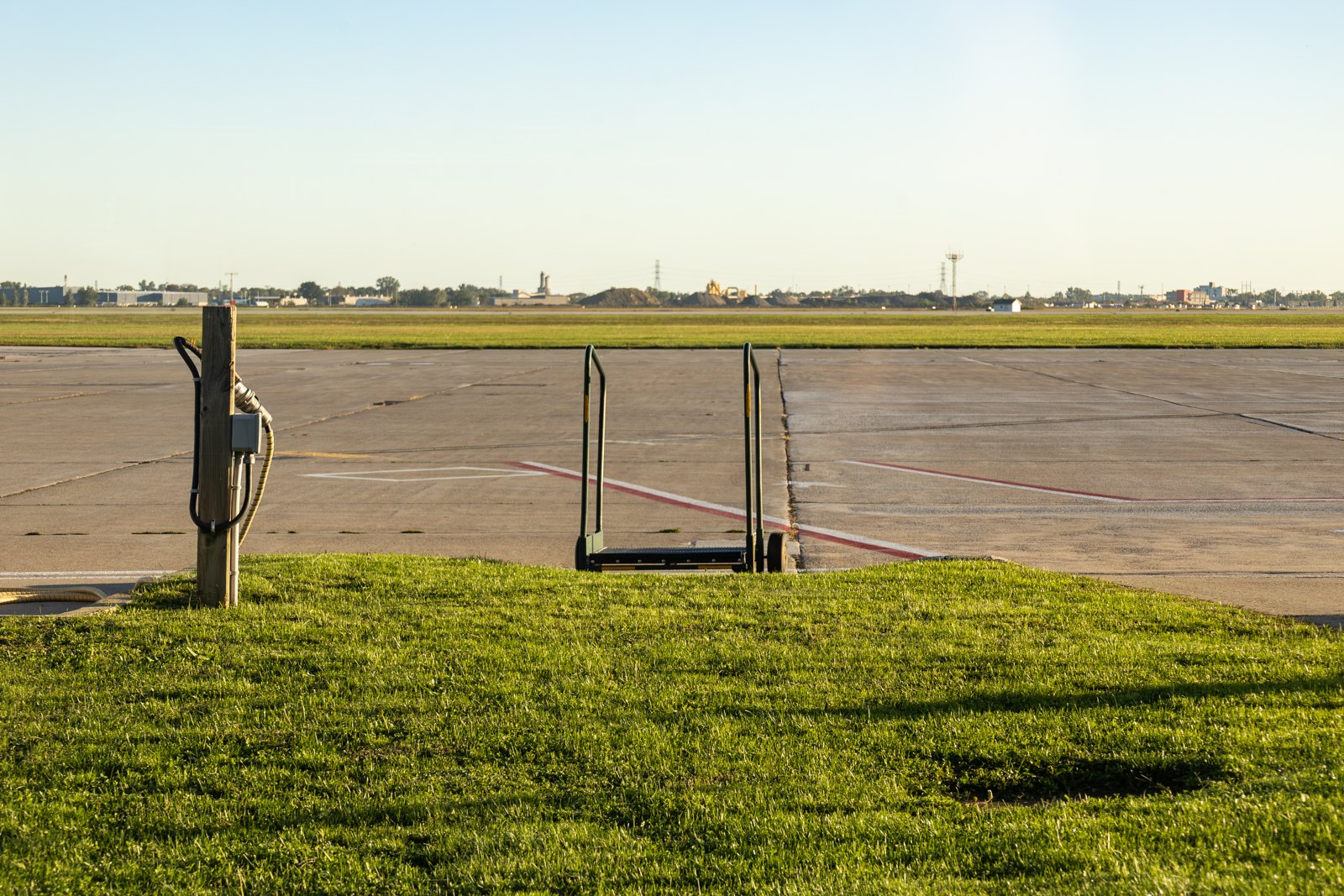
Fleet Finch II, RCAF 4510, the type flown at No. 7 EFTS. This airframe is in the Canada Aviation and Space Museum, Ottawa; it is not a Windsor aircraft. Aeroprints.com, CC BY-SA 3.0. Already credited on uniforms. Source fileWindsor Airport, the old No. 7 EFTS field, seen from the terminal, 24 September 2026. Chris Woodrich, CC BY-SA 4.0. Source file
417 “City of Windsor” Squadron
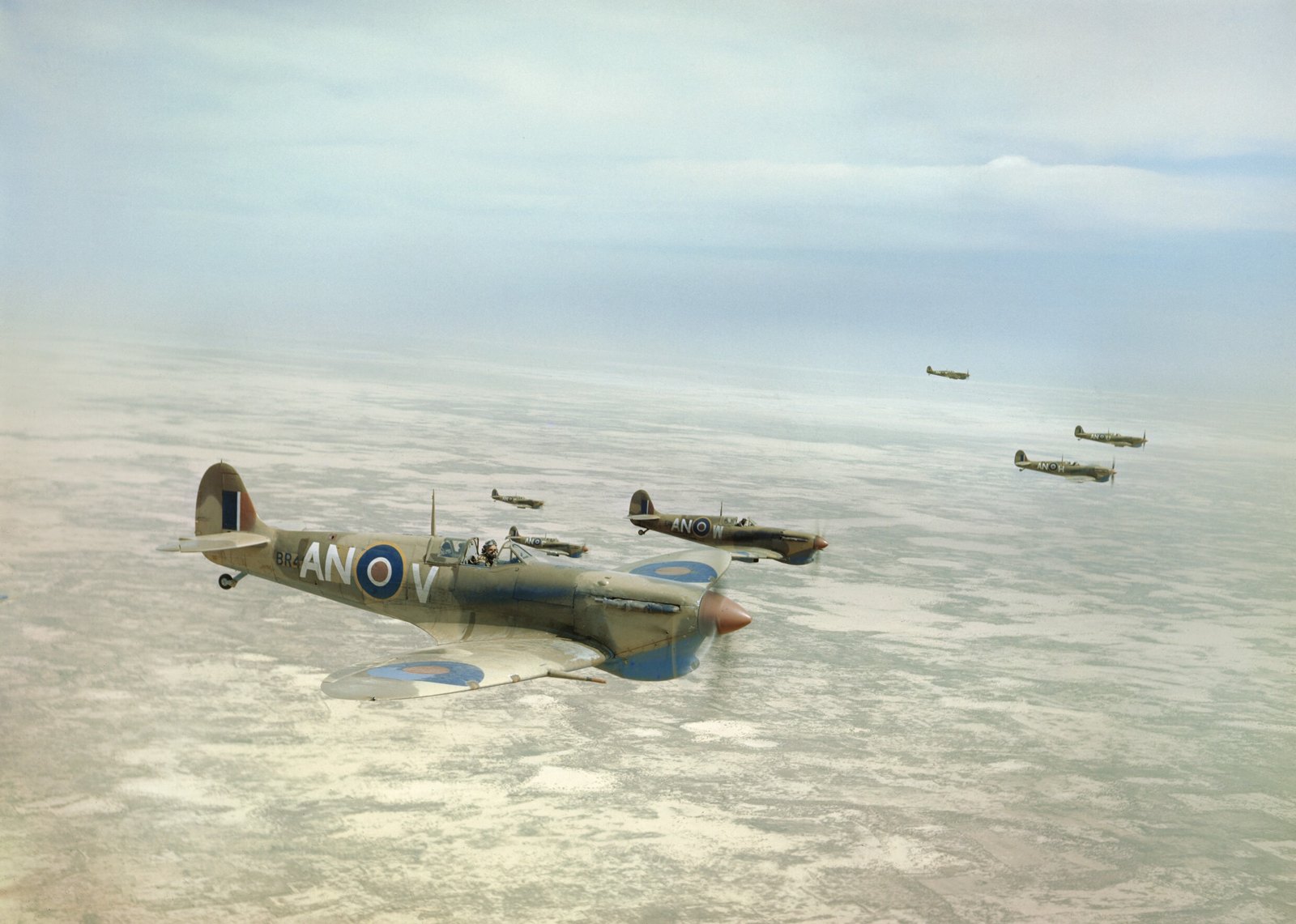
The RCAF formed 417 Squadron in England on 27 November 1941. In April 1942 it went to Egypt as the only RCAF squadron with the Desert Air Force, flying Hurricanes and then Spitfires through North Africa, Sicily, Malta and Italy, until it was disbanded at Treviso on 30 June 1945. The air force still calls it 417 “City of Windsor” Squadron.8
On 6 April 1943 the commanding officer, Squadron Leader F.B. Foster, wrote to Windsor's mayor asking the city to adopt the squadron. He gave three reasons: two-thirds of the squadron's transport had been built in Windsor; the chief speaker for Windsor in the squadron's vote, Flying Officer J.M. Gibson of Kingsville, had stressed the city's civic pride; and the sister squadron, 416, had been adopted by Oshawa. He offered to paint “City of Windsor” on the nose of each Spitfire. The letter was printed on 6 May 1943, the city agreed, and residents sent parcels and letters until the end of the war. The Canadian Aviation Museum says the Windsor hockey team took the name “Spitfires” in 1945 to honour the squadron.9
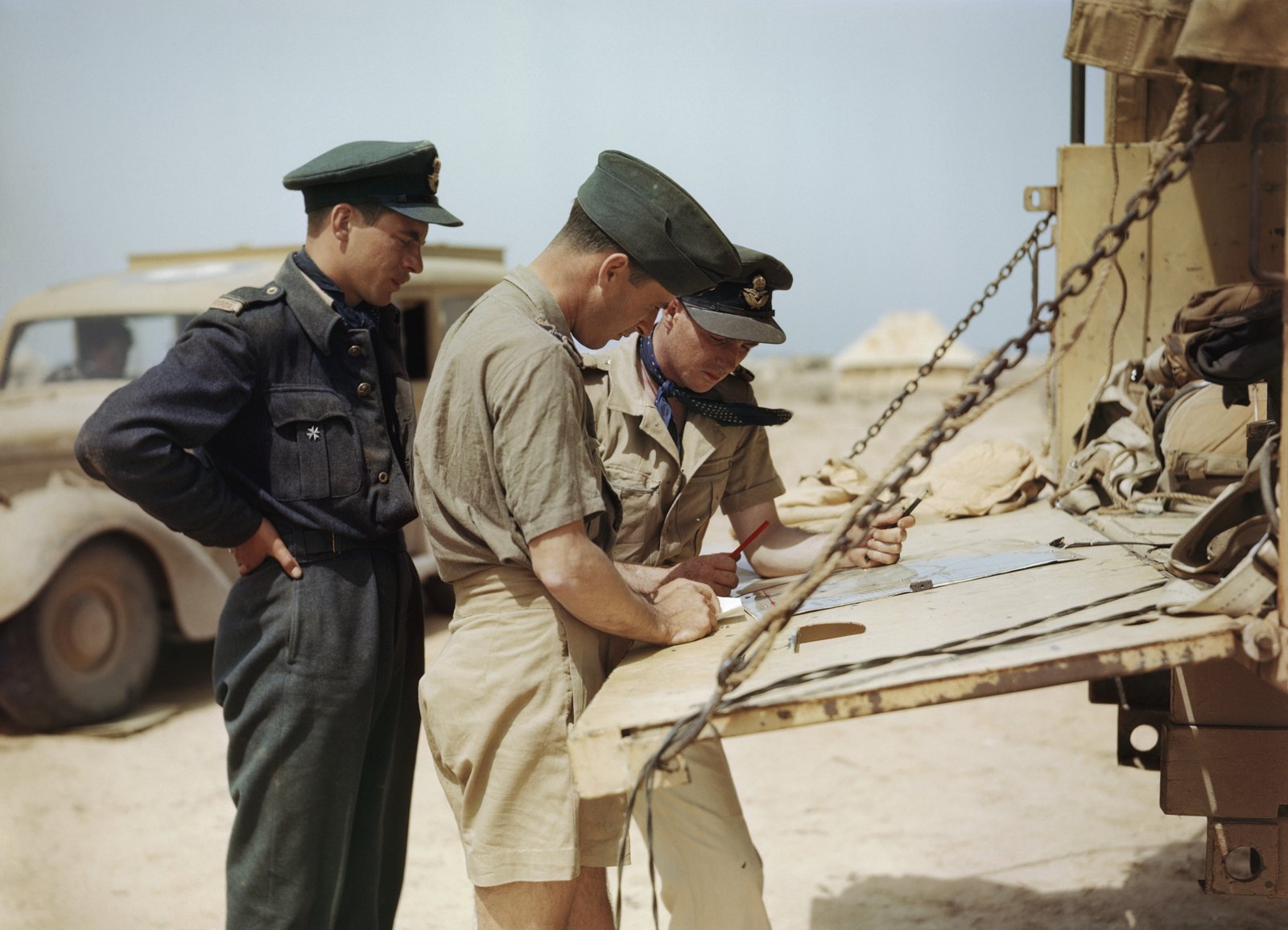
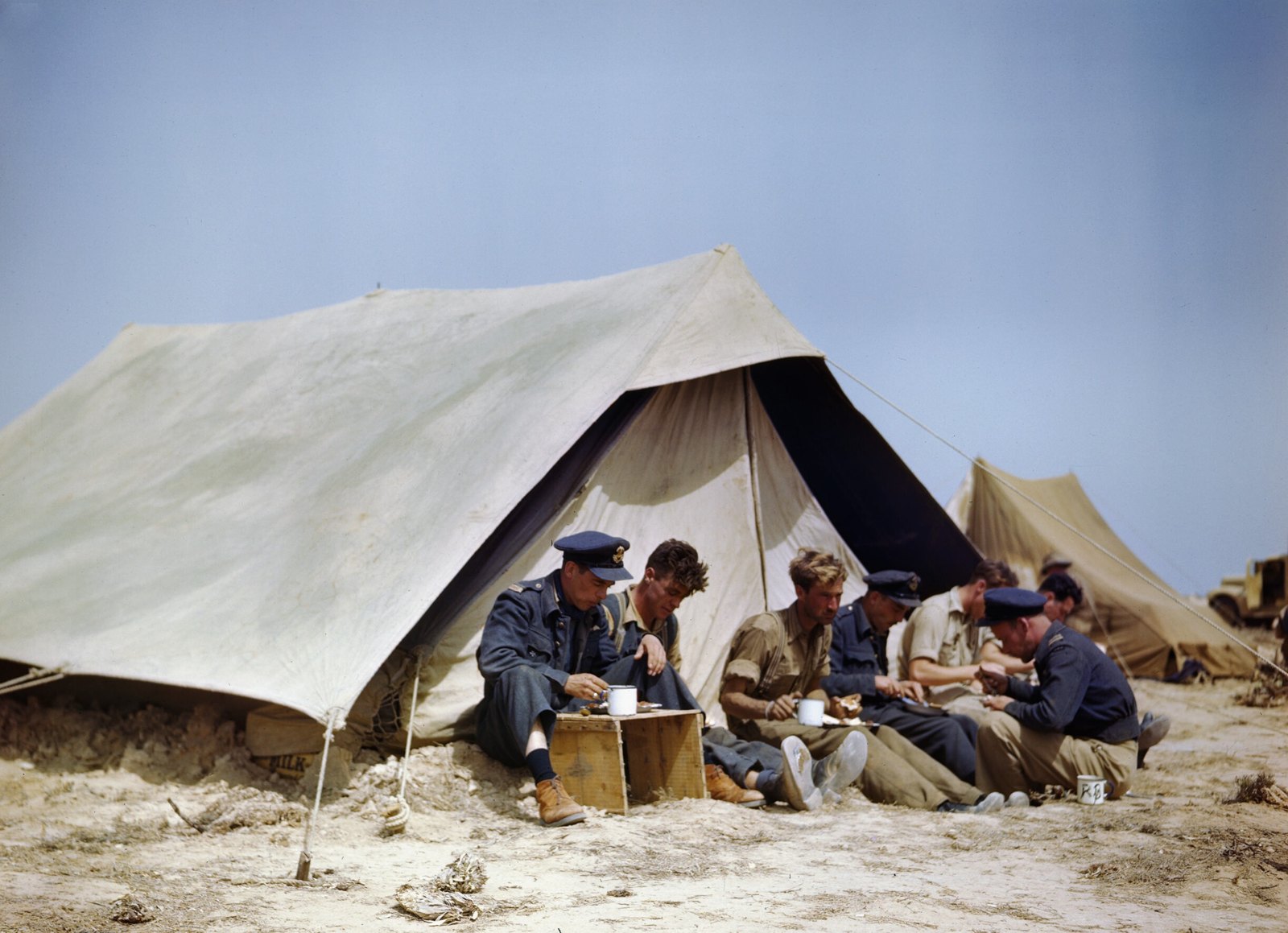
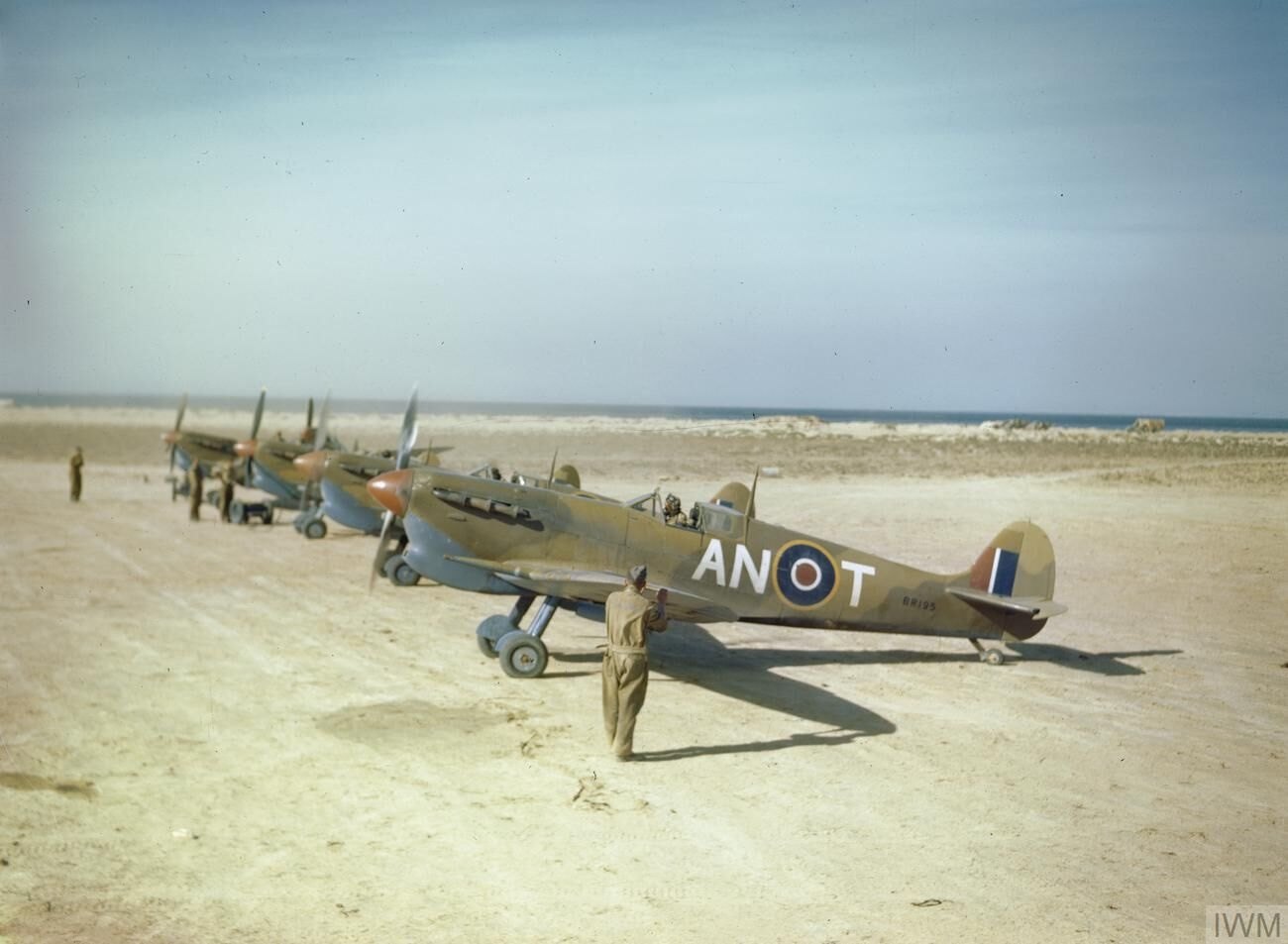
Spitfire Mk Vbs of No. 417 Squadron RCAF escort bombers over Tunisia, April 1943, the month the squadron wrote to Windsor. F/O G. Woodbine, RAF official photographer. Imperial War Museums TR 865. Public domain. Source fileThe commander of No. 417 Squadron works out a course on a trailer tailboard used as the operations room, Goubrine, Tunisia, April 1943. The caption does not name him. RAF official photographer. IWM TR 829. Public domain. Source file417 Squadron personnel have a meal outside a tent at Goubrine, April 1943. The men are not named. RAF official photographer. IWM TR 830. Public domain. Source fileFlight Lieutenant W.H. Pentland of 417 Squadron waits to start his Spitfire Mk VC, BR195 ‘AN-T’, at Goubrine, May 1943. Pentland is not known to be from Windsor. George Woodbine. IWM TR 861. Public domain. Source file
Kingsville’s Goose Squadron
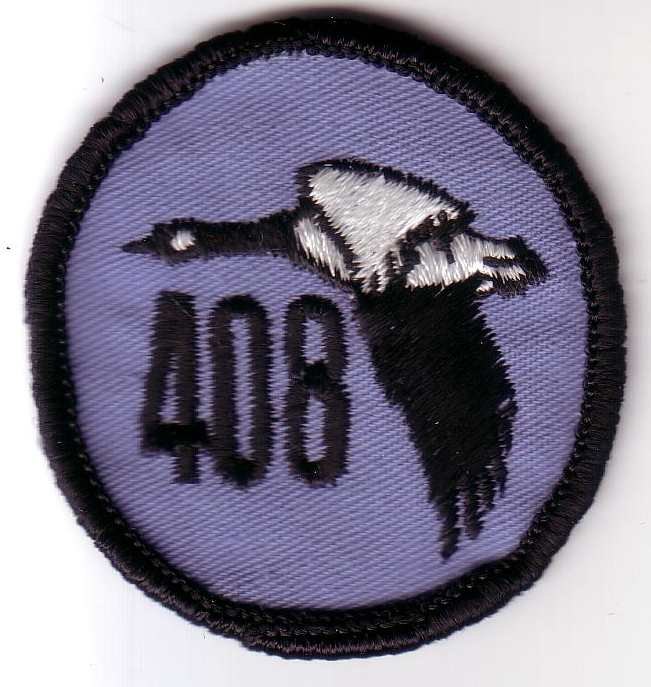
408 Squadron's badge carries a Canada goose. The squadron association's history says Kingsville's Mayor and Council passed a resolution adopting the squadron on 3 April 1944, after bomb aimer Clair Ferguson wrote to Jack Miner, and that the town sent gifts and letters until the squadron disbanded in September 1945.10 Ferguson's Lancaster Mk II, LL636, EQ-G, carried the name “Miss Kingsville”.1011
Sources differ on where Ferguson was from. The association calls him “Claire Ferguson of Kingsville”.10 The modeller who interviewed him writes that he “was from Leamington”.11 Both are secondary. No service record has been checked, so he is not on the roll below yet.
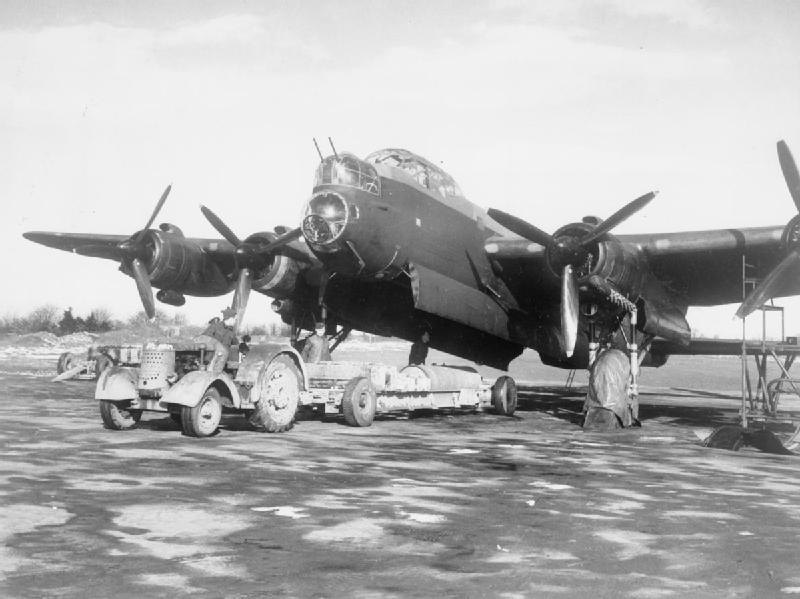
Lancaster B Mk II LL725, EQ-C, of No. 408 Squadron RCAF at Linton-on-Ouse, Yorkshire, with a 4,000 lb bomb. A squadron mate of “Miss Kingsville”, not that aircraft. RCAF official photographer. IWM HU 56276. Public domain. Source file
Cold War, Royal Canadian Air Force, after the Navy
Charles Lawrence "Chuck" Milks
Chuck Milks in a Royal Canadian Navy white uniform, in a framed photograph later kept by the family. Another sailor is visible at the left and is not named. Courtesy of Karyn Anderson.
The Town of LaSalle local veterans page says he enlisted in the Royal Canadian Air Force in 1954, served until 1969, reached the rank of sergeant, and spent much of that career in the Northwest Territories with Air Defence Command (the town page spells it Air Defense Command). A funeral notice names him Charles Lawrence Milks and says he retired from the military in 1969, but gives 1958 as the year he left the navy, which does not match the town page's February 1953 date. Neither account names an air-force unit, and a service file has not been seen. Full profile on the Navy page.
Second World War, Spitfire pilot, 421 Squadron RCAF
Pilot Officer Cameron Dickson Myers
Cameron Myers of Walkerville, on the right, with fellow airmen, July 1942. Royal Canadian Air Force photograph, Walkerville Times Collection. Courtesy of the Southwestern Ontario Digital Archive (SWODA), Leddy Library, University of Windsor. Public domain. Source record
A Walkerville man, he joined the Royal Canadian Air Force in February 1941 and flew Spitfires with 421 Squadron RCAF, the fighter squadron formed overseas in April 1942. He held the rank of Pilot Officer. He was killed in action on 15 May 1943.
A Windsor man, son of George Arthur and Helena Mary Leopold. Official memorial records give his rank as Sergeant, his service number as R/67511, his age as 21, and his date of death as 15 November 1941. He is buried at Bassingbourn-cum-Kneesworth Cemetery. A compiled RCAF casualty record lists him as a pilot with No. 11 Operational Training Unit, and says Wellington R1149 stalled in a turn and crashed near Kneesworth. His brother, Private George Henry Leopold of the Essex Scottish, died at Dieppe the next year.
Squadron Leader Thomas Joseph “Tommy” DeCourcy, DFC
Born in Mitchell, Ontario, on 2 August 1921, he grew up at 535 Rankin Avenue, Windsor, and went to Assumption High School and Assumption College. He enlisted in 1940, flew Spitfires with 118 Squadron RAF and 421 Squadron RCAF, shared in destroying a Dornier over Dieppe on 19 August 1942, and on 29 March 1945 took command of 443 “Hornet” Squadron. His DFC citation credits him with three enemy aircraft destroyed. He was killed in a car accident near Hamburg on 7 June 1945, aged 23.
Pilot Officer Gordon Kenneth Vimy Ridge Vincent, DFC
Born in Windsor on 27 January 1921 and enlisted there on 16 June 1940, he was named after Vimy Ridge; his mother’s brother, Cpl Gordon Moore, died on 4 May 1917. He went to Dougal Avenue Public School and Patterson Collegiate. His DFC citation says that after his aircraft was hit over Karlsruhe he pressed home the attack, landed on the third try, and forced open the burning rear turret to free the trapped gunner. He died on 28 July 1944 and is named on the Runnymede Memorial.
Second World War, Coastal Command pilot, 59 Squadron RAF
Flying Officer Alexander Roy Neilson, DFC
Born in Windsor in 1919, he enlisted there on 14 December 1940 and trained at No. 7 EFTS in Windsor. He flew Hudsons, Fortresses and Liberators against shipping and U-boats, took part in the 1,000-bomber raid on Bremen, and received the DFC effective 19 May 1943. It was presented by the Governor General on 28 January 1946.
Warrant Officer Francis Joseph Higgins, DFM DFM unconfirmed
His parents were of Amherstburg. He died 26 June 1943, aged 22, and is buried at Gorssel General Cemetery in the Netherlands. A Distinguished Flying Medal is recorded for him by secondary databases; the CVWM record does not list it, so the award is shown here as unconfirmed.
The Town of LaSalle says Roy Hazael, of a family from Kingsville that settled in Sandwich West, flew in Lancaster and Halifax bombers with 431 Squadron and was shot down over Belgium in April 1944. He is buried at Wilrijk, Belgium. His brother William served in the RCNVR.
Flight Lieutenant James Anthony Sherry and Flying Officer Michael Bernyk
Two Windsor men in one crew. Sherry, 22, was the pilot and Bernyk, 21, the navigator of Lancaster ME647, AS-J, shot down by a night fighter near Eygelshoven in the Netherlands on New Year's Eve 1944. Both are buried at Nederweert War Cemetery. Bernyk's brother, Pilot Officer Victor Hector Bernyk, a 626 Squadron pilot, had been lost on 25 April 1944.
Born in Sheffield, England, in 1917, he enlisted in Windsor on 6 June 1940; his parents and his wife were of Windsor. He was killed near Barneveld in the Netherlands on Christmas Eve 1944, aged 27, and is buried at Woudenberg. CBC Windsor reported in 2015 that a radio interview he gave five days before his death survives, in which he says he kept running into army vehicles made in Windsor.
Born in Walkerville on 4 April 1914, he enlisted at Kingston in 1938. He died on 29 April 1960 at Milwaukee, Wisconsin, when an RCAF Mitchell crashed into Lake Michigan. The 2451 Squadron brief records a military funeral for him on 6 May 1960 and says he went to school in Windsor (it spells the name “Stevenson”).
Born in Windsor on 25 October 1925. The Supreme Court of Canada records that he was a pilot in the RCAF and served overseas with 6 Bomber Group, later studied at Assumption, and sat on the Supreme Court from 1989 to 1999. He was honorary colonel of 426 Training Squadron. He died in 2020.
Born in Windsor on 28 May 1922 but raised in New Brunswick. His family-written obituary says he flew Spitfires with 412 and 401 Squadrons, received the DFC in January 1945, and was shot down over the Netherlands on 22 February 1945 and held as a prisoner until liberated. He died in Erie, Pennsylvania, in 2018. His local link is birth only.
Born in Windsor on 8 April 1923 and enlisted there on 26 September 1941. His medals include the 1939-1945 Star and the Burma Star. He died on 15 March 1957 at Assumption, Quebec, while serving with 425 All Weather Fighter Squadron, and is buried at Windsor (Green Lawn) Memorial Park.
Born in Windsor in 1888; 21st Essex Fusiliers; Royal Flying Corps and RAF in Canada, 1918 to 1919; the 2 January 1921 mail flight from Camp Borden. See above.
The Town of LaSalle records that Philip Adam served a year in the air force as a cook before moving to the army, and that Enos Howson enlisted in the RCAF in 1942 and served as a chef at Centralia, Trenton and St. Jean until 1945. Not every airman flew.
Apart from the public-domain RCAF photograph of Cameron Myers, and the Air Ministry official photograph of Pilot Officer E.A. Roemmele below, no portrait of any person above has been cleared yet. Family and memorial-site photos need permission and are listed separately. They are not used here.
Second World War, RCAF
Pilot Officer E.A. Roemmele
An Air Ministry official photograph names Pilot Officer E.A. Roemmele, of Windsor, as one of four Mustang pilots credited together with shooting down six Heinkels. He is the second man from the left.
Pilot Officer E.A. Roemmele of Windsor with three other Mustang pilots. The official wartime caption names the men, left to right: Flt Lt L.A.F. Burra-Robinson; P/O E.A. Roemmele, of Windsor; P/O J. Crossland; and Flt Lt A.F. Pavey. It records that the four had shot down six Heinkels. Roemmele is the second man from the left. Air Ministry official collection. Imperial War Museums, CH 12891. Public domain (UK Crown copyright expired). Source record
The roll
A starting roll of Windsor-Essex people in the air force, from the sources cited. Service facts and the local link only. Already-live airmen (Myers, MacDonnell, McCrimmon, Cheng, Doolittle) are not repeated. A fuller list of air force deaths, researched from public records and cross-checked against town memorials, with a link to each source, is on the Air Force roll. It is not an official list, and it is not complete. The Lancaster memorial was dedicated in 1965 to about 400 airmen from this area who died in the Second World War alone; that dedication list has not been found.28
Search this page:
Name
Service, as recorded
Units, aircraft, stations
Local link, as recorded
Source
Allan Gordon McLerie
RFC/RAF (Canada), 1918 to 1919
Schools at Hamilton, Leaside, Beamsville, Armour Heights; Camp Borden 1921
These names are on the honour roll, each with a CVWM or Bomber Command record: Vincent (28 July 1944), Croft (14 October 1942), Higgins (26 June 1943), Hazael (April 1944), Sherry and Michael Bernyk (31 December 1944), Victor Bernyk (25 April 1944), Unwin (24 December 1944) and DeCourcy (7 June 1945, accident on active service). Wright (1957) and Stephenson (1960) died in peacetime service. Flying Officer MacDonnell is also on the honour roll. Many more air force deaths, researched the same way, are on the Air Force roll.
Women in the air force
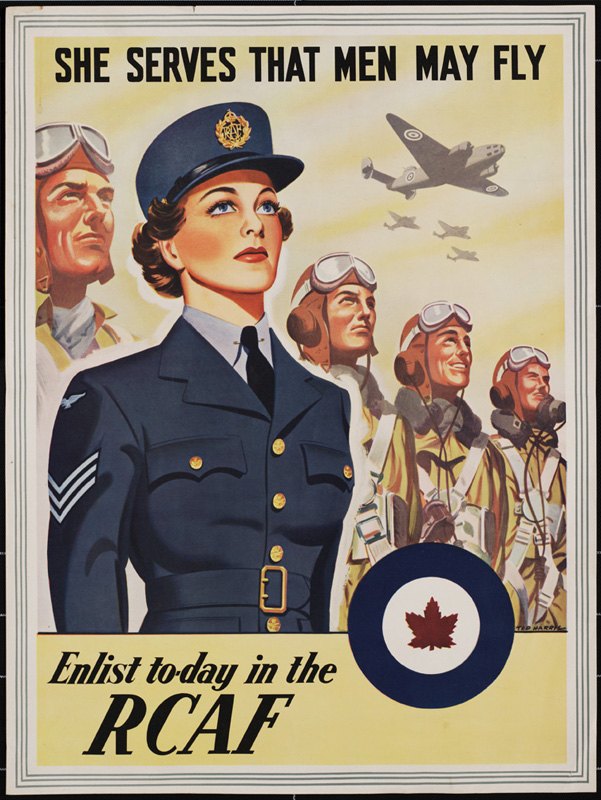
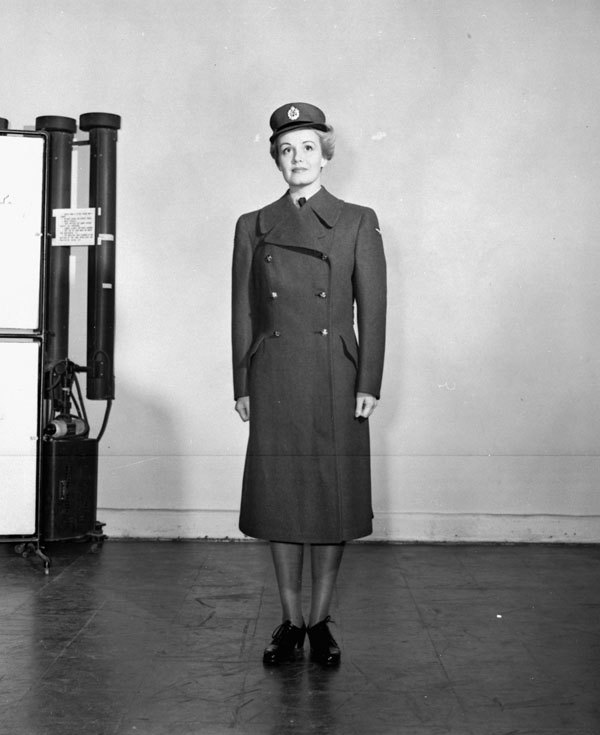
The RCAF Women's Division recruited from 1941. Its posters are below. The number of Windsor-Essex women who served in it is not found. One LaSalle story records Joyalen Slade, who served from 1963 to 1998 and in 1967 travelled around the world with 437 Squadron at Trenton as a flight attendant.15
“She serves that men may fly”, RCAF Women's Division recruiting poster, 1941. Ted Harris. McGill University Library, Canadian War Poster Collection WP2.R28.F5. Public domain. Source fileAn unidentified airwoman models the Women's Division uniform, RCAF Station Rockcliffe, 10 July 1942. Department of National Defence / Library and Archives Canada. Public domain. Not a Windsor woman as far as is known. Source file
After 1945: 2451 Squadron, cadets and the air show
A 1960 report by Windsor's auxiliary radar unit, 2451 Aircraft Control and Warning Squadron, survives in transcription. The unit was formed on 4 January 1954 and disbanded on 31 May 1961. The 1960 brief says it opened a new headquarters on 5 October 1957 and gave space to two Windsor air cadet squadrons whose building at the airport had been condemned. S/L J.S. Mencel handed command to S/L Robert Norwood in April 1959. That September the Air Force Club of Windsor sponsored an air show for the 50th anniversary of flight, opened by Air Marshal Hugh Campbell on 19 September, with the Golden Hawks.24
Windsor's air cadets today are 364 Lancaster Squadron, about 90 cadets, based at Windsor International Airport.30
Lancaster FM212
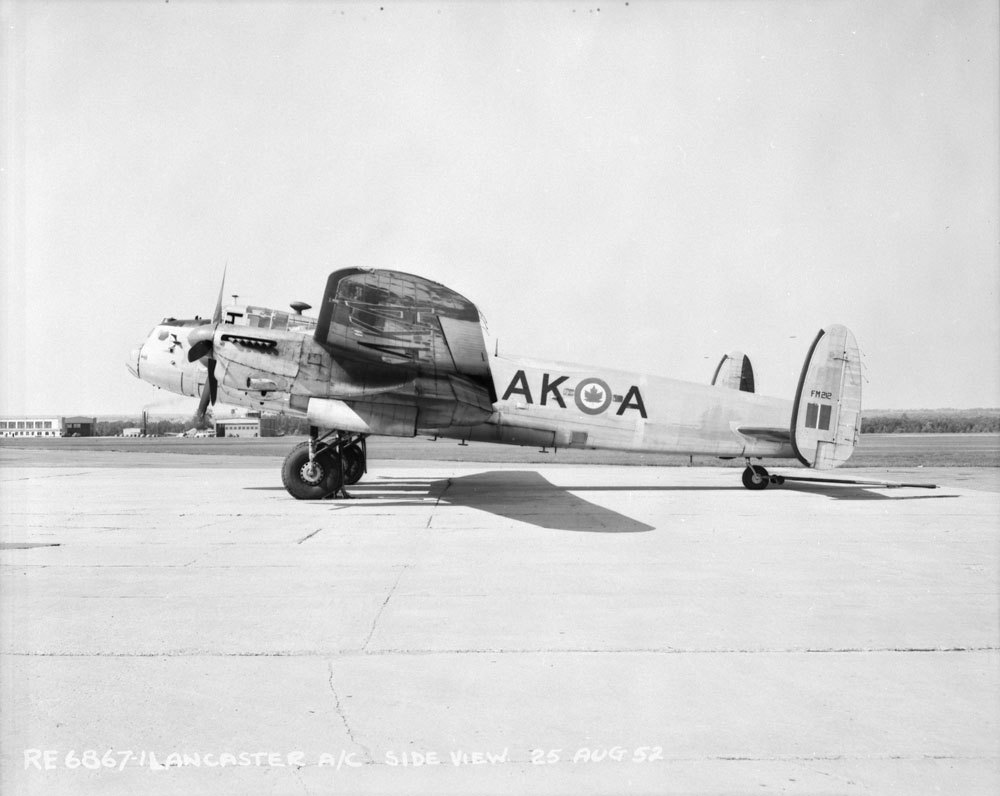
FM212 was built by Victory Aircraft at Malton in July 1945, too late for the war, and became the first Canadian-built Mark 10P photographic Lancaster. It mapped the Arctic with 408 Squadron at Rockcliffe and logged 8,069.5 hours before it was retired in 1962. A “Lancaster for Windsor” committee headed by Wing Commander Joseph Mencel, with many members of the Air Force Club of Windsor, led the city to buy it for $1,250 in 1964. It came by barge from Dunnville to Dieppe Park, was towed to Jackson Park in February 1965, and on 4 July 1965 was dedicated to the approximately 400 airmen from this area who died in the Second World War. It came off its pedestal on 26 May 2005 and has been under restoration by volunteers at what is now the Canadian Aviation Museum.28
Sources differ on its flying hours. The museum gives 8,069.5; a 2023 restoration article gives 8,039.5. The museum figure is used.
Avro Lancaster Mk X FM212, the Jackson Park Lancaster, in RCAF service, 26 August 1952. Department of National Defence / Library and Archives Canada, MIKAN 3584699. Public domain. Source file
Memorials
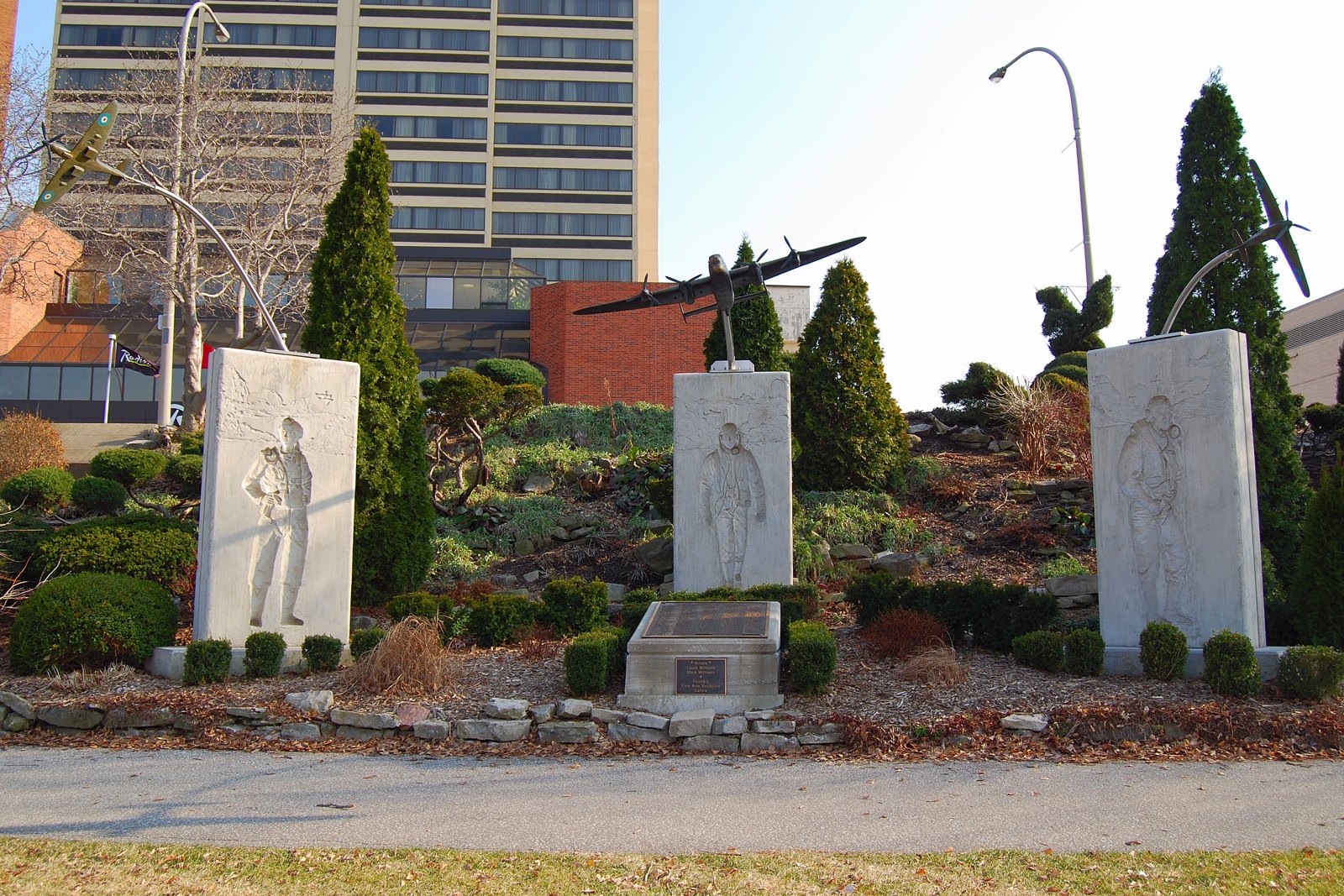
RAF/RCAF Monument, Windsor, 22 March 2009. The Commons description credits local sculptor Mark Williams and names a Hurricane, a Spitfire and a Lancaster, and says the Lancaster plaque from Jackson Park moved to Dieppe Gardens. PDru2014, CC BY 2.0. Source fileBattle of Britain memorial, Windsor riverfront, 22 June 2008. jodelli, CC BY 2.0. Already used on the chronology. Source file
Patches
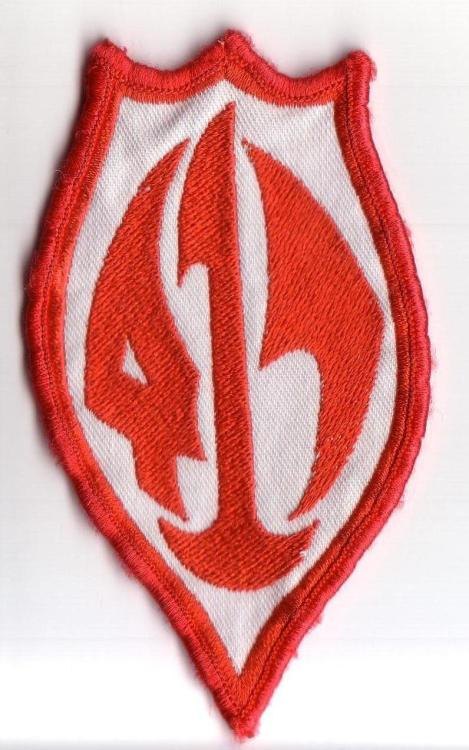
Photographs of cloth unit patches, not the squadrons' official heraldic badges, shown for history only. None is a local veteran's own object. Official badges have not been redrawn. No cleared badge was found for the Windsor Flying Club, No. 7 Elementary Flying Training School, or 2451 Squadron.
A 417 Squadron cloth patch. Photograph by Ahunt, 2007, released into the public domain. Date of the patch not recorded; not a wartime item as far as is known. Source fileA 408 “Goose” Squadron cloth patch. Photograph by Ahunt, 2007, released into the public domain. Date of the patch not recorded. Source file
Windsor Flying Club: no badge or logo was found under an open licence.
No. 7 Elementary Flying Training School / BCATP at Walker Airport: no school patch was found under an open licence. A wartime photograph of the school also remains uncleared, as noted below.
2451 Squadron: no cleared badge was found.
Official heraldic squadron badges: not shown and not redrawn.
Wartime posters
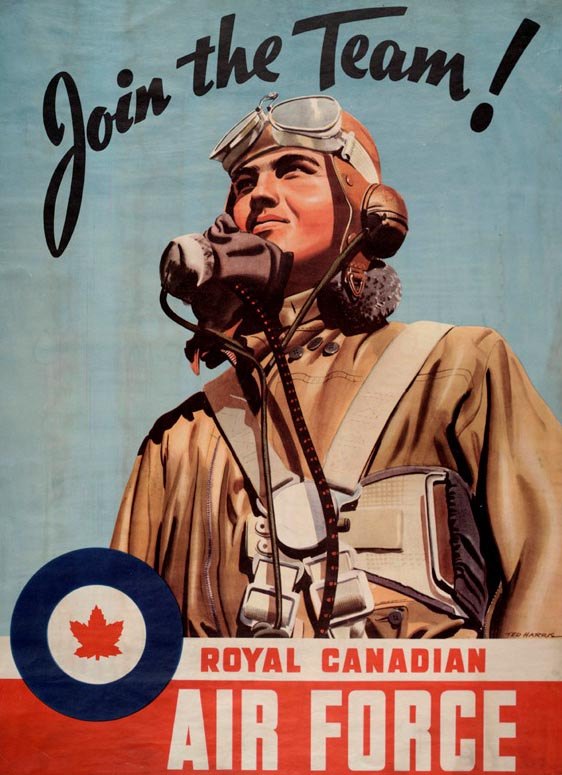
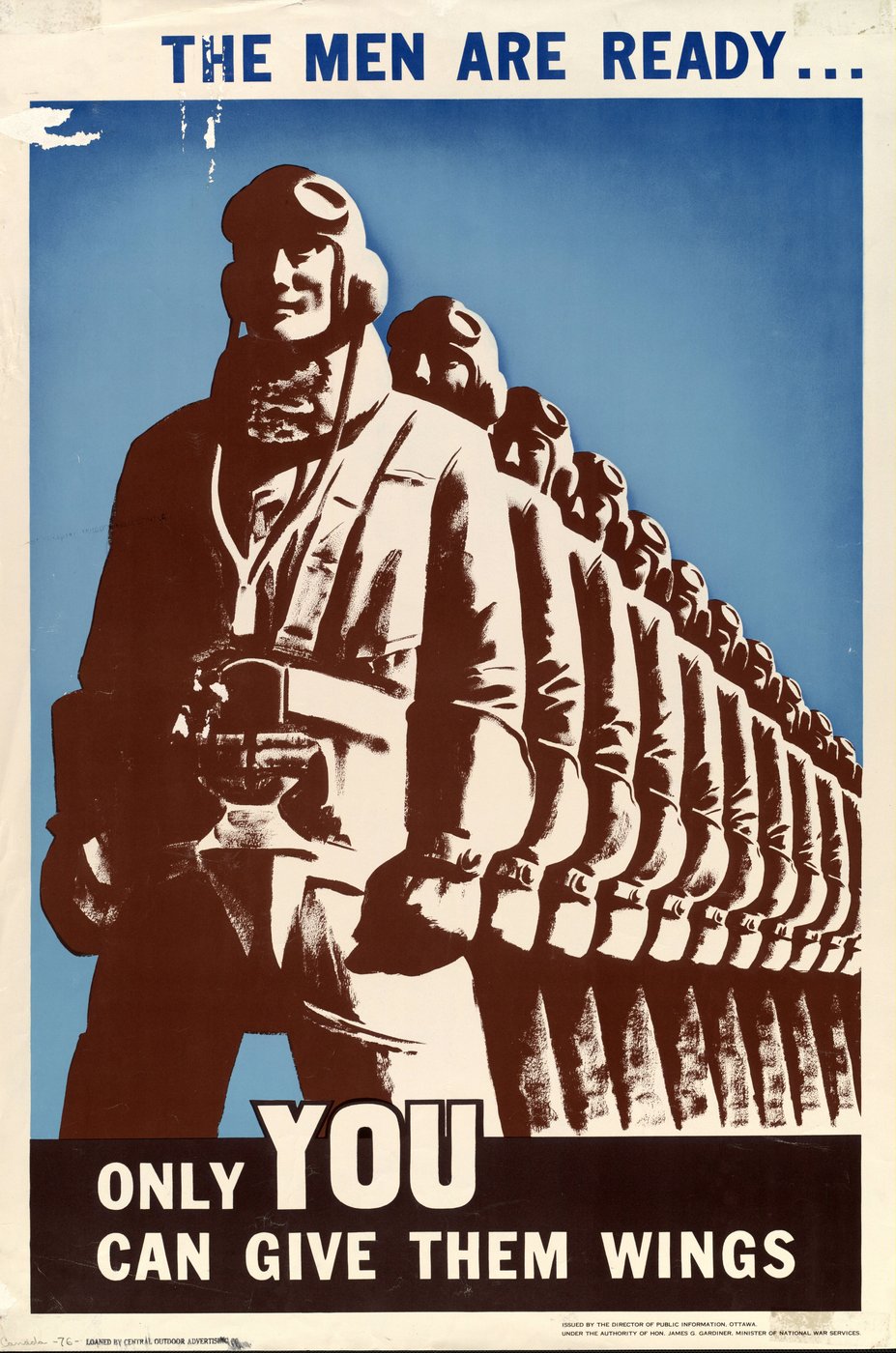
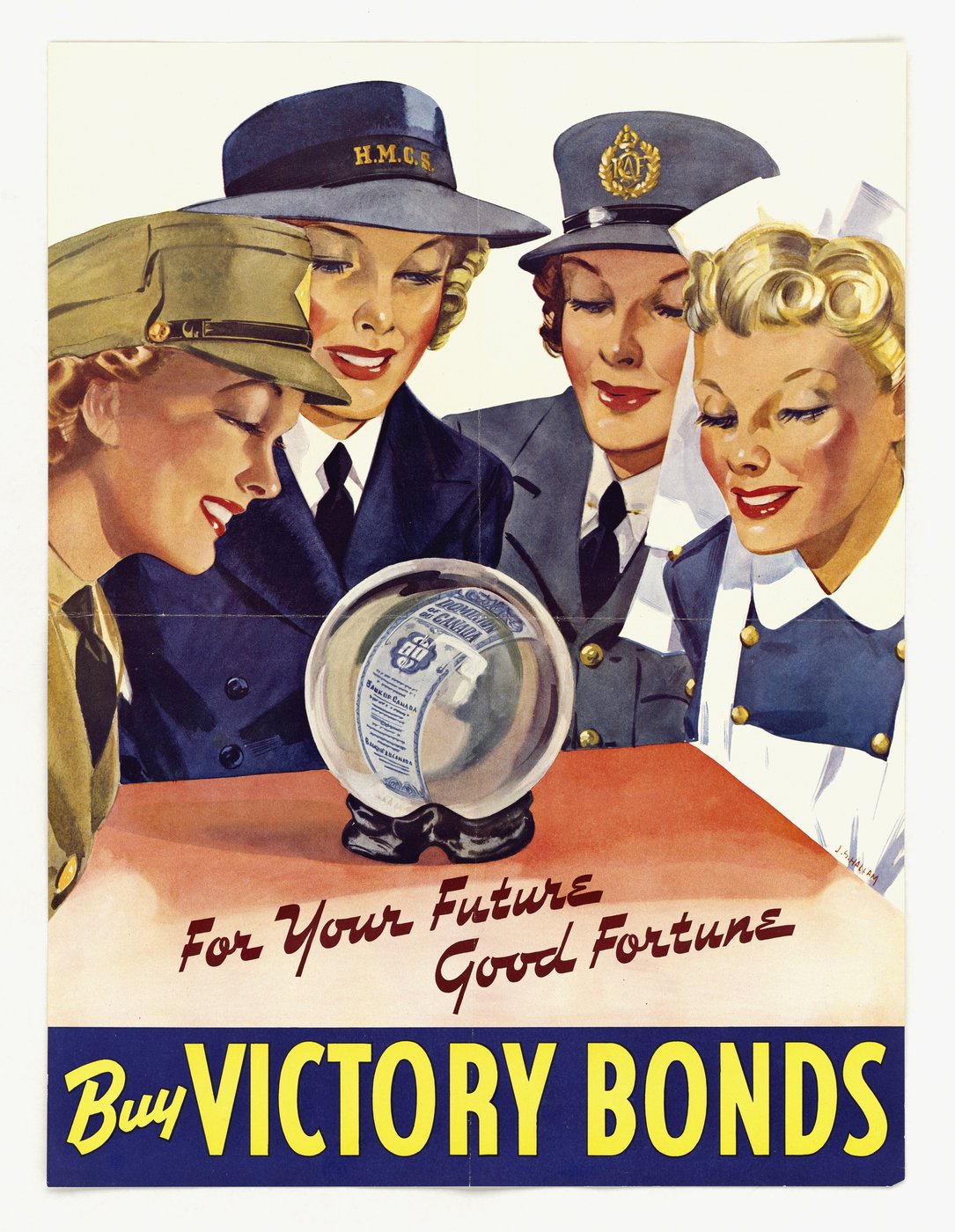
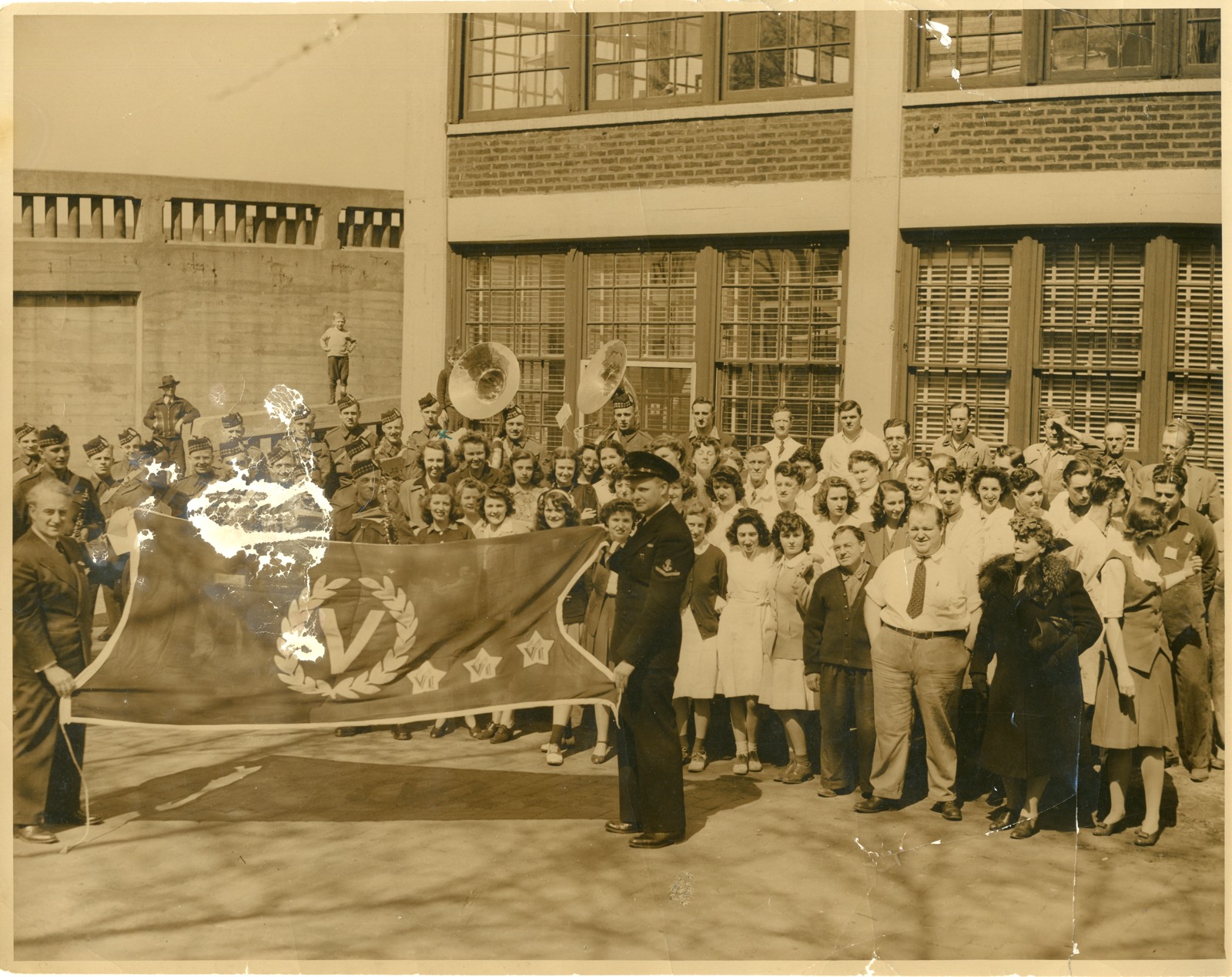
Cleared RCAF recruiting posters, a home-front poster about giving aircrew aircraft, and a Second World War Victory Bonds poster. The Women's Division poster, "She serves that men may fly", remains in Women in the air force. A photograph of a local Victory Bond drive in Walkerville is included. These posters are national, not Windsor printings, except the local photograph.
"Join the Team!", RCAF recruiting poster, 1939 to 1945. Ted Harris. McGill University Library, Canadian War Poster Collection WP2.R16.F3. Public domain. Source file"The Men Are Ready... Only You Can Give Them Wings." Second World War home-front poster, issued by the Director of Public Information, Ottawa, under James G. Gardiner, Minister of National War Services. Artist not named on the sheet. Public domain (Crown copyright expired). Resized. Source file"For Your Future Good Fortune, Buy Victory Bonds." Second World War. J. S. Hallam. Public domain (Crown copyright expired). Resized. Source fileVictory Bond drive, Gelatin Products Limited, Walkerville, 1943. Photographed by Sid Lloyd and donated by Mary Templeton. A campaign banner and uniformed musicians are visible; the musicians' unit is not identified. This is a photograph of a local drive, not a standalone poster. University of Windsor, Leddy Library / SWODA. Public domain. Item record
War art
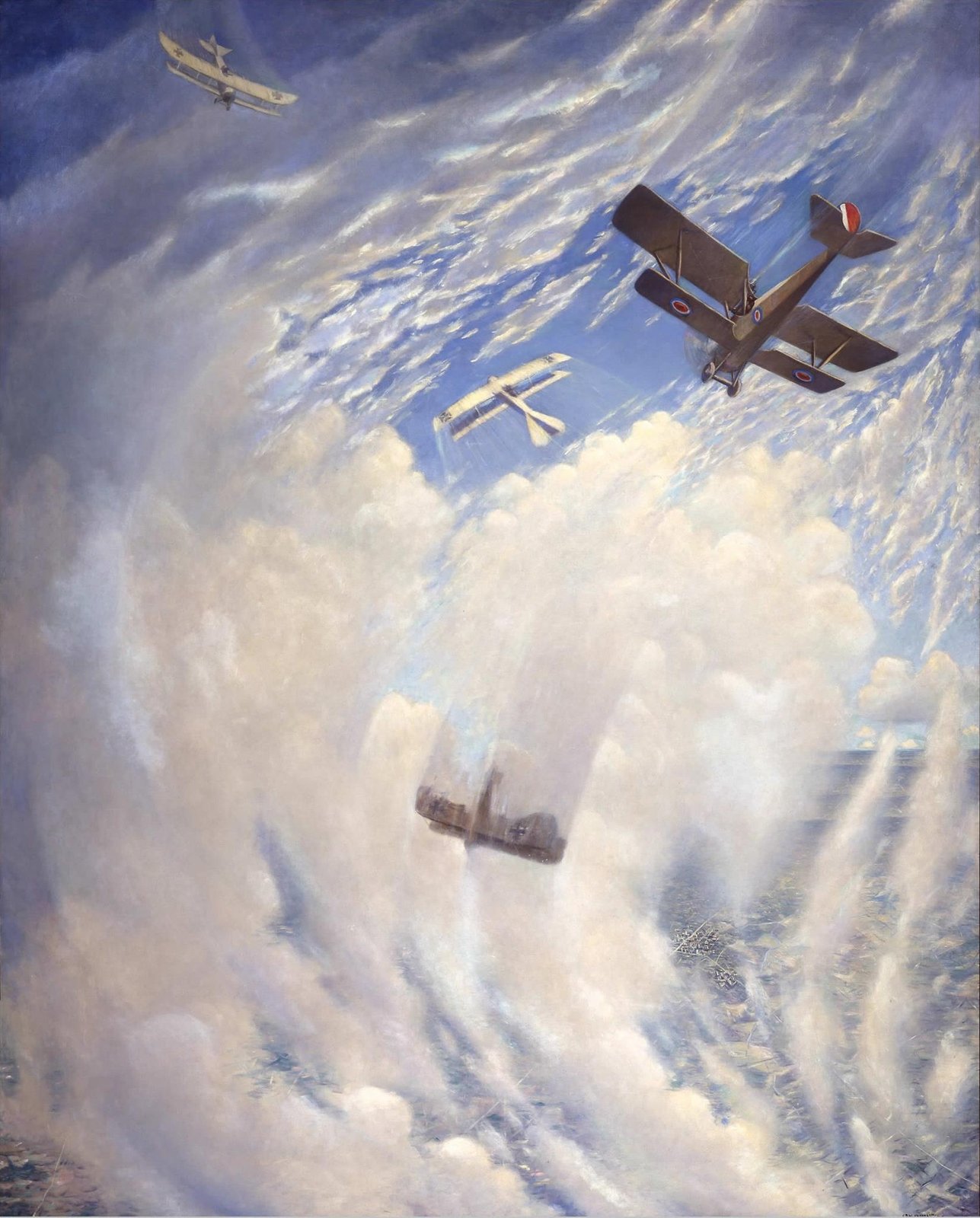
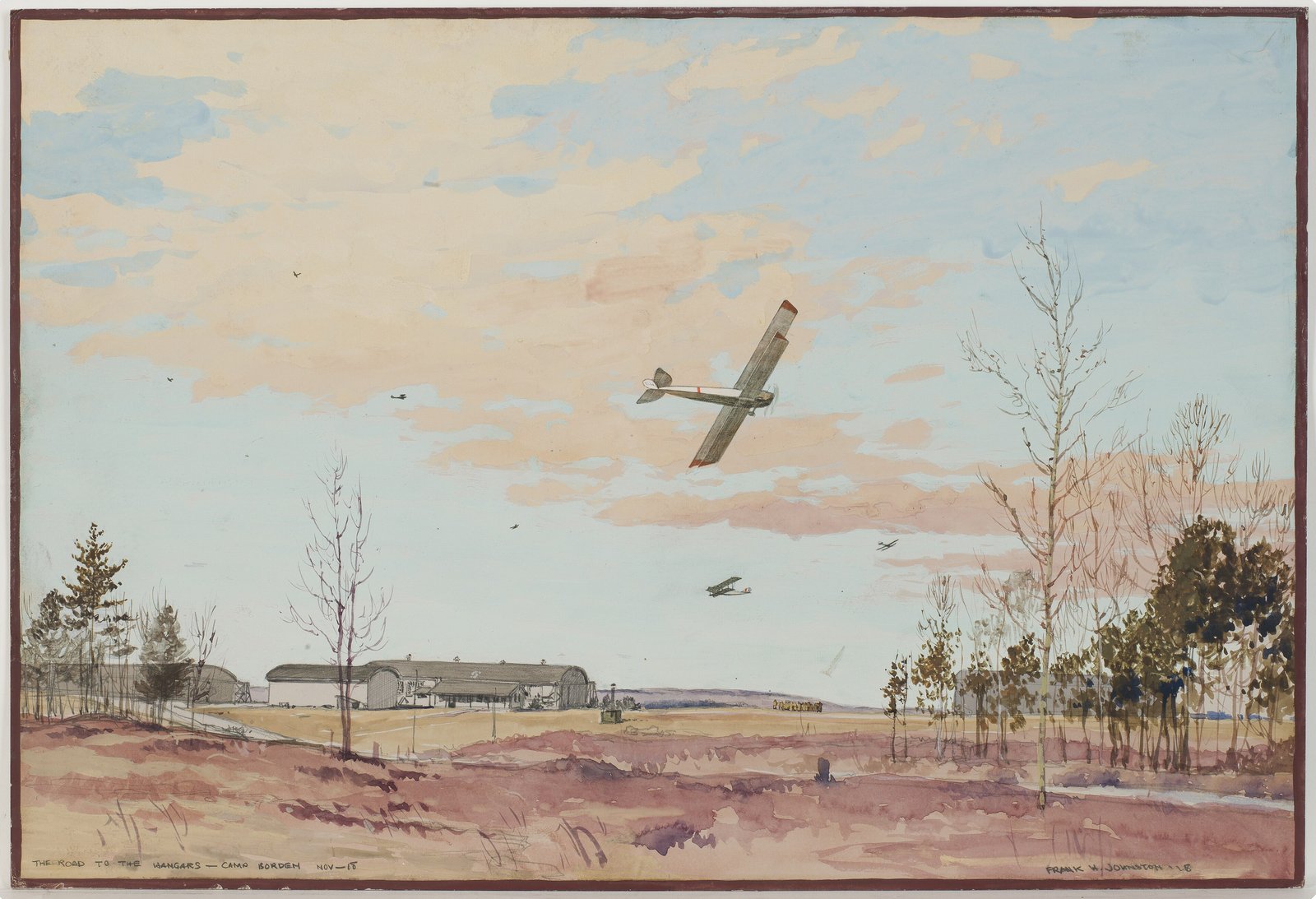
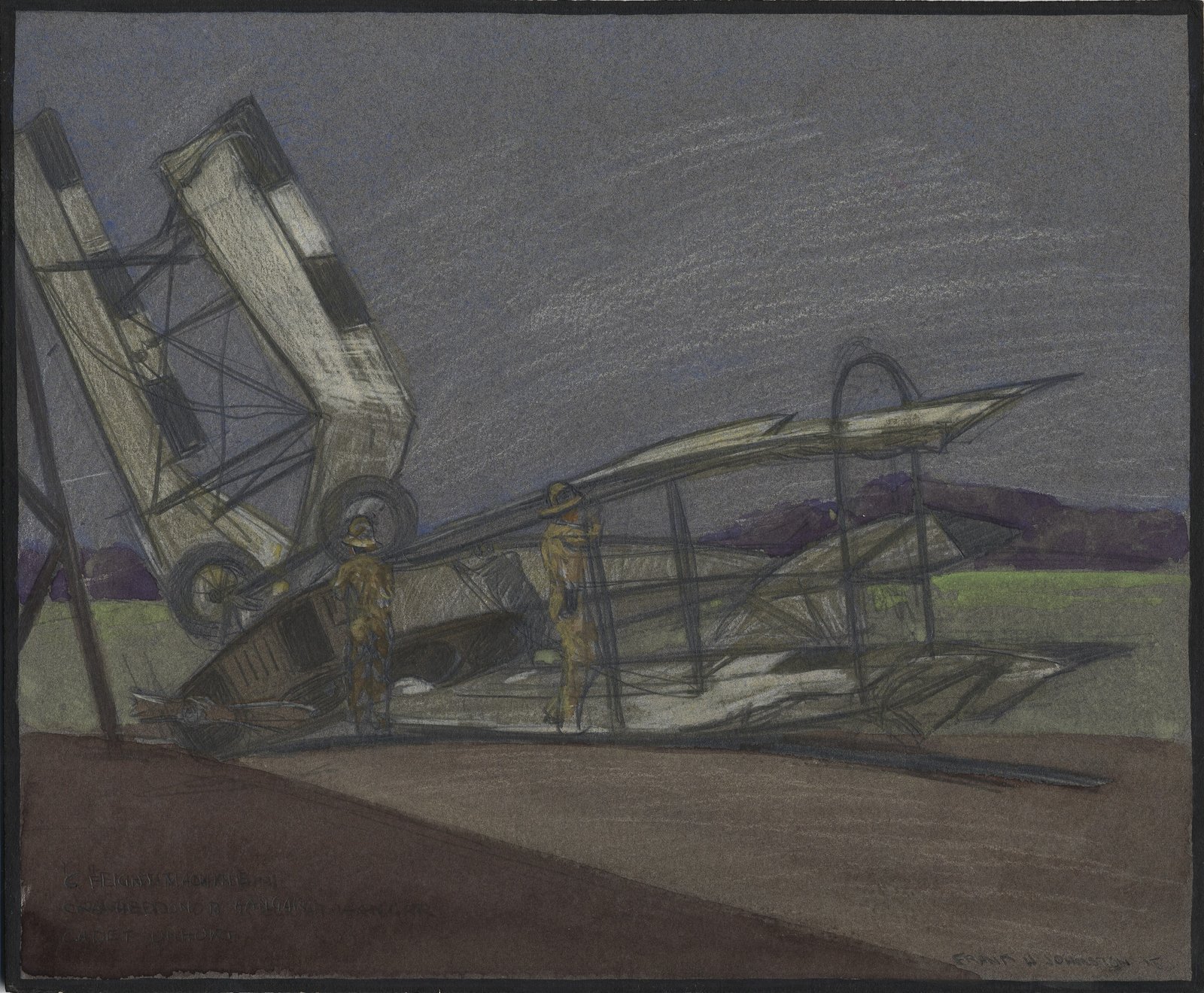
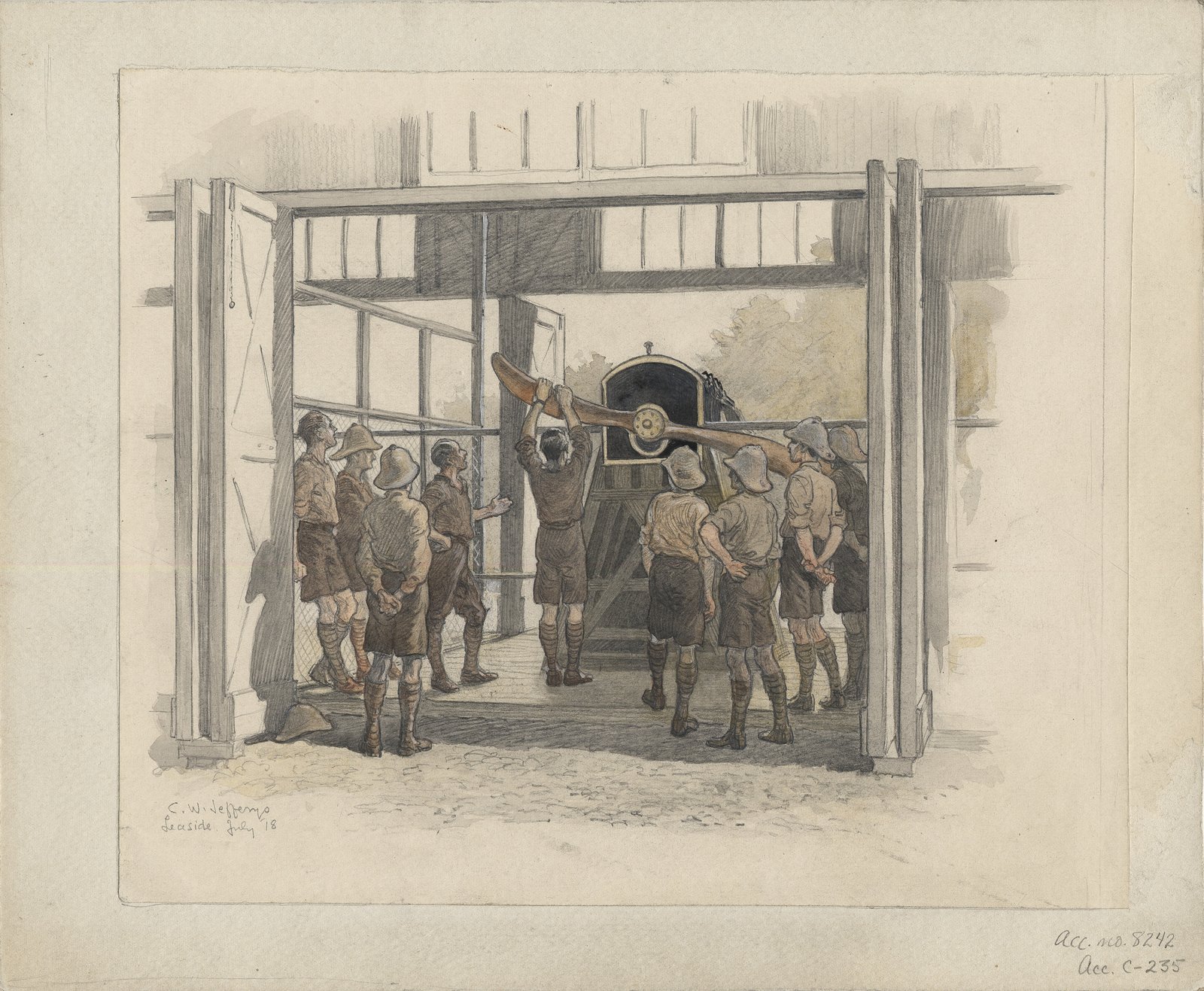
Official Canadian war art of flying and flying training from the Beaverbrook Collection of War Art at the Canadian War Museum. These are First World War works and are in the public domain. They are not pictures of Walker Airport or of No. 7 Elementary Flying Training School. Official Second World War RCAF paintings by Paul Goranson and other air-force war artists exist in the same collection, and Crown copyright on those official works has expired, but no freely licensed digital file was found (the museum asks for a request to use its scans), so they are not shown.
War in the Air, C. R. W. Nevinson, First World War. The Canadian War Museum identifies the Canadian aircraft as that of William "Billy" Bishop. The RCAF did not yet exist; Bishop flew with the British flying services. Beaverbrook Collection of War Art, 19710261-0517. Public domain. Resized. Source fileThe Road to the Hangars, Camp Borden, Frank Johnston, November 1918. Canadian flying training in the First World War, not at Windsor. Beaverbrook Collection of War Art, 19710261-0276. Public domain. Resized. Source fileC Flight Machine Cracked on Hangar B, Frank Johnston, 1918. A crashed Curtiss JN-4, used in the caption as an example of the danger of pilot training. Not a Windsor scene. Beaverbrook Collection of War Art, 19710261-0297. Public domain. Resized. Source fileInstruction in Propeller Swinging, Charles William Jefferys, July 1918. Ground crew training at Leaside, near Toronto, not at Windsor. Beaverbrook Collection of War Art, 19710261-0227. Public domain. Resized. Source file
Medals
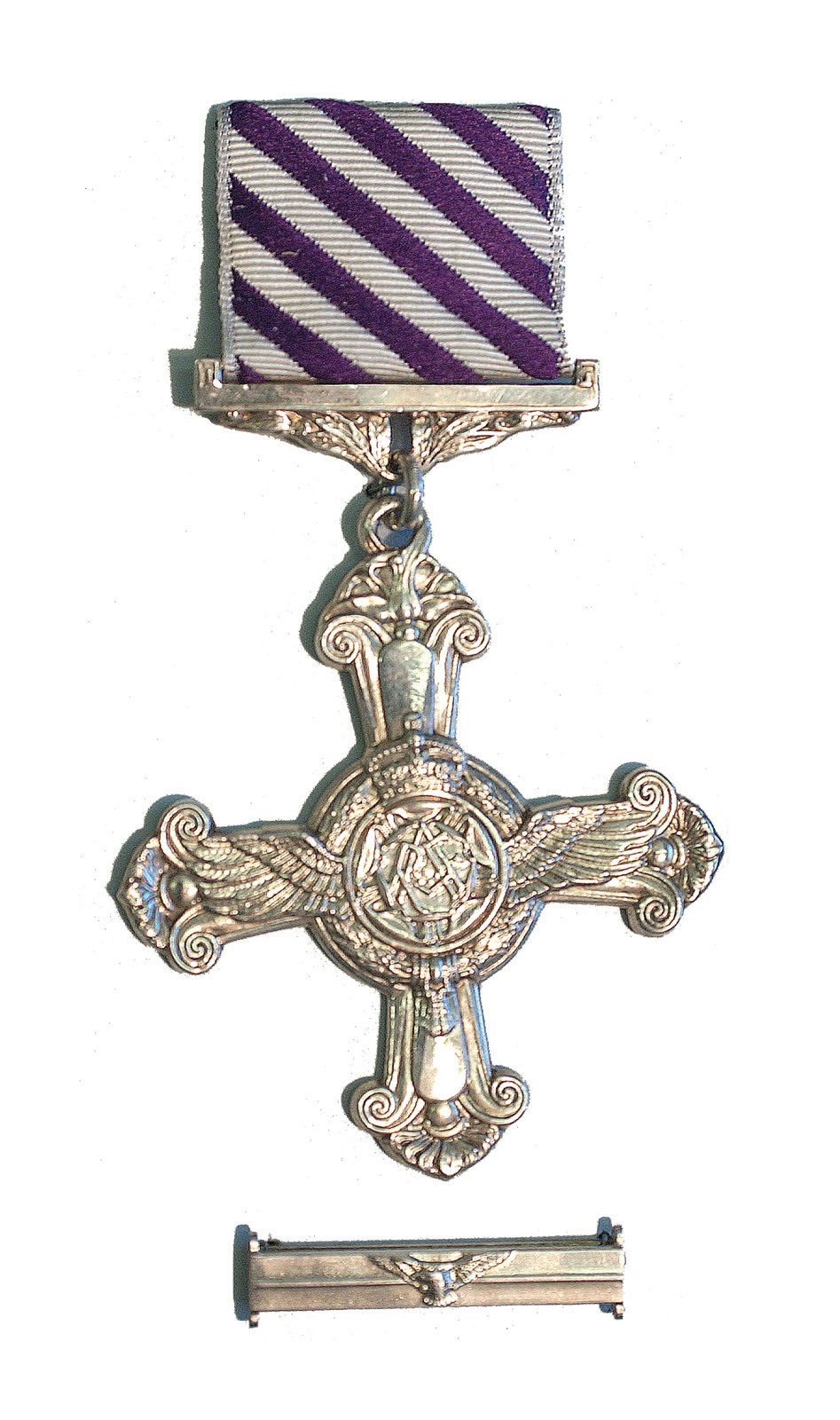
Examples of a type. None is a local veteran's own object.
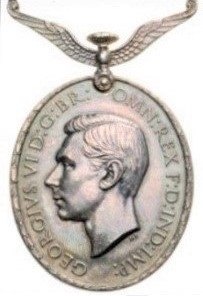
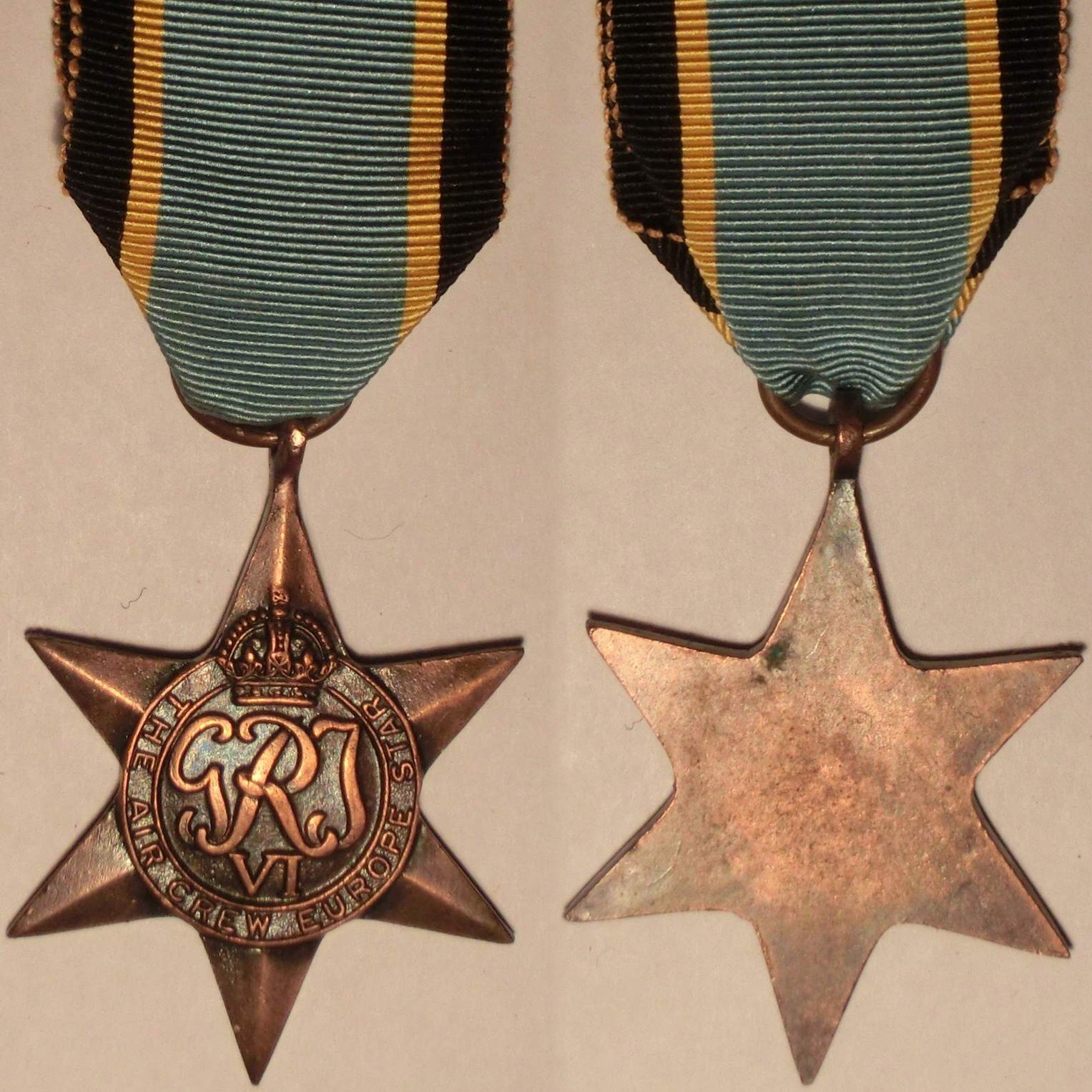
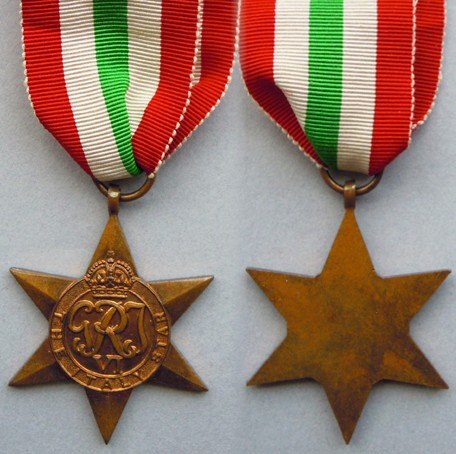
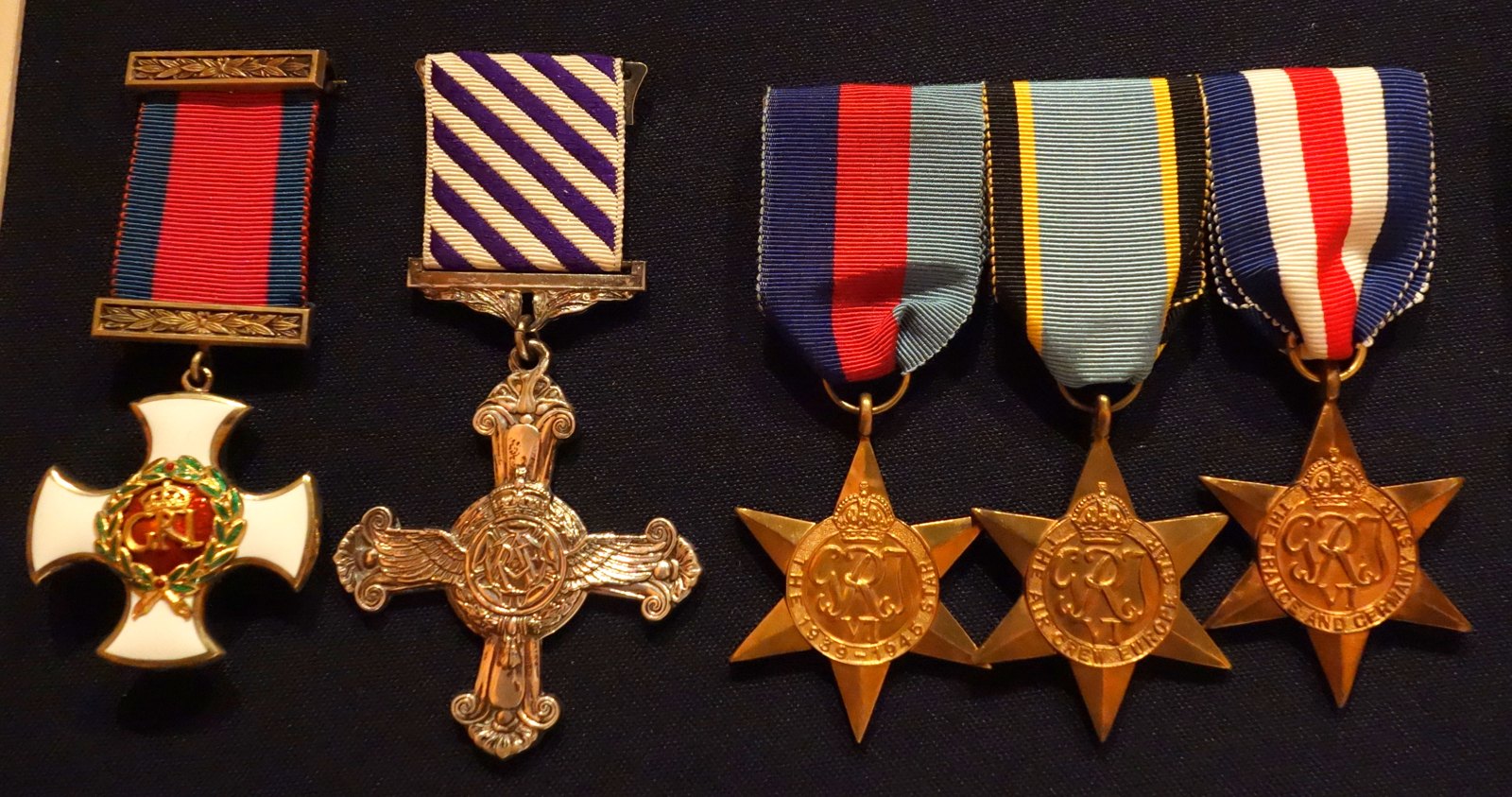
The Distinguished Flying Cross, awarded to DeCourcy, Vincent, Neilson, Myers and Murray. An example, not theirs. UK Ministry of Defence, Open Government Licence v1.0. Source fileThe Distinguished Flying Medal (George VI), the award for non-commissioned aircrew. An example only. Hsq7278, CC BY-SA 4.0. Source fileThe Air Crew Europe Star. An example only. Col André Kritzinger, public domain. Source fileThe Italy Star, the campaign star for 417 Squadron's theatre from 1943. An example only. Col André Kritzinger, public domain. Source fileA full RCAF medal group: DSO, DFC, 1939-1945 Star, Air Crew Europe Star and France and Germany Star of W/C Lawrence MacKinnon, 405 Squadron, Glenbow Museum. Not a Windsor airman; shown so readers can see how such a group looks. Daderot, CC0. Source file
Today
The No. 7 EFTS hangar is now the Canadian Aviation Museum at Windsor Airport, home of FM212.4 The 2019 Snowbirds team list named Major Bassam Mnaymneh, outer right wing, as from Windsor.29 Living members are listed only from what they or official sources have made public.
What we could not find
A badge or logo for the Windsor Flying Club, No. 7 Elementary Flying Training School, or 2451 Squadron under an open licence. Official heraldic squadron badges were not redrawn.
A freely licensed digital file of official Second World War RCAF paintings by Paul Goranson and other air-force war artists. Crown copyright on those official works has expired, and they are in the Beaverbrook Collection, but the Canadian War Museum asks for a request to use its scans, and no Wikimedia Commons copy was found, so they are not shown. First World War official air art is shown instead.
A cleared portrait for most of the airmen on the roll. Two official Department of National Defence photographs from 1943 (PL-26818, Donald McLean Awrey; PL-22802, a 438 Squadron group including Robert Milne McKenzie) are used on the Air Force roll. Family photos on the Canadian Virtual War Memorial need permission and were not used, nor were newspaper photographs.
A cleared photograph of No. 7 EFTS in wartime. The Canadian Aviation Museum holds them; permission needed.
A photograph of FM212 on its Jackson Park pedestal, 1965 to 2005, under a free licence.
The 1965 list of about 400 local airmen named at the Lancaster dedication has not been found. The Air Force roll is a researched list, not that dedication list, and it is not complete.
The number of Windsor-Essex women in the RCAF Women’s Division.
Official records for Clair Ferguson (408 Squadron), F/O J.M. Gibson of Kingsville (417 Squadron) and Murray Viper of Mersea (408 Squadron).
Air cadet history before 364 Squadron: which two squadrons used 2451 Squadron’s building in 1958.
Whether a 1940s RCAF “City of Windsor” nose marking was ever photographed.
Windsor Star, "Ceremony marks birth of combat flight training in Windsor", July 2015 (facts only; no Star text or photos reused), windsorstar.com
Andrea Grimes, "Windsor's Aviation History Takes Flight", Biz X, July/August 2015, p. 53, bizxmagazine.com
Hugh A. Halliday, RCAF awards database entry for F/O Alexander Roy Neilson, DFC, as posted by the compiler on RAFCommands, 15 October 2007, rafcommands.com
Royal Canadian Air Force, "417 Combat Support Squadron", canada.ca
Canadian Aviation Museum, "RCAF 417 Squadron and How the “Windsor Spitfires” Got Their Name", quoting the letter of S/L F.B. Foster, 6 April 1943, as printed 6 May 1943, canadianaviationmuseum.ca
Gary R. Tetzlaff, "The Kingsville Connection, 1941-45 and Beyond", 408 "Goose" Squadron Association, forfreedom.ca
Bob Swaddling, "Avro Lancaster Mk.II and F/O Clair Ferguson, Miss Kingsville", HyperScale, January 2014 (an account given to the author by Clair Ferguson), clubhyper.com
Al Mickeloff, "Introducing Squadron Leader Thomas DeCourcy, DFC", Canadian Warplane Heritage Museum, warplane.com
Veterans Affairs Canada, Canadian Virtual War Memorial, "Pilot Officer Gordon Kenneth Vimy Ridge Vincent", veterans.gc.ca
Veterans Affairs Canada, CVWM, "Warrant Officer Francis Joseph Higgins", veterans.gc.ca
Town of LaSalle, "Local Veterans" (stories submitted by veterans and families; the Town says it makes efforts to verify them), lasalle.ca
Veterans Affairs Canada, CVWM, "Flight Lieutenant Leonard Arthur Unwin", veterans.gc.ca
CBC News Windsor, "Fallen WWII pilot's voice helps Windsor woman learn about her uncle", 11 November 2015, cbc.ca
Veterans Affairs Canada, CVWM, "Warrant Officer Class II Wesley Bethel Croft", veterans.gc.ca
Veterans Affairs Canada, CVWM, "Air Commodore John Gay Stephenson", veterans.gc.ca
Aviation Safety Network wikibase, RCAF North American Mitchell 3ST (B-25J) 5220, 29 April 1960, Lake Michigan (crash database, secondary), aviation-safety.net
2451 AC&W Squadron (Auxiliary), Windsor, historical narratives and a 1960 brief from the National Archives of Canada, as transcribed by the C&E Museum Pinetree Line pages (secondary transcription), c-and-e-museum.org
Supreme Court of Canada, "The Honourable Peter deCarteret Cory", scc-csc.ca
Obituary of Frederick Thomas Murray, Burton Quinn Scott Funeral Service, Erie, Pennsylvania, December 2018 (family-written), burtonquinnscott.com
Veterans Affairs Canada, CVWM, "Flying Officer Clarence Russell Wright", veterans.gc.ca
Minot Daily News, "The Spirit of the Prairie", 30 June 2019, listing the 2019 Snowbirds team from a Snowbirds news release, minotdailynews.com
364 Lancaster Royal Canadian Air Cadet Squadron, "About us", 364squadron.ca
Cremation Society of Windsor and Essex County / Families First Funeral Home, "Obituary of Chuck Milks," cremationsociety.ca, retrieved 11 November 2026. Names him Charles Lawrence Milks; heading gives the years 1930 to 2022; death dated 26 April 2022; says he left the navy in 1958, then served in the RCAF and retired from the military in 1969. A family funeral notice, not a service file.